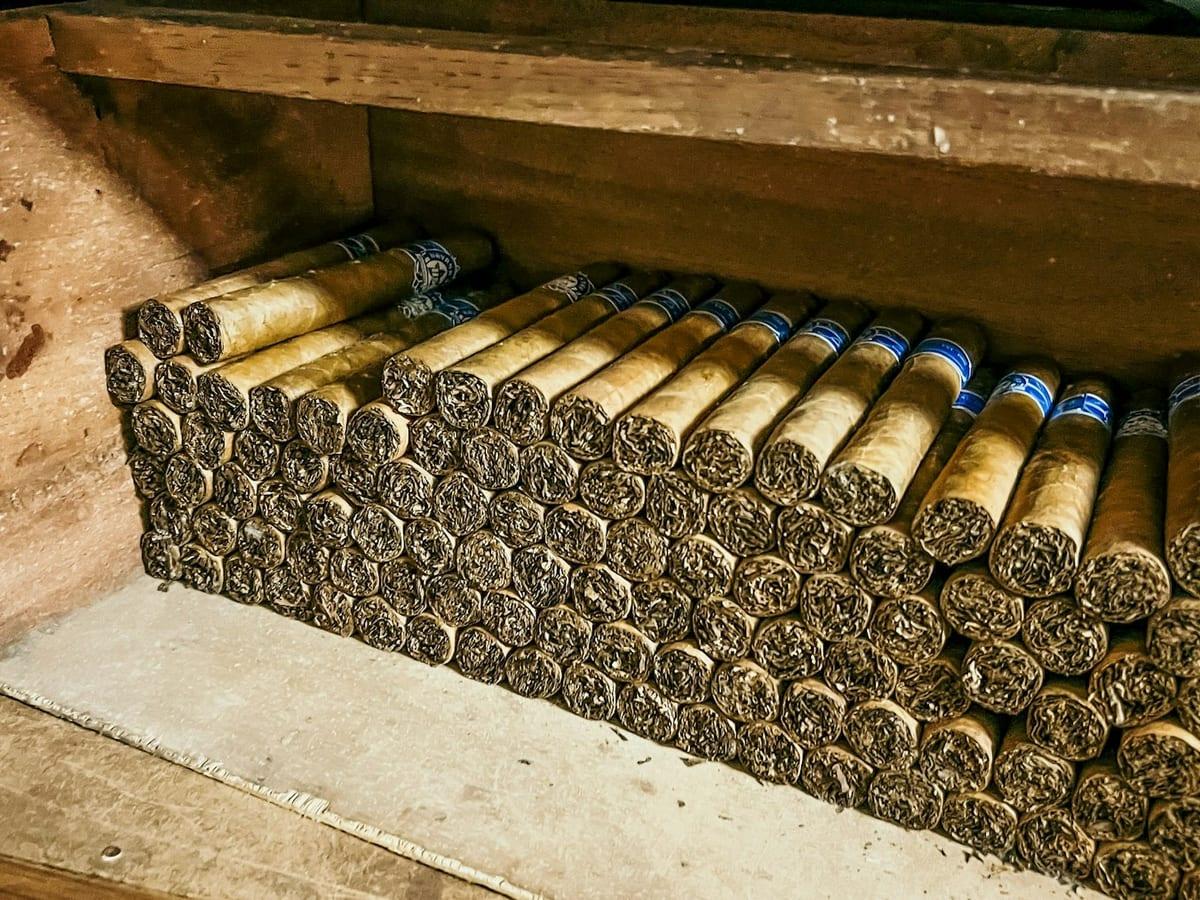
Box and humidor aging are the main thread, as Box Aging vs. Humidor Aging describes, but the trade has a few other methods with narrower jobs. This lesson covers three of them: aging a cigar against cedar, understanding and waiting out the sick period that fresh cigars go through, and using cold to stop the tobacco beetle. Mold and Plume, in the Storage & Humidity topic, covers the white bloom that can appear on a well-aged cigar.
Cedar aging
Cedar does more in a humidor than line the walls. Because Spanish cedar, *Cedrela odorata*, holds and releases moisture steadily and gives off a soft, woody scent, a cigar left against it slowly picks up that scent, and the wood absorbs a little of the ammonia a young cigar releases. A cigar aged in its own cedar box gets this by default, and it is part of why box-aged cigars from the same box come out not only matched but subtly sweetened and cleaner. Some smokers push the idea further and age cigars in cedar-lined drawers or cabinets for the flavor the wood adds, a method that amounts to box aging without the box.
The one caution is the wood itself. Only Spanish cedar belongs near tobacco. The aromatic or red cedar sold for moth-proofing clothes is a different tree, and its strong oil overwhelms a cigar and can spoil the whole humidor, so a storage container should carry genuine Spanish cedar—cedro—or none at all.
The sick period of a fresh cigar
Every cigar has a restless youth. In the first weeks and months after rolling, the ammonia the fermentation left behind is still leaving the leaf, and until it has gone, a cigar can taste sharp, bitter or strangely flat, even when it was perfectly made. Collectors of Havana cigars gave this phase a name, both in Spanish, la enfermedad, and in English, the sick period. The cigar is not damaged; it is merely young, and the sickness passes on its own.
The practical answer is rest. The older Cuban custom is to smoke a Habanos young and lively at first, then to wait out the sick period—often set somewhere in the first year or two—before it settles into the long, gradual improvement that box aging brings. Sources disagree on how long the sickness lasts and exactly when it falls, which is one reason no single timetable can be trusted. What is not in dispute is the cause and the cure: the cause is ammonia and youth, the cure is time in steady, correct conditions, and a cigar that tastes sharp or reeks of ammonia is too young or was never fermented enough, as Ammonia Release, in the Curing & Fermentation topic, explains.
Cold against the tobacco beetle
The coldest job in aging is pest control. The tobacco beetle, Lasioderma serricorne, is a small insect whose eggs can sit invisibly in a cigar and hatch when the temperature rises; above about 22 to 23 °C (72 to 73 °F) with high humidity, the larvae tunnel through the filler and out through the wrapper, leaving a tiny round hole and fine dust. No amount of ordinary aging kills them—only cold does.
The method is freezing. Cigars are sealed in plastic bags, frozen for three days at about −17 °C (1 °F) or colder, then moved to a refrigerator for at least a day, so they warm slowly and the wrappers do not crack, and only then returned to the humidor. A refrigerator alone is not storage—it is too dry and the cigar picks up smells from the food around it—and it is used only as the gentle warming step after the freeze, not as a place to keep cigars. Habanos does the job at scale: since 2005 the company has frozen every cigar in its Havana warehouse before release, so beetles are now rare in Cuban boxes, and many non-Cuban makers freeze their cigars before shipping for the same reason. A smoker who freezes new cigars is repeating, at home, the precaution the factory already took.