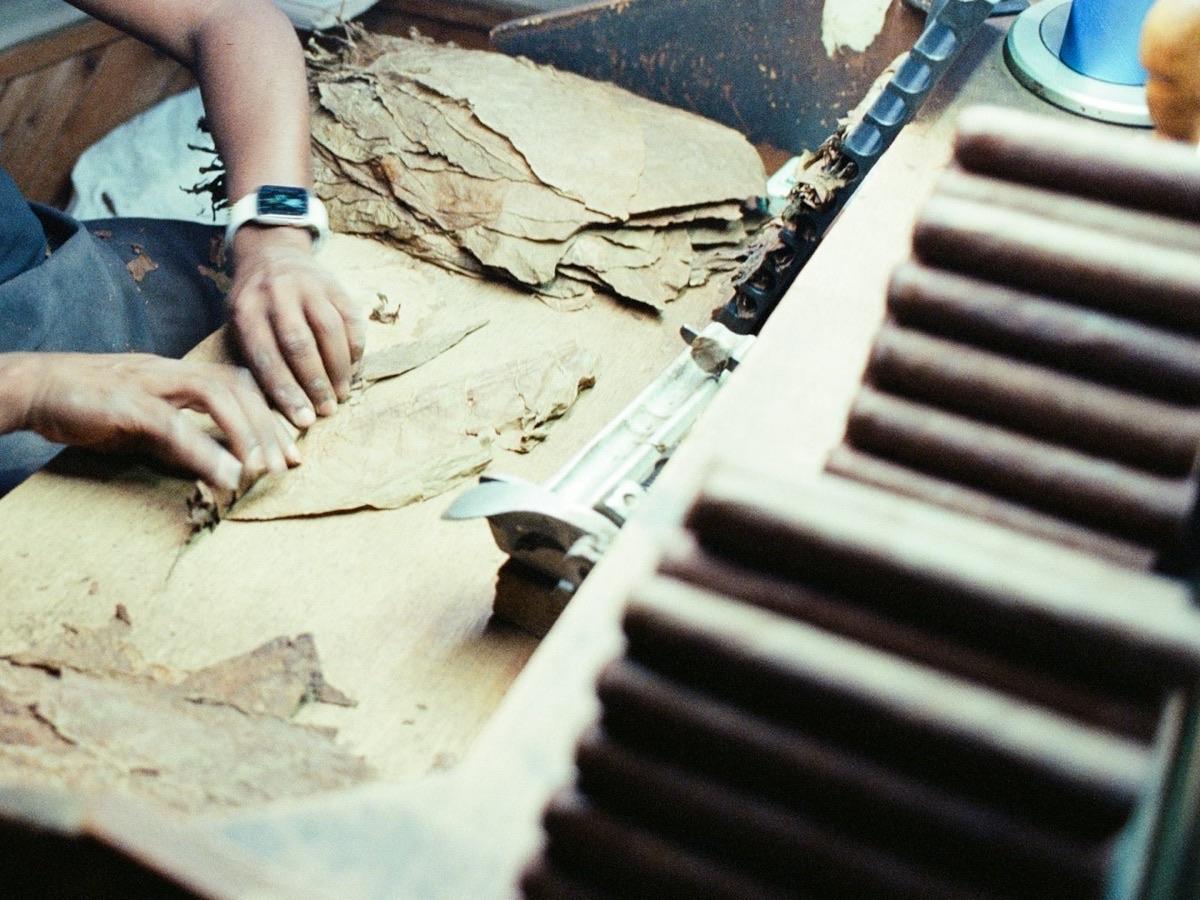
A binder is only as good as the hands that roll it. A sound, elastic leaf makes the work easier, but the draw and the burn of the finished cigar are decided at the moment the roller gathers the filler and rolls it into the binder. This lesson explains what makes a binder elastic, how binder is prepared and laid in Cuba and elsewhere, what happens to the bunch in the mould and the press, and what goes wrong when the binder or the rolling fails.
What makes a leaf elastic
An elastic binder stretches around the filler, holds it under even tension and does not tear when the bunch is pressed. Two things decide how elastic a leaf is: what is in the leaf, and how much water it holds.
Potash, the potassium the plant takes up from the soil, matters most in the leaf itself. Trials on Connecticut Havana Seed, a binder tobacco, published in 1932 found that leaf short of potash was harsh, dry, short and not elastic. Potash readily absorbs moisture, which lets the leaf take up water and become supple, and it also helps the leaf hold fire, which is why the same mineral matters for the burn and the ash, as Ash Formation, in the Cigar Anatomy topic, explains. Beyond that, a good binder is a thin, sound leaf with no holes, and its central vein is removed before it is used.
Moisture does the rest. A dry leaf is brittle and cracks, so binder, like all leaf, is moistened before it is worked, a step the trade calls casing, until it is supple. In Cuba, filler and binder leaves are taken from their bales and examined, aired or dried as needed, and kept in wooden containers for one to three days until they are judged ready for the rollers.
Laying the binder in Cuba
Torcedor means twister, but at the bunching stage twisting is the one thing a Cuban roller must not do. The torcedor lays out two, or sometimes three, half leaves of binder on the board, placed so that their veined undersides will face inward. The filler leaves are gathered and folded so that the smoke will have a straight path, and then rolled into the binder, starting at the foot, to the exact diameter the size requires. The compression of the filler must be the same at every point along the bunch: the binder is rolled around the filler, never twisted. Finally the head of the bunch is cut square with a guillotine.
In Cuba one torcedor makes each cigar from start to finish, binder and wrapper alike. Rollers are ranked in four grades, and only the top grade makes the largest and most complicated sizes, the figurados above all, where the roller has to shape the taper by hand and still keep the bunch evenly filled. A skilled torcedor makes between 60 and 150 cigars a day, depending on the size and the shape.
Bunching elsewhere
In Nicaragua, the Dominican Republic and Honduras the bunch is usually made by a buncher, the bonchero, who passes it to a roller, the rolero, for the wrapper. A bunch there usually takes a single half leaf of binder, and a few blends use two different binders. Bunchers fold the filler by one of three methods, book, accordion or entubado, which Three Ways of Preparing La Tripa, in the Fillers topic, compares. Whatever the method, the buncher's task is the same as the Cuban torcedor's: even compression along the whole bunch.
Many Dominican factories bunch with a Lieberman, a hand-operated device also called a Temsco. It takes its name from Bernard Liberman, a Philadelphia inventor who patented a series of cigar-bunching devices in the 1910s and 1920s. The buncher lays the binder and the filler on its apron and works the handle, which rolls them into a bunch. The device is used almost everywhere in the Dominican Republic, rarely in Central America and never in Cuba. It rolls the bunch evenly, but the buncher still chooses, folds and lays every leaf.
In the mould and the press
The bunch then goes into a mould, the molde, a block of wood or plastic with slots cut to one format, and into a press. Factories typically press bunches for 30 to 45 minutes, giving the mould a quarter turn at intervals; some leave the bunches in the mould for up to an hour and then press them for another half hour or more. In Cuba they spend at least 30 minutes in a wooden mould. This is where the binder's strength is tested. It must hold the filler under pressure without splitting, and a worn wooden mould can tear the binder when the bunches are turned or taken out.
Out of the press, the most careful factories test the draw of each bunch by suction before the wrapper goes on, so a badly rolled bunch is caught before any wrapper is spent on it. Every Cuban factory has done this since the end of 2001, and many factories in the Dominican Republic, Nicaragua and Honduras do the same.
When the binder or the rolling goes wrong
Many construction faults begin at this stage. Filler compressed too tightly inside the binder gives a tight draw, and a folded or twisted leaf can block the draw almost completely, a fault called a plug. Filler packed too loosely gives a soft cigar that draws too easily and burns hot and fast. Uneven compression leaves soft and hard spots, and the burn runs ahead where the cigar is soft. A binder that splits in rolling or in the mould leaves a weak place under the wrapper. Construction Defects, in the Cigar Anatomy topic, describes each fault and what a smoker can do about it, and Binder and Wrapper Application, in the Cigar Construction topic, follows the bunch to the wrapper.