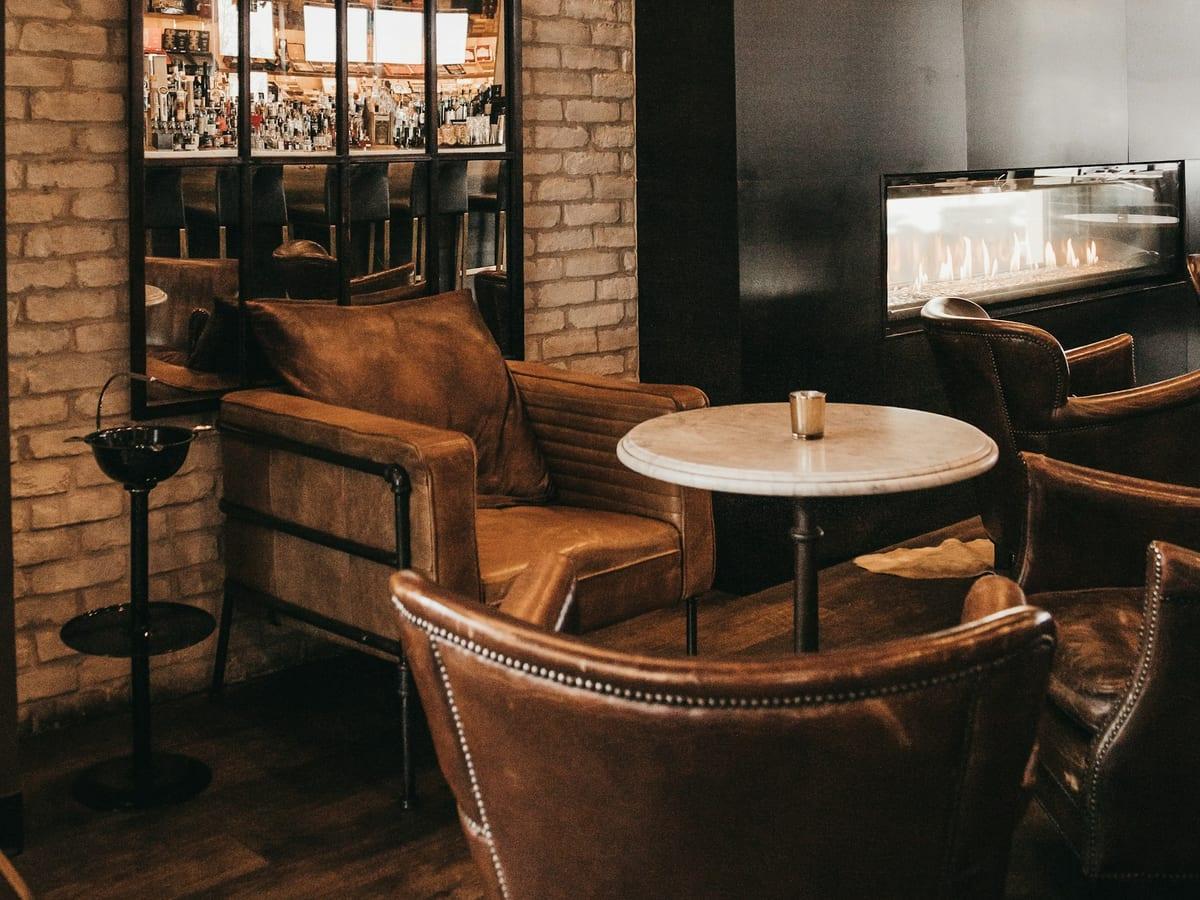
Cigars, food and drink have kept company for centuries, and the customs that grew up around them are about two things: not spoiling anyone's meal, and letting the cigar and what goes with it show at their best. The Pairing topic covers what to drink and eat with a cigar in depth. This lesson covers the manners.
After the Meal
In Victorian and Edwardian Britain, the ladies withdrew from the table after dinner, and the gentlemen stayed behind with port and cigars. American etiquette books of the 1920s likewise had cigars passed only after dinner, once the ladies had left the dining room. Those rules have gone, and men and women now smoke together, but the timing has stayed: at most tables, the cigar comes after the meal, with coffee, or with a digestif such as brandy, rum, port or whisky.
There are good reasons for it. Smoke drifts over other people's plates, and a cigar's aroma and a dish's flavors compete with each other. A cigar also takes an hour or more, which suits the end of a meal, when no one is in a hurry.
At the Table
Where smoking at the table is allowed, at home or on a restaurant terrace, ask your host and the people at the table before you light up, and wait until everyone has finished eating. Keep your smoke away from other people's food and drink, and keep the cigar in an ashtray, never on a plate, in a saucer or in a glass, and never left to smolder beside the food.
In some restaurants and hotels, cigars are served like wine. A cigar sommelier presents an open box or a cigar menu, the guest chooses, and the sommelier cuts and lights the cigar at the table, or hands over the cutter and a match if the guest prefers to do it. Cuba takes this service seriously: Habanos has held an international contest for cigar sommeliers since 2000.
Drinks
The aim is balance: a drink that neither drowns the cigar nor is drowned by it. A mild cigar suits lighter drinks, and a full one stands up to aged rum, whisky or port. The classic partners are aged spirits such as rum, whisky and brandy, fortified wines such as port and sherry, and coffee. Rum has been linked with cigars longest in the Caribbean, and in Cuba, the Dominican Republic and Nicaragua, all of which make it, a cigar with aged rum or strong coffee is a familiar pairing. Very sweet or heavily flavored drinks can overwhelm a delicate cigar. The Pairing topic goes into each in Spirits and Liquor Pairing with Cigars, Wine & Champagne Pairing with Cigars, Pairing Cigars with Beer and Craft Beverages and Pairing Cigars with Non-Alcoholic Beverages.
Sip as slowly as you smoke, alternating a sip with a puff, so that both can be tasted. Keep a glass of water at hand: it refreshes the palate, and it helps if the nicotine becomes too much. Drink in moderation. Alcohol dulls the palate, and the US National Cancer Institute warns that people who use both alcohol and tobacco face much greater risks of cancers of the mouth, throat, voice box and esophagus than people who use only one of them.
Food
Strongly flavored food, such as garlic, chili or heavy spice, lingers on the palate and can mask a cigar's flavors, so many smokers wait a while after such a meal, or rinse with water or coffee first. During a long smoke, mild accompaniments such as nuts, cheese, dark chocolate or fruit go well without competing. Pairing with Food covers matching food to a cigar.
Eating before a cigar also matters for comfort. Nicotine on an empty stomach makes nicotine sickness more likely, which is one more reason to smoke after a meal rather than instead of one.
Hosting a Cigar Evening
A host who offers cigars after dinner does well to prepare: a choice of cigars from mild to full, a cutter and an odorless lighter or matches, enough ashtrays that every smoker has a rest, water on the table and, if possible, a terrace or a well-aired room away from the guests who don't smoke. Let non-smoking guests know in advance, so that no one is surprised, and offer the cigars at a moment when those who don't smoke can comfortably move elsewhere or stay.