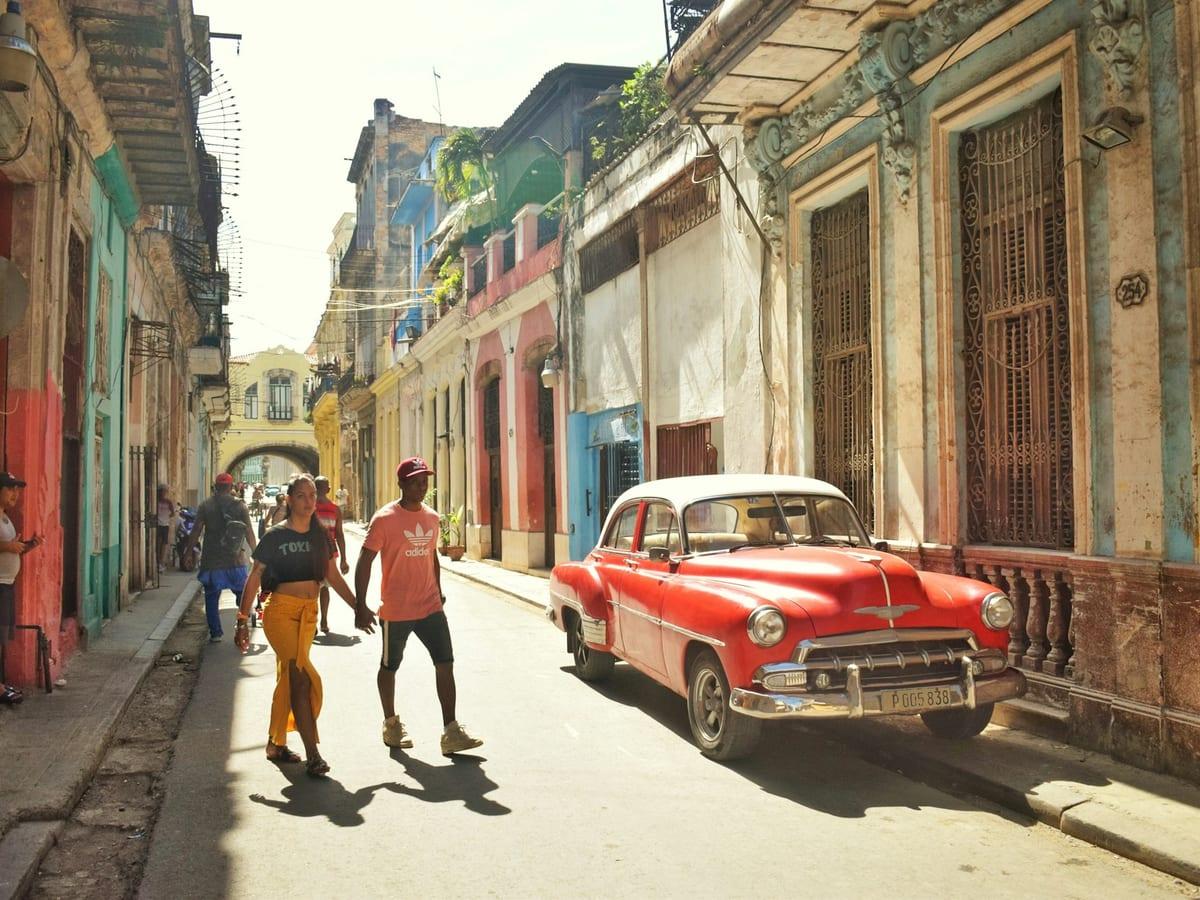
The weight the word "Cuban" carries in a market where the best Dominican and Nicaraguan cigars score as well as or better than Cuban ones in blind tastings is worth explaining. This lesson looks at where the two reputations come from and how they live side by side today. It is about perception rather than law or leaf, so it leans on the stories the two halves of the trade tell about themselves: Cuba's history and scarcity, and the other countries' rise through the people who rebuilt the industry after 1959. Quality Differences takes up what is actually true about quality, and Cigar History tells the history this prestige grew out of.
Cuba's reputation
The Cuban cigar's standing was earned before the embargo, in the 19th century, when Havana's family factories turned the island's leaf and handwork into the world's standard. Brands founded then and after — H. Upmann in 1844, Partagás in 1845, Romeo y Julieta in 1875, Montecristo in 1935 — became the names collectors keep, and the leaf that filled them came first of all from the Vuelta Abajo, the region of Pinar del Río that Tobacco Regions describes. Cuba later added its own flagship. Cohiba, begun in 1966 at the El Laguito factory and reserved at first for the country's leaders, went on public sale in 1982 and became the global icon of the Cuban cigar, and the diplomatic Trinidad, made at the same factory from 1969, gave the state a second private reserve. Cigar History tells both stories, and Major Cigar Brands profiles the houses.
What scarcity did
The American embargo added a layer no advertising could have bought. By cutting the largest market off from Havana, it made the Cuban cigar scarce and therefore desirable, and gave it the standing of a thing a smoker is not allowed to have. That "forbidden" quality, more than any marketing, deepened the aura the leaf and the rolling tradition had already built, and Habanos S.A. has been careful to tend it. The company turns its new releases into events at the Festival del Habano, held in Havana each year since 1999, and issues limited editions whose stated scarcity — the Edición Limitada and regional releases Cigar Terminology describes — keeps the sense that a Cuban cigar is a thing to be collected rather than merely bought.
The other side of the reputation
The non-Cuban premium cigar built its name on what it does rather than on where it comes from. The makers who left Cuba after 1959 rebuilt the industry in the Dominican Republic, Nicaragua and Honduras, working beside firms that were already there, such as La Aurora, the Dominican Republic's oldest factory, dated to 1903. Padrón, whose Cuban-born founder José Orlando Padrón moved his factory to Estelí in 1970, and Arturo Fuente, a Cuban-led brand that moved its production to Santiago in 1980, became famous for what they could smoke, not for what they could claim. Padrón's 1964 Anniversary Series, released in 1994, and Arturo Fuente's Fuente Fuente OpusX, the first widely sold premium cigar made entirely of Dominican leaf in 1995, gave the new countries flagships of their own, and Cigar History follows that migration. Where the Cuban cigar's story is scarcity and tradition, the non-Cuban story is a family's work and a measurable record.
Prestige now
The two reputations have converged. The trade's best-known blind tastings have run since 1992, and the Cigar of the Year, named since 2004, has gone repeatedly to cigars from Honduras, Nicaragua and the Dominican Republic, a record the trade reads as proof that the non-Cuban makers now stand at the top alongside Cuba's. The Cuban cigar keeps its mystique — the word that best fits a prestige built on history and prohibition — and the non-Cuban cigar keeps its record of performance and variety. The smoker's crowd therefore divides not into right and wrong but into two tastes: one that buys a Cuban cigar for what it represents, and one that buys a Dominican or Nicaraguan cigar for what it smokes. Both are prestige; they are simply different currencies.