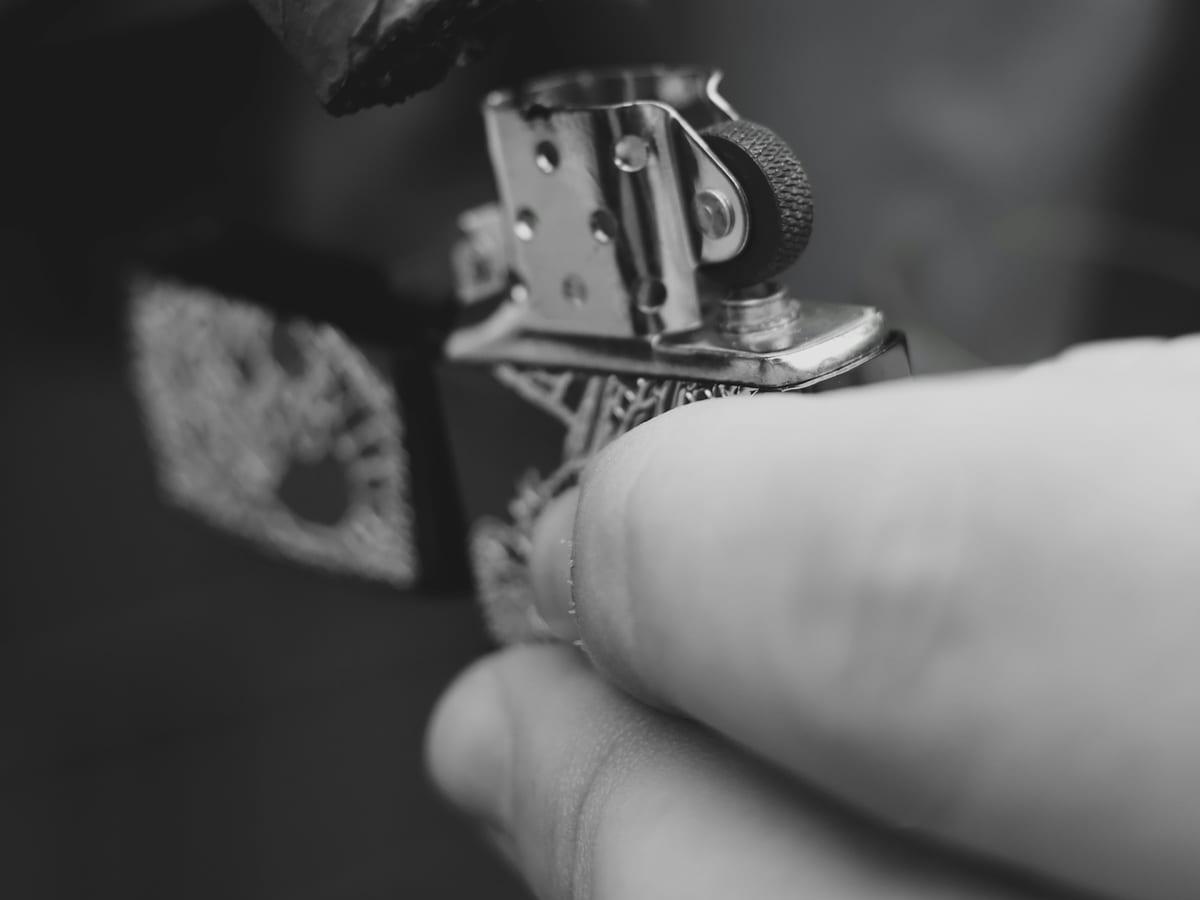
A cigar lighter is a small fuel system: a tank that holds the fuel, a valve that lets it out, a burner that mixes it with air and an igniter that sets it alight. Almost every cigar lighter made today burns butane, and how well a lighter works, and whether it adds anything to the taste of a cigar, depends more on its fuel and on how it is filled than on its looks. This lesson explains how the system works, how to refill and look after it, and how to carry it safely.
Butane
Butane is a gas at room temperature, but under modest pressure it turns to liquid, which is how a small tank holds enough fuel for many lights. When the valve opens, liquid at the bottom of the tank boils off into gas, and the gas flows to the burner. The butane sold for lighters is refined, and refined butane burns cleanly and without smell. Lighter makers warn that lower grades can clog the fine passages of the burner and damage the lighter, and a torch, with its tiny nozzle, is the most sensitive to dirty fuel.
Butane boils at about 0 °C (32 °F). Below that temperature the liquid in the tank barely turns to gas, and even a little above it the flame is short and weak. That is why a lighter left in a cold car, or carried in an outer pocket on a winter evening, may only sputter, and why warming it in your hand or an inside pocket for a minute brings it back.
Two Kinds of Burner
The burner is what separates a soft-flame lighter from a torch. In a soft-flame lighter, the gas leaves the valve and meets the air only as it burns, giving the yellow, flickering flame of a match or candle. In a torch, the gas is forced through a tiny nozzle into a chamber with air holes; the jet draws air in and mixes with it before it ignites, and the mixture burns fast and completely in the hot, blue, hissing flame that Matches vs Torch vs Soft Flame describes. Because a torch depends on the air it draws in, it can falter at high altitude, where the air is thinner, and some makers state the altitude up to which their torches work.
Ignition
Three kinds of igniter are in common use. A flint wheel, turned by the thumb, strikes sparks from a small rod of ferrocerium, an alloy of iron and cerium usually just called the flint, which wears down and should be replaced before it is used up. A piezoelectric igniter, the click of most modern lighters, uses a spring-loaded hammer to strike a small crystal that produces a high-voltage spark, and needs neither flint nor battery. An electronic igniter makes its spark from a battery. None of them affects the taste of a cigar. What matters is that the lighter catches at the first try, so that you are not tempted to hold the cigar to a half-lit flame. One safety point is worth knowing: some flint lighters with a lid keep burning until the lid is closed.
Petrol Lighters
The other common lighter fuel is lighter fluid, a light petroleum spirit known as naphtha, used in the classic windproof wick lighter. The fluid soaks into cotton wadding inside the case and rises up a wick, where it burns with a yellow flame that smells of its fuel, and the smell reaches the cigar. For that reason cigar guides advise against petrol lighters. Some lighters of this kind accept a butane insert in place of their fluid insert, which turns them into butane lighters.
Refilling a Butane Lighter
Most lighter faults come from the fuel rather than the mechanism, and many of them from refilling. Each fill lets a little air into the tank, and air left there takes up room meant for fuel and upsets the flow. Lighter makers give much the same steps:
- Work in a well-ventilated place, away from any flame, heat or spark, and don't smoke while you refill.
- Turn the flame adjuster to its lowest setting.
- Bleed the tank: hold the lighter upside down and press the filling valve with a small screwdriver or the tip of a pen until the hissing stops. This lets out the air and the last of the old fuel.
- Still holding the lighter upside down, push the nozzle of the butane can straight down onto the valve and press firmly for four or five seconds.
- Press the valve briefly again. If liquid comes out, the tank is full.
- Wait at least two minutes, so that the lighter returns to room temperature and any spilled fuel evaporates.
- Turn the adjuster back up a little, light the lighter and set the flame height.
If the lighter hisses after filling, don't try to light it, since it may be leaking.
When a Lighter Misbehaves
Most faults have simple causes, and the table pairs the usual ones with their cures.
| Symptom | Usual cause | What to do |
|---|---|---|
| Sparks but no flame | An empty tank, or air in it | Bleed the tank and refill it |
| A flame that flickers in normal use | Fuel running low | Refill |
| A short, weak flame in the cold | Butane too cold to turn to gas | Warm the lighter in your hand or an inside pocket |
| A torch that sputters or burns unevenly | Dust, tobacco or residue in the burner | Clean it with a few short bursts of compressed air, and use refined butane |
| Hissing after refilling | A leak or a faulty valve | Don't light it; have it serviced |
| A flame too tall or too short | The adjuster setting | Turn the flame adjuster |
Butane Safety
The safety data sheets for lighter refills carry the same warnings. Butane is extremely flammable, and its vapor can travel some distance to a flame and flash back, which is why lighters are refilled away from any flame and never next to a lit cigar. Liquid butane escaping from a can or a valve is cold enough to cause frostbite on the skin or in the eyes. A can may burst if it is heated, so it belongs away from heaters, stoves and strong sun, and in a confined space butane vapor can displace the air you breathe.
Flying With a Lighter
Air travel has its own rules, and they are strictest for exactly the lighters cigar smokers like best. The international rules for dangerous goods that most airlines follow ban "blue flame" or "cigar" lighters, meaning torches, from a passenger's person and from both carry-on and checked baggage. In the United States, a passenger may carry one ordinary butane or wick lighter in a pocket or carry-on bag, but not in checked baggage. Torch lighters are banned from both, with one exception: up to two lighters, torches included, may go in checked baggage on domestic flights inside special airtight travel cases approved by the US Department of Transportation. Butane refills and lighter fluid are not allowed in any baggage. Rules differ between countries and airlines, so check them before you fly.