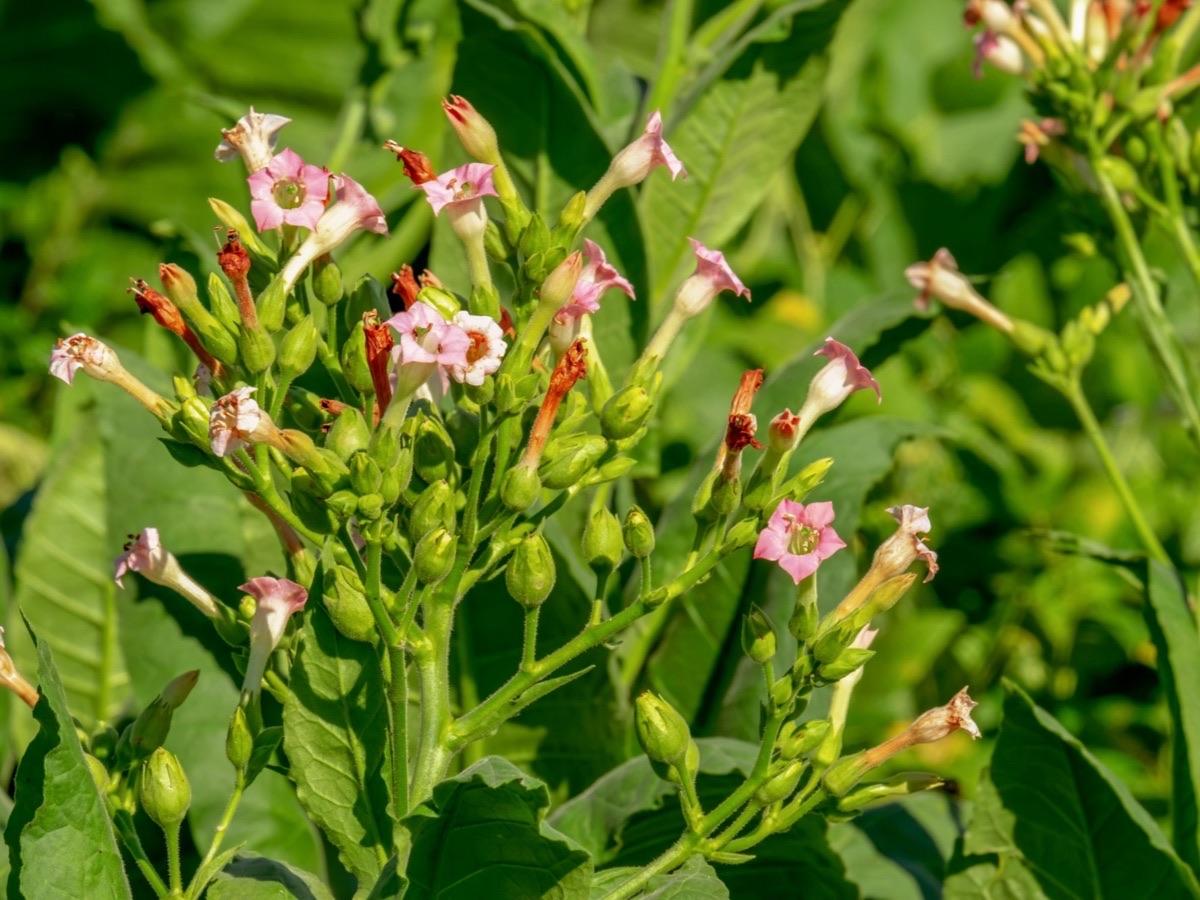
No two tobacco plants are exactly alike, and for centuries growers have saved seed from the plants they liked best. That patient selection, and since the early 20th century deliberate breeding, has given cigar tobacco its varieties. This lesson explains what a variety is, follows the main families from Cuba to the Dominican Republic, Central America, Ecuador, the United States and beyond, and looks at who supplies the seed today and how growers choose it. Seed Genetics and Hybridization explains how new varieties are bred, Seed Preservation how seed is grown and kept, and Wrappers: Seed and Variety, in the Wrappers topic, follows the wrapper varieties in more detail.
What a variety is
A variety is a group of plants that share a recognizable leaf and habit of growth and pass them on through their seed. Varieties differ in height, in the number, size and shape of their leaves and how those leaves sit on the stalk, in how early they flower and ripen, and in how they stand up to disease. In 1934 Connecticut's agricultural experiment station described the three varieties then grown in the state in just those terms. Broadleaf had long, wide leaves that drooped from the stalk; Havana Seed had smaller, smoother leaves that stood upright; and the shade tobacco grown for wrapper was taller than either, with smaller leaves set farther apart on the stalk.
Many varieties began as a grower's selection. Broadleaf came to Connecticut when B. P. Barbour of East Windsor brought seed from Maryland and began growing it in 1833; within a few years it had replaced the narrow-leaved tobacco grown before, and farmers later selected local strains from it, such as John Williams, Bantle, Frank Roberts and Hockanum. Havana Seed grew from seed brought from Cuba sometime between 1870 and 1880. Generations of selection in New England changed it so much that by 1934 the station could say that no district in Cuba grew tobacco like it.
Seed and place work together. The variety sets what a leaf can become, and soil, climate, the way the plant is grown and the way the leaf is cured and fermented decide what it does become. When Florida growers planted large quantities of seed imported from Cuba in the 1890s, the crop broke up into many different types, most of them poor, and the U.S. researchers who studied it blamed the growers for not first selecting seed from the plants that suited the new conditions, the work Seed Preservation describes. That is also why a seed name on a cigar band, such as Habano or Connecticut, names a family of plants rather than a place or a taste.
Cuba's black tobaccos
Cuban cigar tobacco is tabaco negro, dark tobacco that is air-cured and fermented, and two traditional varieties shaped it. Criollo, the native tobacco, is grown in full sun for filler and binder. Eumelio Espino, who led variety development at Cuba's Tobacco Research Institute (Instituto de Investigaciones del Tabaco) from 2000 to 2012, traces it to a strain that an American botanist, Heinrich Hasselbring, isolated from the farmers' tabaco criollo in 1907 and that the Cuban agronomist Juan Tomás Roig later selected again; by 1937 it grew on the best farms of the Vuelta Abajo. Corojo, bred for wrapper on the El Corojo farm near San Luis and introduced in the 1930s or in 1948, as sources differ, was the only wrapper on Cuban cigars until 1994.
Both were defenseless against blue mold, which destroyed more than 95 percent of Cuba's 1979–80 crop. The institute, based at San Antonio de los Baños, and its experiment station at San Juan y Martínez, founded in 1937, set out to breed replacements that kept the old leaf's character. By Espino's account the work began with 17 varieties, 2,500 plants of each, from which about 200 lines were chosen and compared with the original Criollo and Corojo; it took 14 years, and by the 1995 harvest nearly every farm in Pinar del Río had changed to the new seed. Cuban breeders say they used only crossing and selection, no genetic engineering.
The table compares the main varieties the institute describes, by their parents, how they are grown and the diseases they resist.
| Variety | Parents | How it is grown | Resists |
|---|---|---|---|
| Habana 92 | Corojo and R x T, a Polish tobacco | In the sun, primed or harvested with a piece of stalk | Blue mold, black shank, environmental necrosis |
| Habana 2000 | Corojo and Bell 61-10, a mild Cuban cigarette tobacco, crossed back to Corojo | Under cloth; in the sun, primed | Black shank, blue mold |
| Criollo 98 | Habana 92 and Habana P.R. | Under cloth; in the sun, primed or stalk-cut | Blue mold, black shank, mosaic virus |
| Corojo 99 | Habana 92 and Habana P.R., a sister of Criollo 98 | Under cloth; in the sun, primed | Blue mold, black shank, mosaic virus, environmental necrosis |
| Habana Vuelta Arriba | Corojo and GA-955, an Australian tobacco | In the sun, primed or stalk-cut | Blue mold, black shank, mosaic virus |
| Sancti Spíritus 96 | Pelo de Oro, an old Cuban variety, and R x T | In the sun, stalk-cut | Blue mold, black shank, environmental necrosis |
| Corojo 2012 | Criollo 98, Habana 2000, Corojo 99 and a line called L 17, crossed in 2001–02 | For wrapper and filler | Blue mold, black shank, mosaic virus, environmental necrosis, Alternaria leaf spot |
Read down the second column and every variety goes back to Corojo or to old Cuban tobacco, crossed with other tobaccos for their resistance: a Polish one, R x T, which gave Habana 92 and Sancti Spíritus 96 their resistance to blue mold, an Australian one and a Cuban cigarette type. Environmental necrosis is the leaf spotting caused by ozone that Pest and Disease Control, in the Tobacco Farming topic, describes. The newer varieties also carry more leaves. Habana 2000, Criollo 98 and Corojo 99 give 14 to 16 leaves a plant, Sancti Spíritus 96 gives 12 to 14, and Corojo 2012 grows 24 leaves, 20 of them usable, two more than Criollo 98, with a potential yield of 2,350 kilograms a hectare where earlier commercial varieties gave at most about 2,200. Cuba has gone on breeding. Corojo 2006 came from the same program at San Juan y Martínez, and in 2011 Cuba announced that it would extend it across its tobacco farms; Criollo 2010 followed; and a variety named Connecticut 2018 was grown under cloth in trials at San Juan y Martínez from 2017 to 2020.
The Dominican Republic
The Dominican Republic grows a wider mix. Its tobacco institute, Intabaco, counted five types and 21 varieties in 2025. Olor Dominicano, the native tobacco, is used for milder cigars and comes in local strains such as Quin Díaz, Chago Díaz, Papayo, Amarillo Parado, Olor San Víctor, Tumba Rancho and Carbonell. The Havanensis tobaccos, of Cuban type, include Piloto, San Vicente and Intabaco T-13. Then come varieties brought in from abroad, among them Criollo 98, Corojo, Habana Vuelta Arriba and Negrito San Andrés, local criollo tobaccos, and tobaccos grown for wrapper.
Piloto Cubano came to the country in 1962 from the Piloto area of the Vuelta Abajo and is grown for strength. San Vicente, a hybrid grown in the Dominican Republic, yields more leaves a plant than Piloto, though purists say it lacks Piloto's flavor. Intabaco released its own variety, Intabaco T-13, in 2026, bred to resist blue mold and black shank. Makers breed too: Hendrik Kelner, who blended Davidoff's cigars, and the growers A.S.P. created a hybrid called P151 for the Davidoff Millennium.
Nicaragua, Honduras and Ecuador
Cuban seed travelled with the growers who left Cuba and, as seed is easy to carry, by many other routes. Nestor Plasencia planted the first crop of Habana 2000 in Nicaragua in 1996; before it, he said, blue mold could cost him whole crops, and afterwards his losses fell to about 1 percent. Criollo 98 and Corojo 99 are now widely grown in Nicaragua and Honduras. A.J. Fernández grows mainly Criollo 98 for filler and binder on his San Ramón farm, and Aganorsa grows Corojo 99 and lately Corojo 2012 for wrapper in Jalapa. Names change on the way: Nicaraguan studies speak of Habano 98, Habano 2000 and Habano Criollo 751, and one Jalapa grower worked in 2018 with a Habano Mejorado 98 that carries more than 14 leaves, is ready 90 to 100 days after planting and cures evenly, though it is susceptible to blue mold.
In Honduras, Julio Eiroa brought Corojo seed to the Jamastrán valley, in the late 1980s by his son Christian's account (other family accounts say 1997). His son Christian explained in 2003 that the family did not create hybrids but developed its seed by selection: "we allow the seed to evolve by herself." Ecuador's tobacco grows in the lowland provinces of Los Ríos and Guayas. Its two traditional varieties were Connecticut seed and Sumatra seed, and Cuban-seed Habano 2000 and Corojo 99 have joined them. A.S.P., one of the country's largest growers, has run its own hybrid trials there.
The United States and the other origins
The Connecticut River Valley grows three classic types. Broadleaf and Havana Seed are sun-grown, and in 1934 both went mostly into binders; the shade tobacco, grown under cloth, goes into wrapper. Connecticut's shade growers began in 1900 with Sumatra seed and soon tried Cuban seed, and Wrappers: Seed and Variety tells how the valley's shade variety took shape. Broadleaf has spread to Pennsylvania, Kentucky and Tennessee. In Kentucky and Tennessee there is little choice of variety: the dealer who contracts the crop supplies the seed of one standard variety, in 2020 a selection of one called "33", which resists only mosaic virus. No Connecticut Broadleaf variety resists black shank.
Elsewhere, old local varieties and Sumatra seed dominate. Sumatra seed from the Deli region of Indonesia lies behind Cameroon wrapper and is still grown in Ecuador, Indonesia and Mexico. Mexico's San Andrés valley grows its dark San Andrés Negro, and the Turrent family there also grows Sumatra-seed tobacco and Habano 2000. Brazil grows Mata Fina, Mata Norte and Arapiraca. Wrappers: Seed and Variety describes each of these leaves.
The main varieties at a glance
The table brings the main cigar countries together by their regions, their main varieties and what the leaf is mostly used for.
| Country | Main regions | Main varieties | Used mostly for |
|---|---|---|---|
| Cuba | Pinar del Río, with the Vuelta Abajo; central and eastern provinces | Criollo- and Corojo-type varieties such as Criollo 98, Corojo 99, Habana 2000, Corojo 2006 and Corojo 2012 | Wrapper, binder and filler |
| Dominican Republic | The Cibao Valley | Olor Dominicano, Piloto Cubano, San Vicente, Intabaco T-13, Criollo 98 | Filler and binder |
| Nicaragua | Estelí, Condega, Jalapa | Criollo 98, Corojo 99, Habano 2000, Corojo 2012 | Filler, binder and wrapper |
| Honduras | The Jamastrán valley | Corojo and other Cuban-seed tobacco | Filler and wrapper |
| Ecuador | Los Ríos and Guayas | Connecticut seed, Sumatra seed, Habano 2000, Corojo 99 | Wrapper |
| United States | The Connecticut River Valley; Pennsylvania, Kentucky, Tennessee | Connecticut Shade, Broadleaf, Havana Seed, Pennsylvania Seedleaf | Wrapper and binder |
| Mexico | The San Andrés valley | San Andrés Negro, Sumatra seed, Habano 2000 | Wrapper, binder and filler |
| Brazil | Bahia and Alagoas | Mata Fina, Mata Norte, Arapiraca | Wrapper, binder and filler |
| Indonesia and Central Africa | Sumatra and Java; Cameroon and the Central African Republic | Sumatra and Besuki leaf; Cameroon, from Sumatra seed | Wrapper |
Read across the rows and Cuban seed, often under the name Habano, turns up in most of them; even Connecticut's Havana Seed descends from it. Only Cuba grows nothing but its own varieties; the Dominican Republic, the United States, Mexico and Brazil keep native or long-adapted varieties alongside the Cuban ones.
Where the seed comes from
How a grower gets seed depends on the country. In Cuba the Tobacco Research Institute produces the original seed for the national seed program, and every farmer plants seed from that system. The municipality of San Juan y Martínez supplies about 80 percent of the country's tobacco seed, and for the 2026–27 season it set aside 31.5 hectares to grow it. In Kentucky and Tennessee the leaf dealer supplies the seed with the contract. In Nicaragua, Honduras and Ecuador the large growers keep their own seed, often as a trade secret: Jorge Padrón would say only that his family's seed was proprietary, and A.S.P. grows its hybrids from plants that make no pollen, so that no one can reproduce them from a stolen flower. Seed Preservation explains how seed is grown and kept.
Choosing a variety
Growers weigh several things when they choose a seed. The first is the use of the leaf: Cuba recommends Habana 92 only for growing in the sun, Habana 2000 and Corojo 99 for cloth or sun, and Sancti Spíritus 96 for sol en palo, the stalk-cut sun tobacco of central and eastern Cuba. The second is disease. Since the 1990s Cuban farmers have planted resistant varieties, and in Kentucky and Tennessee Connecticut Broadleaf can be grown only on land with no history of black shank, because no variety of it resists the disease. The third is yield, which comes mostly from the number of usable leaves: San Vicente is planted for its extra leaves and Corojo 2012 for its two more than Criollo 98. Last comes taste and burn, which only the cured leaf shows. Some growers found that Habana 2000 gave a handsome leaf that did not burn well, as Combustion, in the Fillers topic, recounts, and Dominican purists still prefer Piloto to San Vicente.