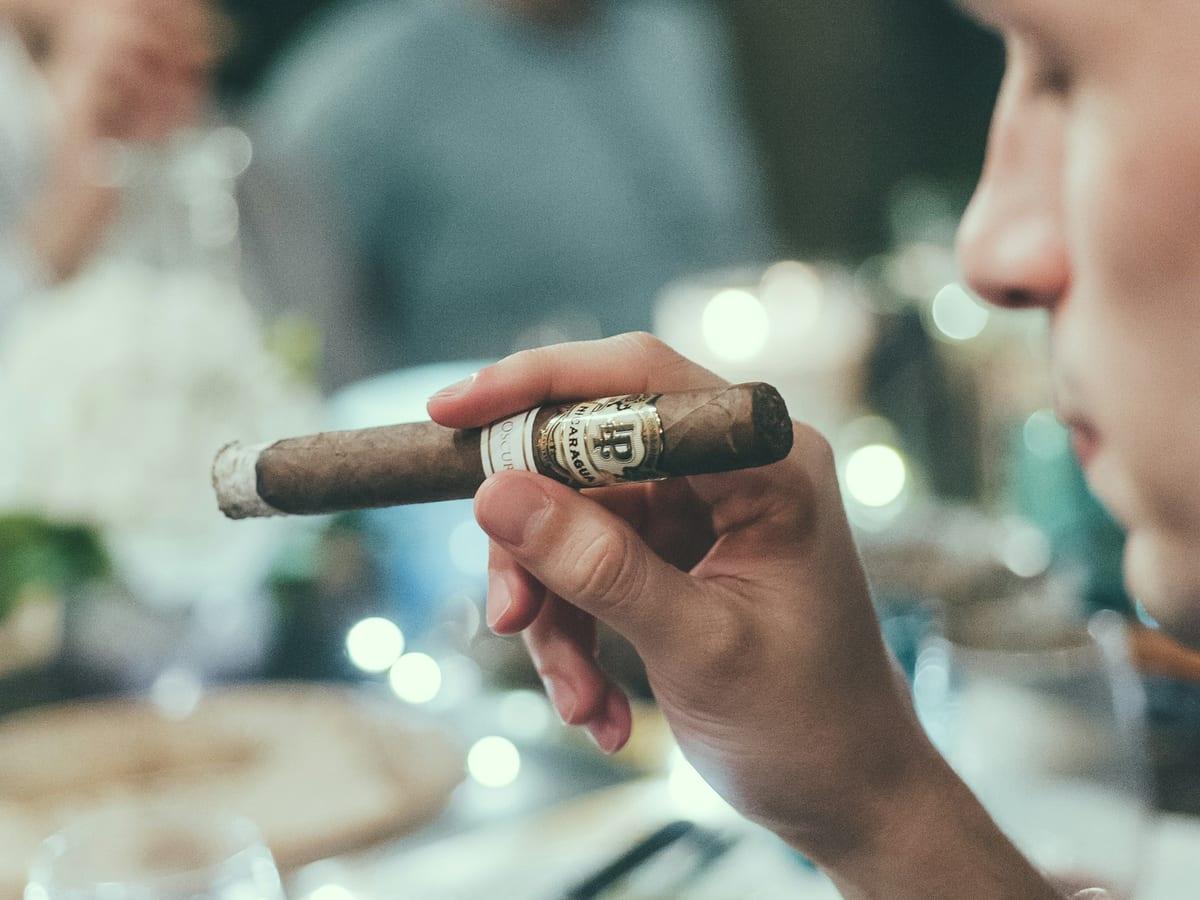
Cut the same leaf anywhere along a premium cigar and it is the same leaf, yet the cigar does not taste the same at the end as at the start. That is the first thing to understand about flavor development: the blend is constant from foot to head, and the change is what the heat does to it. A cigar is its own filter and its own oven. This lesson follows the curve from lighting to the last third, then looks at the three things that set its shape, the wrapper, the filler and the blend of origins, and at what fermentation and age do to it. How to Taste and Describe gives the method for following the same curve, and Strength: Nicotine and Ligero explains why the strength rises alongside the flavor.
Why the profile moves
A cigar's flavor comes from compounds in its leaves, sugars, oils, acids and the aromatics that make the notes, and each of these leaves the leaf at its own temperature as the heat approaches. Because a cigar is drawn through the unburned tobacco between the ember and the mouth, every puff passes over a column of leaf that is warm but not yet burning, and that warm leaf steams off its lightest compounds first. As the fire moves down, the smoke has a shorter, warmer column to travel through, and it reaches the mouth hotter and carrying more of the heavier compounds. The result is the curve every smoker knows: a gentle, wrappered start, a settled middle, and a hot, full finish. None of this depends on the blend changing, as Fillers explains; it happens in every cigar.
The first third
The first third is led by the wrapper and by the lightest compounds of the filler, because the smoke crosses the whole cold length of the cigar and arrives cool and filtered. The notes are the brighter, sharper ones, cedar, hay, cream, light pepper and a slight sweetness. The last few inches before the head, including the wrapper that touches the lips, have more say here than at any other point, which is why a wrapper's character, a Connecticut's cream or an Habano's pepper, shows most on the first puffs. A cigar whose fermentation was rushed shows it here first, as a rough, ammonia or metallic edge, before the blend has had time to settle.
The second third
By the second third the burn has steadied and the whole blend speaks. The filler's oils grow more active, and the middle notes come forward, cocoa, coffee, nuts, leather, earth, the baking spices and the leaf's own sugar. This is where the cigar is usually most balanced and most itself, and where a retrohale pays off, because the floral and dried-fruit notes that sit only on the nose are at their clearest. A well-made, well-fermented cigar moves through this stage without a sharp break, the notes building and receding rather than jumping.
The final third
The final third is the hottest and the fullest. The column of unburned tobacco is short and already warmed and loaded with oil by every puff before it, so the smoke arrives concentrated, and the heaviest compounds come forward, dark chocolate, espresso, charred wood, black pepper, earth and the tang of aged leaf. The cigar is at its strongest here as well as its fullest, as How Strength Builds During the Smoke explains. In a good cigar the finish grows richer without turning bitter; overcooked by fast puffing, or dried out, it turns harsh and tarry instead, and that is the line between a cigar that rewards patience and one that has given its best.
Wrapper and filler
Two leaves shape the curve, and their shares differ. The wrapper is the first leaf you taste and the one that leads the first third, and its oils and sugars color the whole smoke, as Wrapper's Influence on Body shows. The filler, which is most of the tobacco, sets the middle and the end and carries most of the strength. In a slim cigar the wrapper's share is larger and its flavor more dominant, while in a thick one the filler leads and the smoke runs broader and cooler; the two are not interchangeable, and How Strength Builds During the Smoke sets out why a thin cigar can feel so different from a thick one of the same blend.
Origins and the blend
Where the leaves grew steers the curve as much as their place on the plant. Nicaragua shows the spread within one country: leaf from Estelí is prized for strength and earth, leaf from Condega is more medium, and leaf from Jalapa is subtle enough to grow wrapper. The Dominican Republic's Olor Dominicano gives the mild, creamy, nutty character of its classic cigars, while its Piloto Cubano adds strength, and Honduras grows Cuban-seed leaf such as Corojo that holds a peppery, full middle. A cigar that draws its leaf from more than one country puts these characters on a single curve, the wrapper's origin leading early and the filler's origins carrying the rest, which is the work Single-Origin vs Blended Filler describes. Cuba is the purest case: a Habano is made only of Cuban leaf, from the Vuelta Abajo above all, so its whole curve comes from one terroir.
Fermentation, aging and storage
The same leaves, taken young or aged, trace different curves. Fermentation drives out ammonia and sharpness, and aging goes on smoothing, so a young cigar tends to show sharp, separate thirds that jump from one to the next, while a well-aged one moves gradually and its notes knit together. The curve also answers to how the cigar is kept: too humid, and it burns cool and the flavor mutes, muddy instead of clear; too dry, and it burns hot and fast, exaggerating pepper and bitterness and losing its sweetness, as Construction Defects and Why Humidity Matters explain. Flavor development, then, is a report on more than the blend. Read the first third for the wrapper, the second for the blend, the final third for the leaf's depth, and the smoothness of the whole for the fermentation and the age behind it.