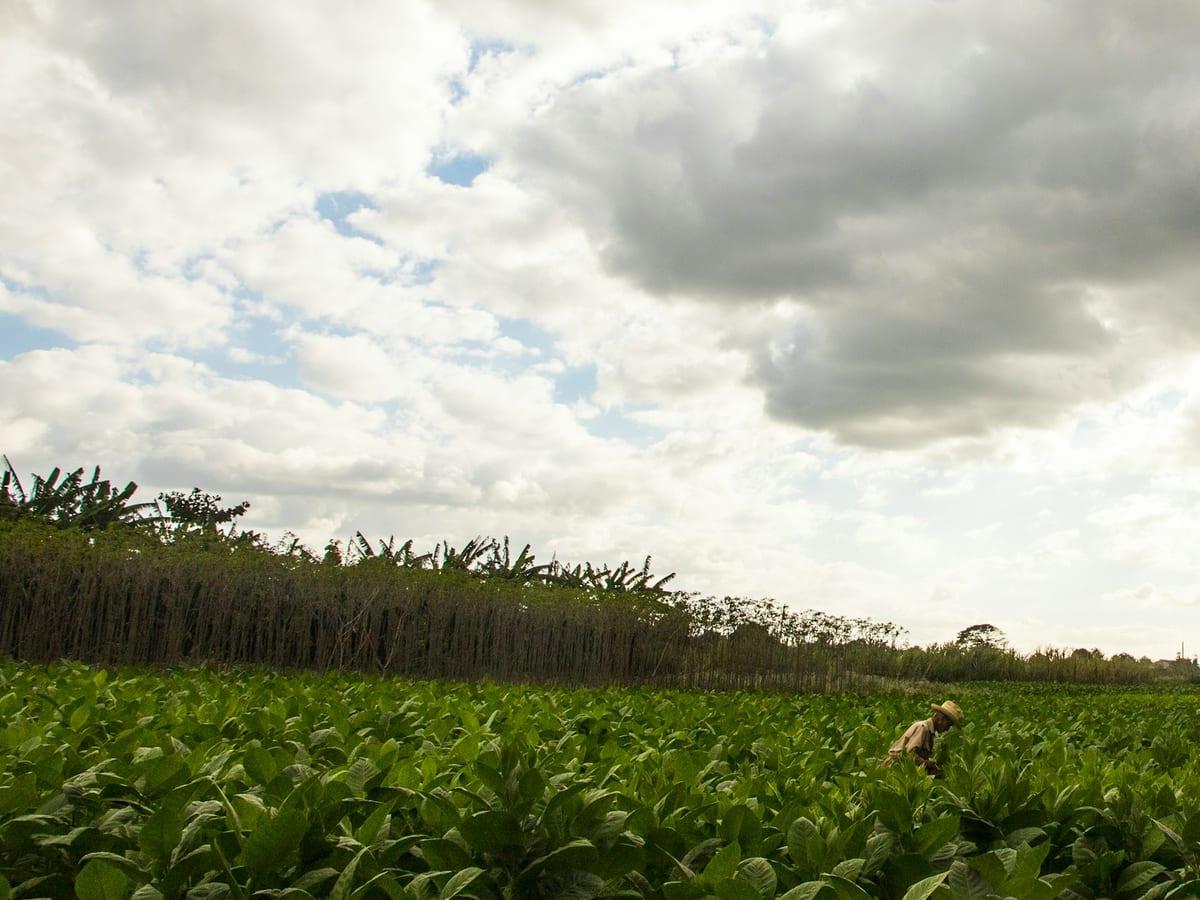
Mexico is easier to find in a blend than on a band. Its tobacco rarely appears alone; more often it is the dark, sweet wrapper or the earthy filler that another maker reaches for. But the leaf has a long and distinctive history, centered on one valley, and it has one family at its head. This lesson covers the pre-Columbian and colonial roots, the San Andrés valley and its Negro leaf, and the Turrents.
Before and under Spain
The Maya and the Aztecs smoked and used tobacco in ritual and medicine long before Europeans arrived, and Spanish rule folded Mexico into the same estanco monopoly that governed the rest of the empire, with tobacco grown inland in Veracruz to keep it clear of pirates on the coast. Veracruz has been the center of Mexican tobacco ever since. The modern valley took shape in the 19th century: from 1830, Cuban and German immigrants settled around San Andrés Tuxtla, in the Los Tuxtlas region, and found the volcanic soil suited to a fine wrapper leaf.
The San Andrés valley
The San Andrés valley, in the south of Veracruz beneath the San Martín volcano, grows Mexico's famous leaf. The region plants with the rains rather than against them: its San Andrés Negro goes into the ground from late June, when the heavy rains begin, and is harvested from early September. The valley's nearly black volcanic soil is so rich in potassium that its growers add no potassium fertilizer. The leaf itself, San Andrés Negro, is dark, thick and elastic, sweet and earthy, and it has become one of the standard wrappers for maduro cigars, the dark, fermented kind, alongside Connecticut Broadleaf. It is grown for wrapper, binder and filler alike, as the Wrappers topic describes.
The Turrents
The valley belongs, above all, to one family. The Turrents have grown and rolled tobacco in San Andrés for generations, and they grow more than half the valley's tobacco by their own estimate. The family's best-known brands include Te-Amo, made at Sihuapan and one of the best-known Mexican cigars for decades, and the newer A. Turrent and Casa Turrent lines, run today by Alejandro Turrent, who took the family business over from his father Alberto. They are of the same kind as the Plasencias of Nicaragua: growers first, makers second, who prune and ferment their own leaf and sell both wrapper to other companies and cigars under their own names.
Mexico's part in the cigar trade is broader than its valley. The Turrents also grow Sumatra-seed and Habano 2000 leaf, and Mexico is one of the largest markets for Cuban cigars, served since 1990 through Importadora y Exportadora de Puros y Tabacos, better known as IEPT, the importer founded with the first La Casa del Habano shop in Cancún by Max Gutmann, as Cigar Personalities recounts. But when a blender reaches for Mexican tobacco, it is the dark leaf of San Andrés that they usually mean.