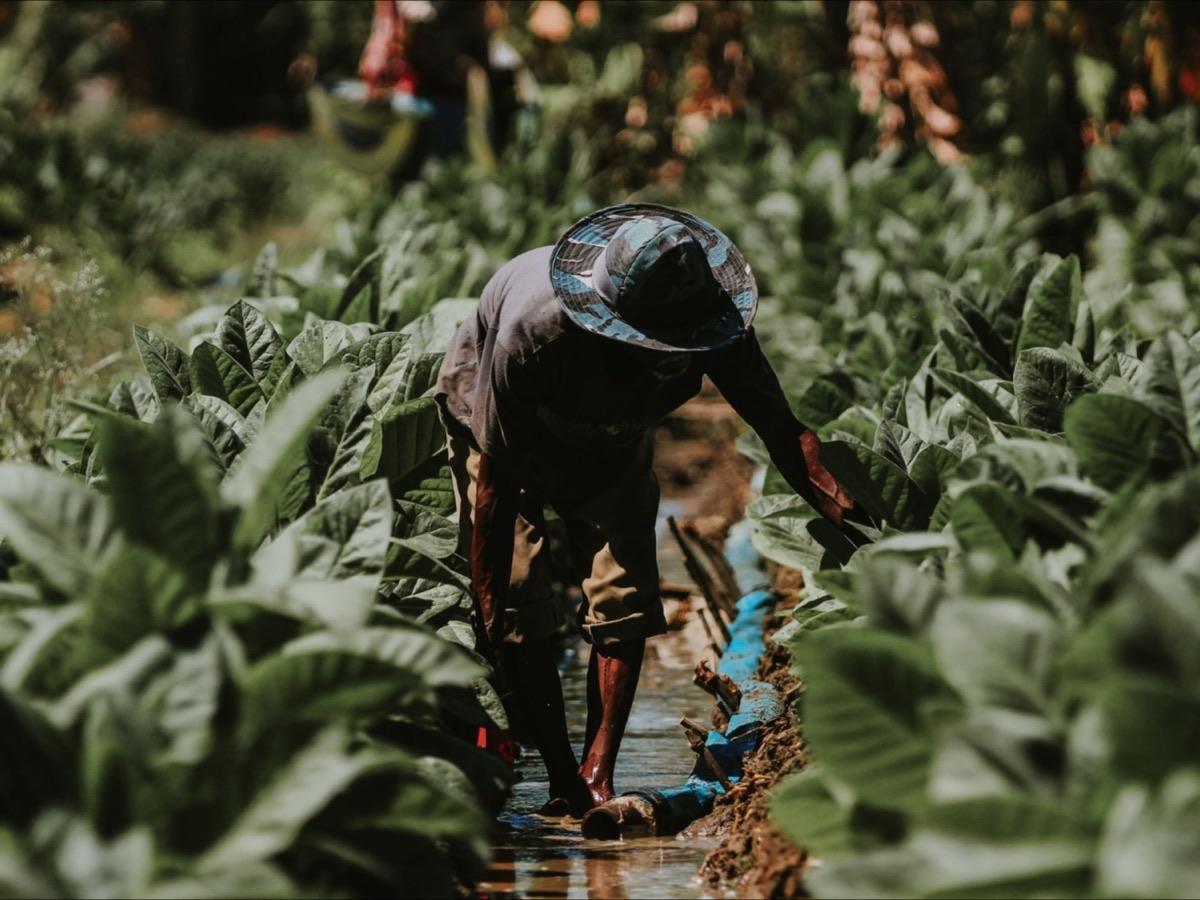
Most field crops have been mechanized from planting to harvest. Cigar tobacco has not. Machines do the heavy work of preparing the ground, and in some countries planting and spraying, but the work that decides the quality of the leaf is still done by people walking the rows. This lesson looks at which jobs are done by hand, by animals and by machines in Cuba, Central America, Connecticut and Cameroon, and at the people who do them.
A crop of hands
Habanos describes the work of the veguero, the Cuban tobacco farmer, on the finest farms: a veguero may have charge of half a million plants or more, and must visit each of them more than 150 times during the growing season. A Cuban agronomist summed it up in 2023: almost the whole process is done by hand, apart from some field work done by machine.
The reasons lie in the leaf. Most cigar tobacco is picked leaf by leaf over several weeks, each leaf when it is ripe, and a wrapper must be free of holes, bruises, spots and tears. Guidance for growing Connecticut Broadleaf wrapper stresses that extreme care during harvest and handling is very important to prevent any damage to the leaves. The work that decides the quality of the crop, topping, suckering, picking and carrying the leaves, is the work machines have not taken over.
Oxen and tractors
The soil is where machines and animals do their part. In Cuba, oxen still pull the traditional plow, the arado criollo, to open the furrows, and the cultivating of wrapper fields is generally done with animals. A 1999 account of Cuba's Vuelta Abajo described oxen plowing the fields and hauling the picked leaf to the curing barns. Tractors work alongside them where fuel allows: a study of a sun-grown farm in Granma, in eastern Cuba, describes a tractor plow and disc harrow alongside an ox-drawn plow and harrow, and in the fuel shortage of 2008 the Robaina family celebrated a delivery of diesel because they could finally do some work with the tractor.
Oxen are not only Cuban. Perdomo, in Nicaragua, plows its rows with oxen to aerate the soil. Elsewhere in Central America tractors do most of the heavy work: Nicaraguan farms in Jalapa and Condega break and harrow their fields with heavy machinery, although one trial in Condega still weeded with a hoe and a pass with oxen before the tractor. Connecticut's research farm grew its first tobacco crop without horses in 1929, and by the 1930s tractors pulled cultivators even inside the shade tents.
Planting
Transplanting is the one big job that machines often do. Cuban growers plant by hand, setting each seedling into a wet furrow, and Nicaraguan studies describe planting by hand as well. Connecticut mechanized early. In 1908 a horse-drawn transplanter, with three men and a team, could set three to four acres (1.2 to 1.6 hectares) of tobacco in a day, and by 1953 two- and three-row transplanters pulled by tractors were in use, each giving every plant about half a pint of water as it went into the ground.
Work in the growing field
Once the plants are in, the work is mostly by hand. Cuban suckering and topping are done entirely by hand, and topping well is a rare skill, as Topping and Suckering explains. Shade fields need work at height: in Cuba, stilt walkers called zanqueros stretch the wires and the cloth of the tapado, and hundreds of them work in the Vuelta Abajo; in Connecticut, workers tie each tall plant to the wires overhead. Spraying is the field job most often done by machine, with tractor-mounted booms on larger farms such as a Nicaraguan wrapper farm near Estelí, though sucker chemicals on wrapper are applied by hand down each stalk.
The harvest
The harvest is handwork everywhere. Connecticut's shade tobacco of the 1930s was picked by boys walking between the rows, while others dragged large canvas baskets behind them for the leaves; today the leaves go into bins on sleds pulled along the rows. A team of 250 workers could usually pick 50 acres in a day in 2006. Connecticut Broadleaf is cut by hand with hatchets and speared onto laths by hand. Stringing the leaves for the barn was the one harvest job to be mechanized: Connecticut's leaves were sewn onto laths by hand until stringing machines came into general use, by 1953. In Cameroon the harvest, like the rest of the work, is done by hand and almost entirely by women. Priming and Harvesting describes the work.
The people
The table compares how the main jobs are done in three kinds of farm.
| Job | Cuba | Nicaragua and Honduras | Connecticut |
|---|---|---|---|
| Preparing the soil | Oxen and tractors | Mostly tractors; Perdomo uses oxen | Tractors |
| Planting | By hand, into wet furrows | Mostly by hand | Tractor-drawn transplanters |
| Topping and suckering | By hand | By hand, sometimes with chemicals | Broadleaf by hand; shade is not topped |
| Harvest | By hand | By hand | By hand |
Read across the rows and the pattern is the same everywhere: the more a job affects the leaf, the more surely it is done by hand. The harvest is manual in every column.
That makes cigar tobacco a crop of many workers. Cuba's tobacco industry employs about 200,000 people, rising to 250,000 at the height of the harvest, and one wrapper grower in Pinar del Río paid about 95 workers on 13 hectares of tapado in 2023. In 2013 the Plasencia family employed some 6,000 people across Honduras and Nicaragua, and the Turrent family in Mexico employs 550 to 600 workers in growing and processing its tobacco. In Cameroon, one company worked with about 3,000 farmers in 1998, most of whom owned one or two acres, without irrigation or tractors. Connecticut's shade farms now depend on migrant workers from Latin America and the Caribbean; in 2026 one farm's seasonal job offer paid $16.94 an hour, against just over $3 an hour for farm workers in Ecuador in 2019.