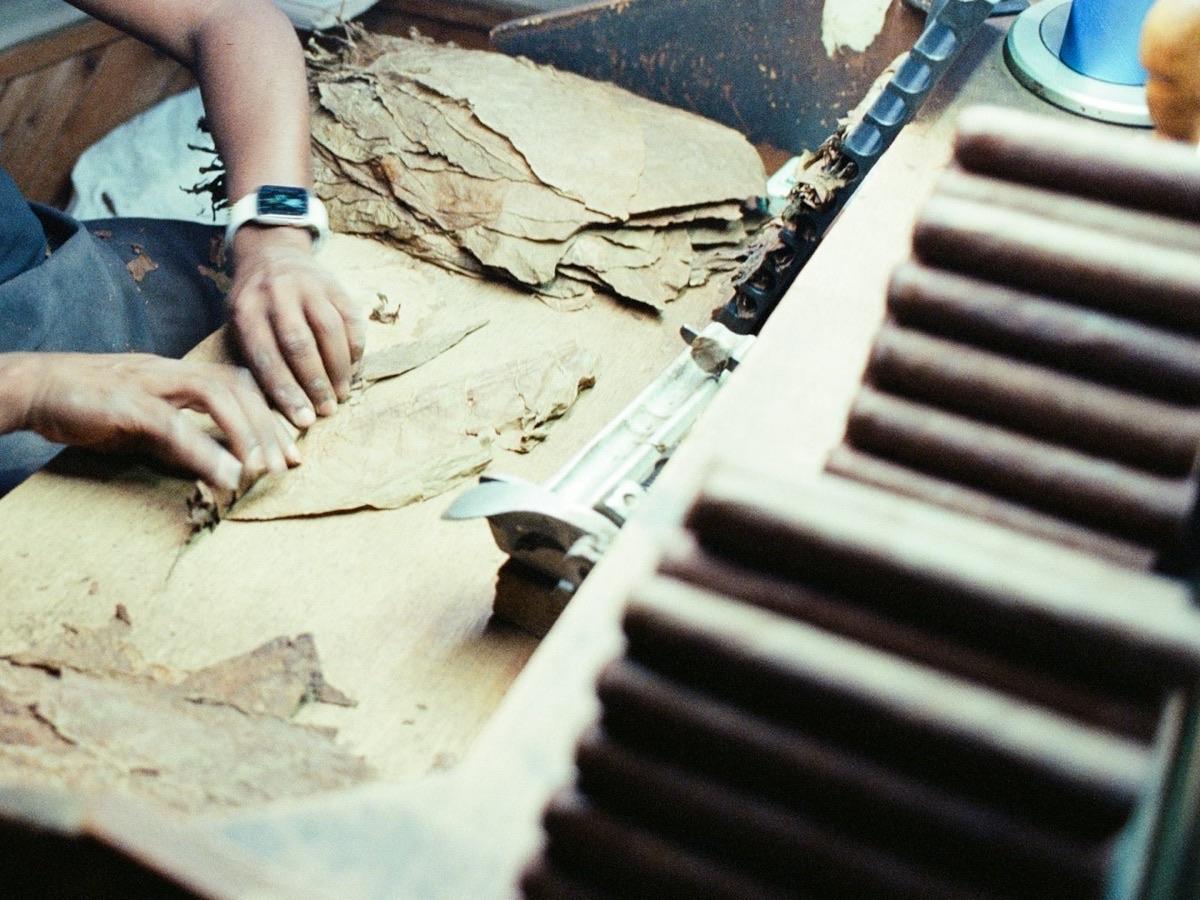
No binder is a generic leaf. Before it reaches the rolling table, every binder has been chosen twice: first at sorting, where a leaf is set aside as binder rather than wrapper or filler, and then by the blender, who decides which binder suits a particular blend. This lesson follows both choices: how a leaf becomes binder, where on the plant it grows, the main origins of binder with cigars that use them, how binder is fermented and aged, and why some cigars carry two binders instead of one.
How a leaf becomes binder
Whether a leaf becomes wrapper, binder or filler is decided when the leaves are sorted, and two kinds of plant supply binder. Much binder comes from plants grown for wrapper. Leaves that are sound but mottled, heavily veined or uneven in color fail the wrapper grades and are used as binder instead. Connecticut Broadleaf is a common case. In its grading, a leaf with only a few clean, wrapper-sized pieces is a No. 2 wrapper, which some dealers simply call binder. Ernest Gocaj, who buys tobacco for General Cigar, says that tobacco is never grown specifically for binder, and that a binder is wrapper tobacco that is not pleasing to the eye.
Other binder comes from plants grown for filler. In Cuba this is the rule. The sun-grown plants of Criollo type that supply a Habano's filler also supply its binder, and at the escogida the leaves are sorted into the four filler classes, volado, seco, ligero and medio tiempo, and into binder. Some makers outside Cuba, such as Ernesto Perez-Carrillo, also take their binders from plants grown for filler.
Where on the plant
The higher a leaf grows on the tobacco plant, the more sun it receives and the thicker, oilier and stronger it becomes, as the filler classes show. There is no single rule for where binder grows. Cuba's binder comes from the largest and finest volado or seco leaves, the lower and middle leaves of the plant, which are thin and supple. Habanos lists the binder apart from the four filler leaves that give a Habano its flavor, as the leaf that wraps them and defines the cigar's shape. Connecticut Broadleaf is different. It is harvested by cutting the whole plant rather than picking leaf by leaf, the leaves big enough for wrapper usually grow in the upper half of the stalk, and its binder grades come from the upper or middle stalk.
Some binders are chosen precisely because they add strength. Binder from Estelí, in Nicaragua, is known for it, and so is Connecticut Broadleaf. When La Flor Dominicana released its Chapter One in 2013, a box-pressed Chisel with a Connecticut Broadleaf binder under an upper-priming Brazilian wrapper, Litto Gomez called it the strongest Chisel he had made: "The broadleaf binder kicks it up."
Binder by origin
Most premium cigars made outside Cuba name the country of their binder, and origin is the main way blenders sort binders. The table gives the common origins, the leaf each supplies and cigars whose binder comes from there.
| Origin | Leaf used as binder | Cigars that use it |
|---|---|---|
| Nicaragua | Cuban-seed leaf, much of it from Estelí | Padrón 1964 Anniversary Series, Oliva Serie V |
| Dominican Republic | Dominican-grown leaf | Arturo Fuente Hemingway, Davidoff Grand Cru, Ashton Classic |
| Honduras | Corojo, and broadleaf grown from Connecticut seed | Camacho Corojo, Alec Bradley Double Broadleaf |
| Mexico | San Andrés leaf, including Matacapán | Macanudo Café, Sobremesa, Rocky Patel Dark Star |
| Connecticut, USA | Broadleaf, and stalk-cut Habano | Brick House Double Connecticut, La Flor Dominicana Chapter One, Undercrown Maduro |
| Brazil | Mata Fina and other Brazilian leaf | Liga Privada No. 9, Davidoff Escurio |
| Indonesia | Sumatra and Java leaf | Partagás Cortado, from General Cigar |
| Ecuador | Sumatra-seed and other Ecuadorian leaf | Alec Bradley Black Market |
| Cameroon | Cameroon leaf | CroMagnon Anthropology |
The first three rows are the main producing countries themselves. Nicaragua, the Dominican Republic and Honduras grow much of the binder their factories use, and a cigar whose wrapper, binder and filler all come from one of them is a puro, like the Nicaraguan Padrón 1964 Anniversary Series, the Dominican Fuente Fuente OpusX or the Honduran Camacho Corojo. Their binder also travels: Altadis, for instance, binds several of the cigars it makes in the Dominican Republic with Nicaraguan leaf.
The next two rows are binders that large makers use widely. General Cigar, which makes Macanudo among other brands, says it mostly uses Broadleaf and Mexican San Andrés for binders, because both blend well with other tobaccos and help the cigar burn. The Macanudo Café, made in the Dominican Republic, has a Connecticut Shade wrapper over a San Andrés binder. Steve Saka's Sobremesa, made in Estelí, uses a binder from Matacapán, in the same part of Mexico. Connecticut also grows stalk-cut Habano, leaf harvested by cutting the whole plant and cured on the stalk, which Drew Estate uses as the binder of its Undercrown Maduro.
The last rows are less common. Brazil's Mata Fina binder sits under the Connecticut Broadleaf wrapper of the Liga Privada No. 9, and Davidoff's Escurio, made in the Dominican Republic, uses a Brazilian binder too. Indonesian leaf binds cigars such as the Partagás Cortado, which General Cigar makes in Nicaragua. Ecuador, best known for wrapper, supplies binder as well, and so does Cameroon, prized for wrapper, in a few blends such as RoMa Craft's CroMagnon Anthropology from Estelí. A handful of cigars go further afield, to Peru, Costa Rica or the Philippines.
Fermented and aged
Binder is fully fermented before it is used, like the filler. In Cuba every leaf goes through a final fermentation whose length follows the leaf's weight: 15 to 25 days for volado and binder, 45 to 60 days for seco and about 90 days for ligero and medio tiempo. The binder, thin and light, needs the shortest. It then ages with the filler in pacas, hessian bales labelled with the leaf they hold. The Curing & Fermentation topic covers these steps in depth.
A few makers use the binder for something special. In the Camacho Triple Maduro the wrapper, the binder and the filler are all maduro, leaf fermented longer and darker. The 2022 edition of the Weller by Cohiba, made by General Cigar in Santiago, in the Dominican Republic, was the first Cohiba with a barrel-aged binder: Connecticut Broadleaf aged in barrels that had held Weller bourbon. The Macanudo Estate Reserve Flint Knoll, from the same year, has a Connecticut Broadleaf binder given a special ageing that lends it the character of French oak barrels.
Two binders
Most cigars are rolled with one binder leaf, and some with two. A double binder uses two different binder leaves in the same cigar, to add complexity. The Alec Bradley Double Broadleaf, made in Honduras, has a broadleaf wrapper grown in Honduras from Connecticut seed, a binder of the same broadleaf and a second binder from Nicaragua. My Father Cigars, the García family's company in Estelí, rolls several of its lines, such as La Antiguedad and The Judge, with two binders, one of Nicaraguan Criollo and one of Nicaraguan Corojo, and its Flor de las Antillas, named the best cigar of the year in 2012, has the family's trademark double binder.
A double binder should not be confused with Cuban practice, where a torcedor lays two, sometimes three, half leaves of the same binder for each cigar. That is one binder, laid in halves to cover the bunch. Binder Elasticity and Torcedor Skill explains how it is laid.