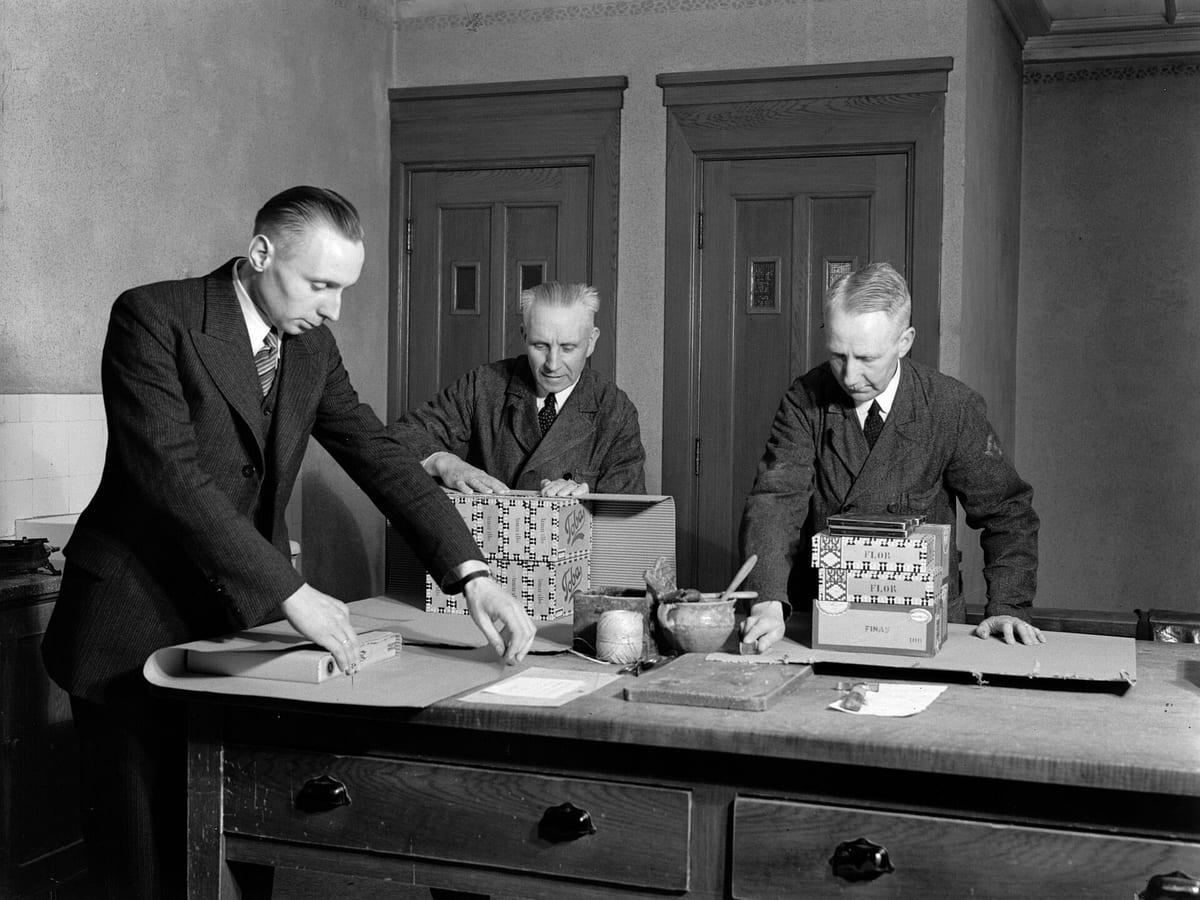
The kind of box a cigar comes in is part of how it is made and sold, and reading a box means knowing the styles and why each exists. This lesson defines the dress box, the cabinet, the slide-lid box, the boîte nature and its half-dressed form, the 8-9-8, the jar and the tubo, and explains how box-pressed cigars fit into the picture. History and Tradition tells how these styles arose, and Cigar Terminology covers the wider vocabulary of the trade.
The dress box
The most common box is the dress box, the trade's name for a hinged cedar box covered, or dressed, in printed paper. It usually holds 25 cigars under a lid that lifts straight up, though smaller dress boxes hold 10 or 20. Because its plain rectangular shape fits the shelf and its printed label carries the brand's artwork, the dress box is the workhorse of the shop counter, and in Cuban packaging it is the box that box-pressed cigars come in.
The cabinet, or slide-lid box
The cabinet, called the Cabinet Selection in the Cuban trade and a slide-lid box, or SLB, in its initials, is the next step up. It is a box of plain or varnished cedar with a lid that slides open along cedar runners rather than lifting on hinges, and it holds 10, 25 or 50 round cigars laid loosely and tied with a silk ribbon. The design was first made for British buyers at the start of the 20th century. The point of the sliding lid and the ribbon is that the cigars are not squeezed and pressed the way they are in a dress box; they keep their round shape, and air can move around them, which is why a cabinet is described as a box that lets its cigars breathe. The same initials SLB mark every slide-lid box in the Habanos range.
The 8-9-8
The 8-9-8 is a Cuban classic made for round cigars that should not be pressed at all. It has curved sides and holds 25 round cigars in three rows, 8 on the bottom, 9 in the middle and 8 on top; the middle row sits in the gaps of the two outer rows, so the cigars nestle together without squeezing and keep their full round shape. The Dalia, a Cuban vitola, a factory size of cigar, was the first size packed this way. The name is simply the count of the three rows, read from top to bottom.
Boîte nature and semi boîte nature
A boîte nature is a box that wants no paper cover. The name is French for "natural box", and it means a box of natural, often varnished cedar on which the maker's name is hot-stamped or printed in gold directly onto the wood instead of laid on as a paper label. A semi boîte nature, abbreviated SBN, is the half-dressed version: a natural cedar box that keeps something of the plain wood while still carrying some of its labels, so the brand shows partly through the wood and partly through paper. Both let the grain of the cedar, rather than a printed scene, carry the box's looks, and their initials, BN and SBN, appear in the Cuban packaging lists.
The jar and the tubo
Two more presentations put a few cigars or a single cigar on display. The amatista, from the Spanish for amethyst, is a heavy glass jar, usually of 25 or 50 cigars, that sits upright on a shelf and shows the cigars whole. The tubo, the Spanish word for tube, is a metal tube, most often of aluminium, made to carry a single cigar; it protects the cigar in a pocket or a case and is itself lined or fitted so the cigar keeps its humidity. Tubes are often sold in small packs, and a small pack of 1, 3 or 5 cigars in cardboard, aluminium or wood is a third small format of its own.
Box-pressed cigars
A box-pressed cigar, prensado in Spanish, is a round cigar pressed square in its box. Habanos makes its labelled dress boxes deliberately a little too small for the cigars, so that round cigars packed into them are pressed square. A box of 25 pressed cigars is usually packed in two layers, which collectors' guides give as 13 over 12. Some brands press most of their sizes this way and some none, and Habanos says the present trend favours round cigars. Cigars meant to stay round are not packed this way; that work belongs to the cabinet and the 8-9-8, as the Shapes and Sizes topic explains when it describes how a cigar is pressed.