A blend is only as good as its least well-fermented leaf, and no single treatment suits every leaf. A thin volado and a thick ligero from the same plant, a delicate shade wrapper and a heavy Broadleaf, each need a different amount of heat and time. This lesson explains how fermentation is matched to the leaf: by its position on the plant, by its job in the cigar, by how and where it was grown, and in the special case of maduro.
By position on the plant
The higher a leaf grows on the stalk, the more sun it gets and the thicker, oilier and stronger it becomes, and the more fermentation it needs to lose its harshness. Cuba's schedule shows the rule most clearly. The table gives, for each Cuban leaf, how many fermentations it gets and how long the last one lasts.
| Leaf | Where it grows | Fermentations | The final fermentation |
|---|---|---|---|
| Volado | The lowest leaves | Two | 15 to 25 days |
| Seco | The middle of the plant | Three | 45 to 60 days |
| Ligero | The upper leaves | Three | About 90 days |
| Medio tiempo | The top two leaves, on some plants only | Three | About 90 days |
| Binder | Large, sound leaves of the sun-grown plant | Two | 15 to 25 days |
| Wrapper | The shade-grown plant | One | At least 20 days |
Read down the table and the time grows with the thickness of the leaf. Volado, thin and quick to burn, gets the shortest treatment, and ligero and medio tiempo the longest, the same for both, followed by at least two years in the bale. Medio tiempo, the rarest and fullest leaf, is fermented exactly like ligero, not more lightly. Makers elsewhere follow the same order, with ligero the slowest leaf to ferment, but set their own times, as Fermentation Cycles shows. The Fillers topic covers the leaf classes, including viso, the class between seco and ligero used in Nicaragua, the Dominican Republic and Honduras.
Wrapper, binder and filler
Wrapper is fermented with more care than any other leaf, because it has to come out supple, evenly colored and unblemished as well as smooth. It goes into the pile with as little water as possible, and most makers keep it cooler: Perdomo ferments natural wrapper at 27 to 32 °C (80 to 90 °F), against 43 to 46 °C (110 to 115 °F) for its filler. In Cuba wrapper gets a single fermentation of at least 20 days, while the filler goes through up to three. Binder, which has to stay elastic for the roller and burn evenly, is fermented in Cuba like volado, and the Binder topic covers it.
Seed, shade and origin
How the leaf was grown changes its treatment. Thick, sun-grown leaf stands up to more fermentation than thin shade leaf, which is why most maduro is made from it, as Wrapper's Influence on Body explains. Origin matters even within one seed. Davidoff's longtime master blender, Henke Kelner, has said that Connecticut Shade from the United States starts out more bitter and takes longer to improve with fermentation and aging, while Ecuadorian Connecticut is milder, needs less fermentation and is ready sooner. Connecticut seed grown in Honduras comes out thicker and can take more fermentation, which gives it more flavor. At the lightest extreme, General Cigar once put the wrapper of its Macanudo Gold Label on the cigar after a cure of at least 50 days and no fermentation at all, while the browner wrappers of its Macanudo Café and Hoyo de Monterrey Excalibur cured for 60 days or more and were then fermented.
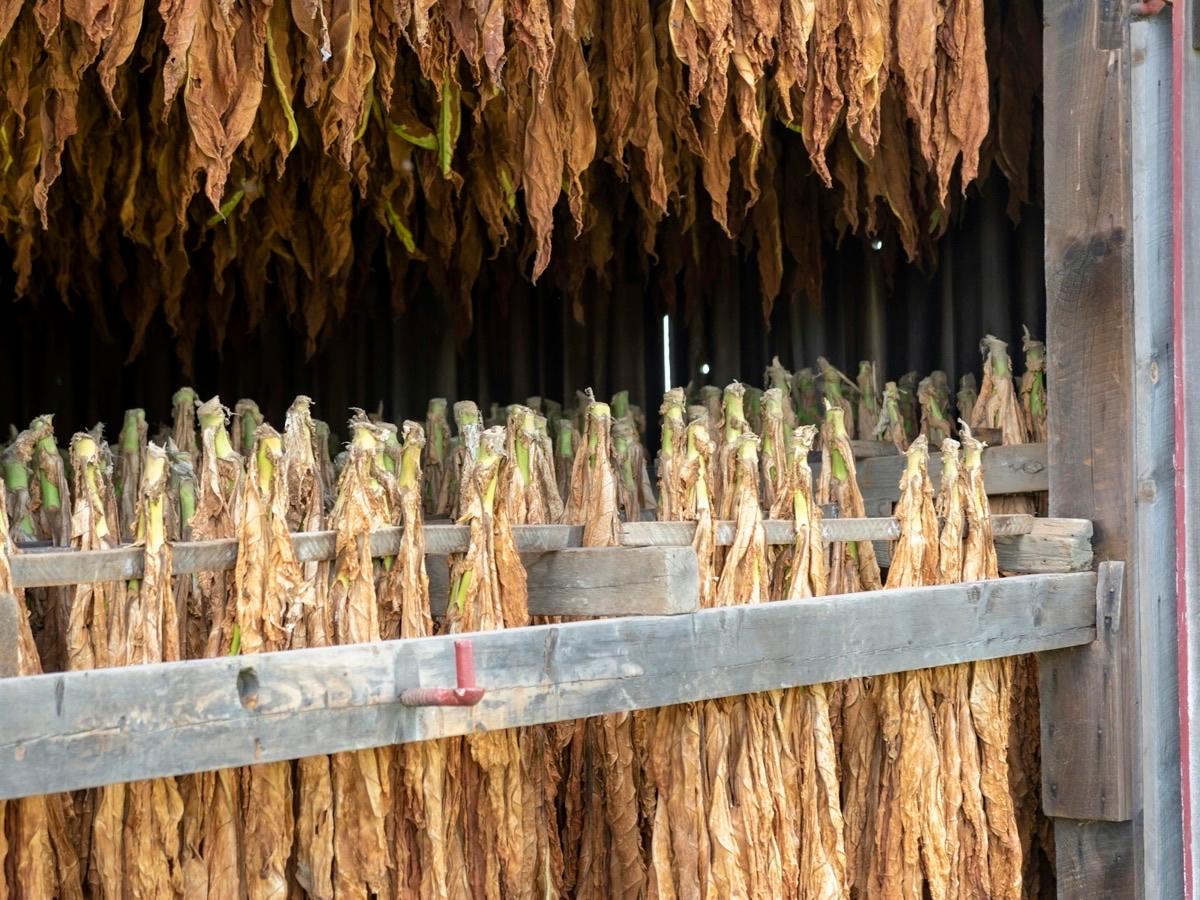
Cameroon wrapper, thin and fine-textured, is cured in barns of bamboo and leaves and fermented in bulks, and the number of fermentations depends on the texture and strength of each crop. Candela skips the slow cure altogether, as Color Transformation explains.
Maduro
Maduro is a process, not a seed or a plant: a wrapper fermented longer, hotter or both, until it turns dark brown and sweet. Thick, sun-grown leaf takes the treatment best, so most maduro is made from Connecticut Broadleaf, Mexican San Andrés and Brazilian leaf such as Arapiraca, and from the thickest grades of other wrappers. Oscuro, the darkest shade, takes the process further still.
The process is slow, and every maker runs it differently. Drew Estate's Willy Herrera puts it at six to nine months, and Broadleaf is said to take twice as long to ferment and age as Connecticut Shade. In San Andrés, the Turrents ferment their dark leaf twice, in pilones of 5 tonnes that reach about 60 °C (140 °F), and leave the final fermentation to their clients, who take it to the shade of maduro they want. General Cigar ferments its Connecticut Havana maduro for six months, ages it for a year, then moistens it and ferments it again for two months, and only the two thickest grades of leaf are chosen for it. Davidoff fermented the Ecuadorian wrapper of its 2024 Maduro for 16 months, twice its usual cycle, with no added heat, then aged it for two years in bales.
There are shortcuts. Steaming can darken a wrapper to maduro color in about a day, but it changes only the color and none of the sweetness a real maduro fermentation brings. That is why a dark wrapper alone proves nothing about how it was made, as Cigar Terminology warns.