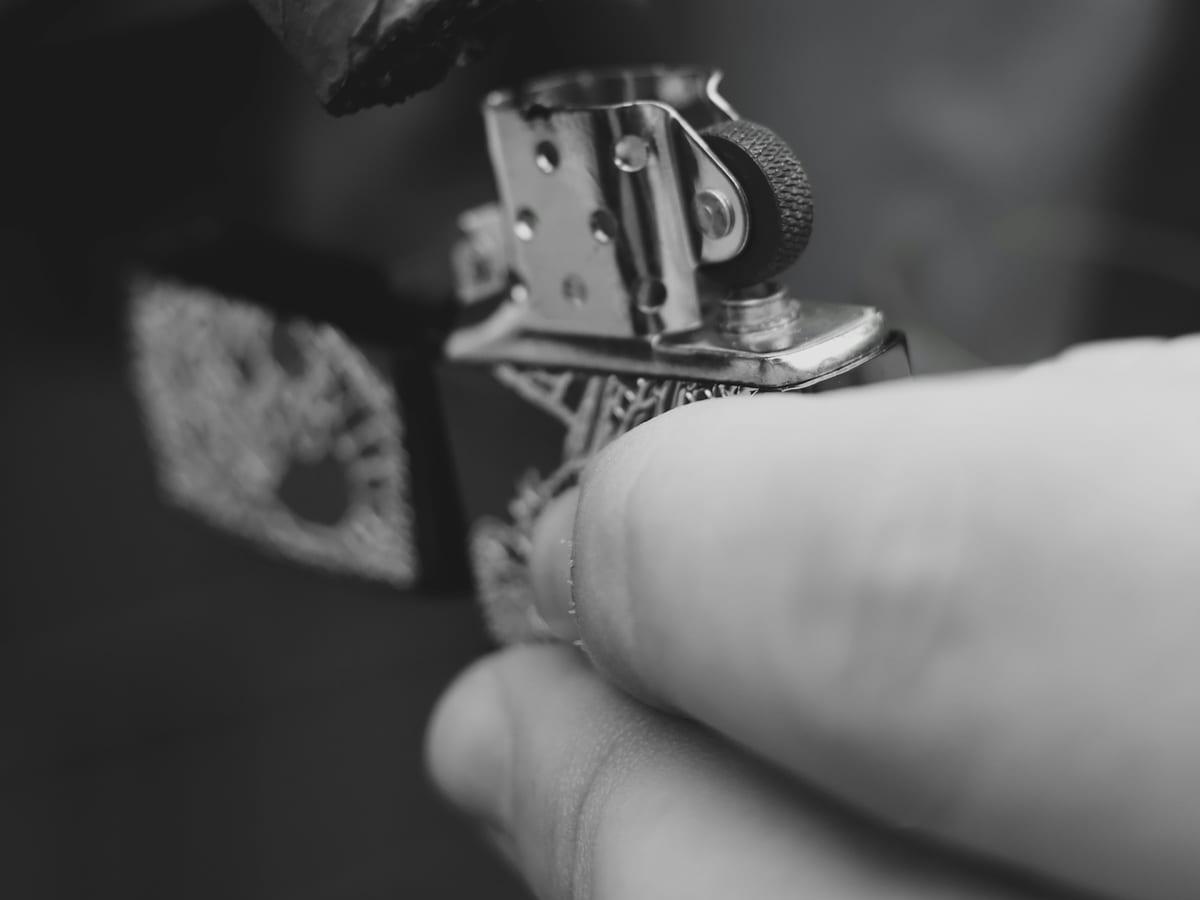
Lighting a cigar does blacken it. The face of the foot is meant to char evenly as it is toasted, and Habanos's own instructions say to turn it over the flame until it does. The charring this lesson is about is something else: heat in the wrong place or too much of it, such as a flame licking the side of the wrapper, an ember forced by hard puffing, or a dry cigar that flares. Scorched leaf tastes charred and bitter, as Cigar Terminology describes, and an uneven light often grows into an uneven burn later. A clean cut and a slow, even light avoid all of it. The cut comes first, because a cigar needs air passing through it to light properly.
Before You Start
A cigar's condition decides much of how it will light. One kept too dry feels brittle, its cap may crack when cut, and it burns hot and fast. One kept too humid feels soft and spongy, draws tightly, lights reluctantly and burns unevenly. Why Humidity Matters, in the Storage & Humidity topic, explains the conditions to keep. It also pays to look at the foot before lighting. An evenly packed face lights evenly, while gaps or a dense knot of filler warn of a hot spot or a plug, as Foot (Boquilla) explains.
Cutting Cleanly
Make the cut just above the line where the cap meets the wrapper, about 2 mm from the end on a round head or about 3 mm from the point on a pointed one, in a single quick stroke with a sharp blade. Then take a cold draw, a gentle puff through the unlit cigar, and the air should pass with light, even resistance. If the draw is tight, take another millimeter off and try again. If that does not help, the cause lies deeper. A plug near the cap can sometimes be cleared with a draw tool pushed gently through the head, but cutting deeper and deeper only removes the cap. A loose draw, with almost no resistance, cannot be fixed by the cut, and such a cigar is best smoked slowly, because it will burn hot.
The cut matters for the light, too. A cigar that draws too tightly tempts you to puff hard while lighting it, and hard puffing pulls the flame into the foot and overheats the leaf.
Toasting and Lighting
Cigar guides give much the same steps, whatever the flame:
- Hold the cigar at a right angle to the flame, with the foot just above the tip of a match or soft flame, or well clear of the tip of a torch, and don't draw yet.
- Turn the cigar slowly so the whole face of the foot heats evenly, until it is evenly blackened and a thin glowing ring shows around the edge.
- Put the cigar to your lips and draw gently, with the flame about a centimeter from the foot, still turning the cigar, until the whole foot catches.
- Take the cigar from your mouth and blow gently on the foot. The whole face should glow evenly.
- If any part stays dark, touch it up with the flame before you settle in.
The toast is the step most often hurried. Its purpose is to bring the whole face of the foot close to burning before any air is drawn through it, so that it all catches at once. The outer ring of wrapper and binder catches first, and the dense center, where the slow-burning ligero sits, takes longer, which is why the advice is to light a cigar from the outside in, and why patience at this stage pays.
Drawing gently matters just as much. A hard pull fans the ember and drives the heat up into the leaf, and the first puffs taste of it. Even a good light leaves some taste of the flame in the first puffs, which is why some smokers blow the first one out instead of tasting it, and why a cigar is best judged a few puffs in.
Touch-Ups and an Uneven Burn
An uneven light is one of the most common causes of an uneven burn. If one side of the foot is left dark, that side lags behind and the burn line tilts; left alone, the cigar may start canoeing, burning faster down one side than the other, which Construction Defects describes. An early touch-up, a little flame held briefly to the lagging edge, is the cure, and it works best while the fault is small. Re-toasting the whole foot is rarely needed and risks scorching the parts that were burning well.
Relighting
Any cigar can go out, especially when it is put down for a while, and relighting it is perfectly normal. First knock off any loose ash, which would otherwise make the cigar hard to relight. Then blow gently through the cigar from the head to purge the stale smoke, which tastes bitter, and toast and light the foot as before. A cigar relit soon after it goes out lights easily, because it is still warm. One left for hours, or overnight, tastes stale and unpleasant. If a cigar keeps going out, it may be badly rolled or kept too humid. Relighting Etiquette, in the Cigar Etiquette topic, covers relighting in company.
Outdoors and in Wind
Wind is the main enemy of an even light. It blows a gentle flame about, so that you hold it closer and longer than you should, and it fans the ember of a lit cigar so that one side burns hot and fast. A torch holds up where a match or soft flame fails, and shielding the flame with a cupped hand or your body helps with any of them. Outdoors, it also pays to check the foot more often and to touch up a lagging edge sooner.