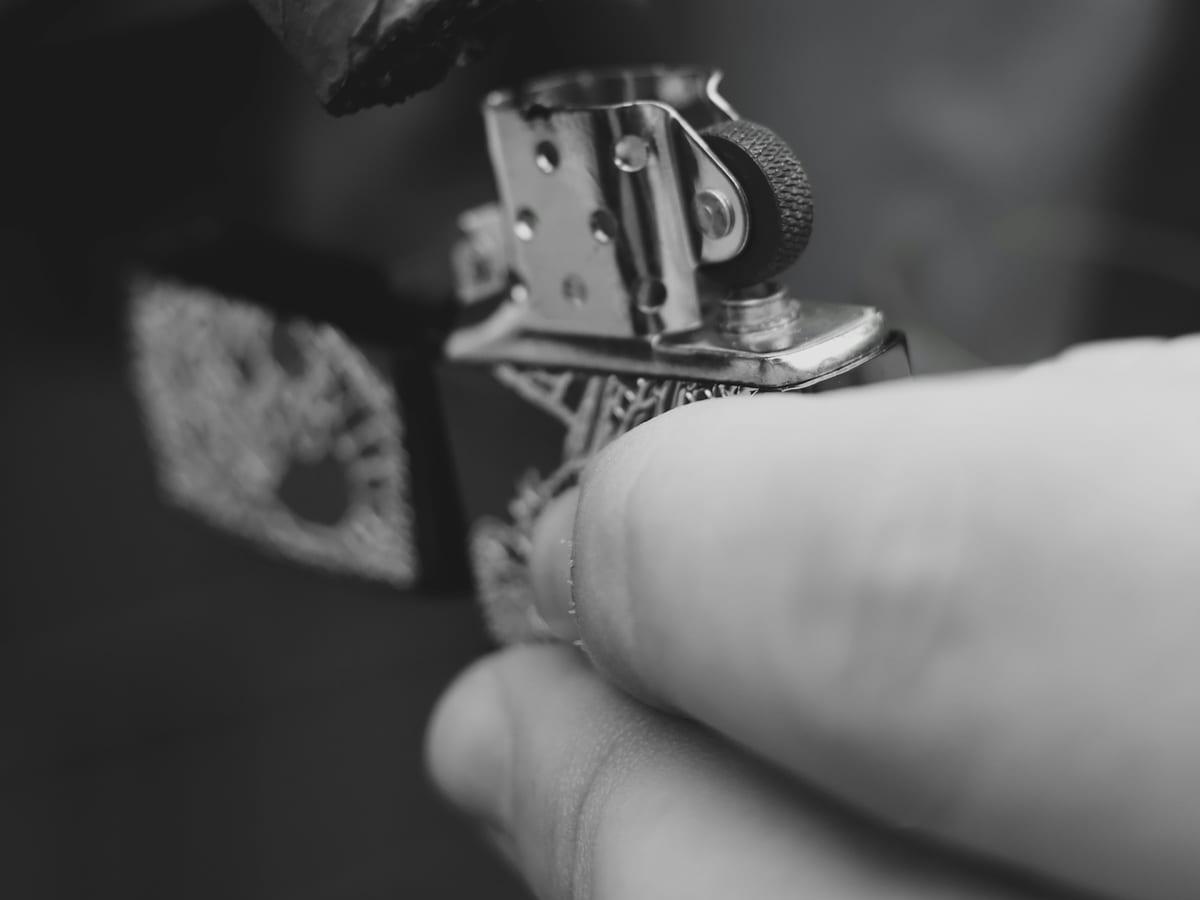
Lighting a cigar means heating the whole face of the foot until it burns evenly, and the flame has two jobs: to deliver that heat where it is wanted, and to add nothing of its own. Tobacco takes up smells readily, and a flame that carries the scent of petrol, wax or sulfur passes it straight into the first puffs. That is why the advice is always to light a cigar with an odorless flame, and why the choice comes down to how much heat you want, how quickly, and where you are smoking. This lesson compares the flames; How to Cut and Light Without Charring sets out the method step by step.
Wooden Matches
Wooden matches are the classic choice. The long matches sold for cigars burn long enough for one match to toast and light the foot, where short household matches may take two or three. A match head holds sulfur and an oxidizer, usually potassium chlorate; on a safety match, the red phosphorus that sets it off sits on the striking strip of the box. The head burns with a sharp, sulfurous flare for a second or two, so the rule is to strike the match, let the head burn away and only then bring the flame to the cigar. What remains is a gentle wood flame that rarely scorches the leaf. Paper book matches are short, so it takes several, and their sulfur has to burn off too.
Cedar Spills
A cedar spill is a thin strip of Spanish cedar, the wood used for cigar boxes, and the sheet of cedar laid between the rows in many boxes can be torn into spills. Despite its name, Spanish cedar (Cedrela odorata) is a tropical American tree of the mahogany family, not a true cedar. The spill is lit from a match or a lighter, and the cigar from the spill. Its flame is broad and gentle, carries no sulfur or gas, and adds a light cedar aroma, which is why it is often recommended above any other flame. A spill burns quickly and can drop embers, so it is best used over an ashtray, and it is no use outdoors in any wind.
Soft-Flame Lighters
A soft-flame lighter burns butane much as a match burns wood. The gas meets the surrounding air only as it burns, and it gives a yellow, flickering flame like a candle's. The flame is quiet, its tip is easy to see, and its gentle heat seldom scorches the leaf, which makes it the easiest flame to control indoors. You usually draw on the cigar to pull the flame into the foot, so lighting takes a little more patience than with a torch. The weakness is wind: the slightest breeze can bend the flame or blow it out. Refined butane burns without smell, which is why a butane lighter counts among the odorless flames. Fuel Systems explains how these lighters work.
Torch Lighters
A torch lighter, also called a jet or blue-flame lighter, mixes air into the butane inside the burner before it ignites, and the mixture leaves the nozzle as a narrow, hissing blue jet; some aviation rules call these premixing lighters. The jet is far hotter than a soft flame, about 1,370 °C (2,500 °F) by the US Transportation Security Administration's figure, and it holds its shape at any angle and in wind. That makes the torch the lighter of choice outdoors, on a terrace or a golf course, and for touching up an uneven burn. Many torches have two, three or more jets side by side, which spread the heat across a wider foot.
The same heat makes a torch easy to misuse. The tip of a blue flame is hard to see, and a foot held in it scorches in a moment and leaves a charred, sometimes gassy taste. With a torch, distance is everything: keep the foot clear of the tip of the flame, keep it turning and let the heat do the work. Torches are also the lighters that airlines restrict most, as Fuel Systems explains.
Flames to Avoid
Petrol lighters, the classic windproof wick lighters that burn naphtha, give a flame that smells of its fuel, and the smell reaches the cigar; if one is all you have, let it burn for a moment before you bring it to the foot. Candles leave the smell of wax, and so do wax matches. All three are best avoided.
Comparing the Flames
The table compares the usual flames on the points that matter when lighting a cigar.
| Flame | Heat | In wind | Effect on taste | Best for |
|---|---|---|---|---|
| Wooden match | Gentle | Easily blown out | Sulfur until the head burns off, then none | Indoors |
| Cedar spill | Gentle and broad | Useless | A light cedar aroma | Indoors, at an unhurried pace |
| Soft-flame lighter | Gentle | Easily blown out | None, with refined butane | Indoors, and everyday use |
| Torch lighter | Very hot | Holds up well | Charred or gassy if held too close | Outdoors, wind and touch-ups |
| Petrol lighter, candle, wax match | Gentle to moderate | Varies | Fuel or wax | Best avoided |
Heat is the main difference. The gentle flames take longer but forgive mistakes, while the torch is quick and punishes a foot held too close. Wind decides the rest, since only the torch works reliably in it. Thick cigars have a wide foot that takes longer to toast, and a broad flame, from a cedar spill or a torch with several jets, helps to cover it evenly.