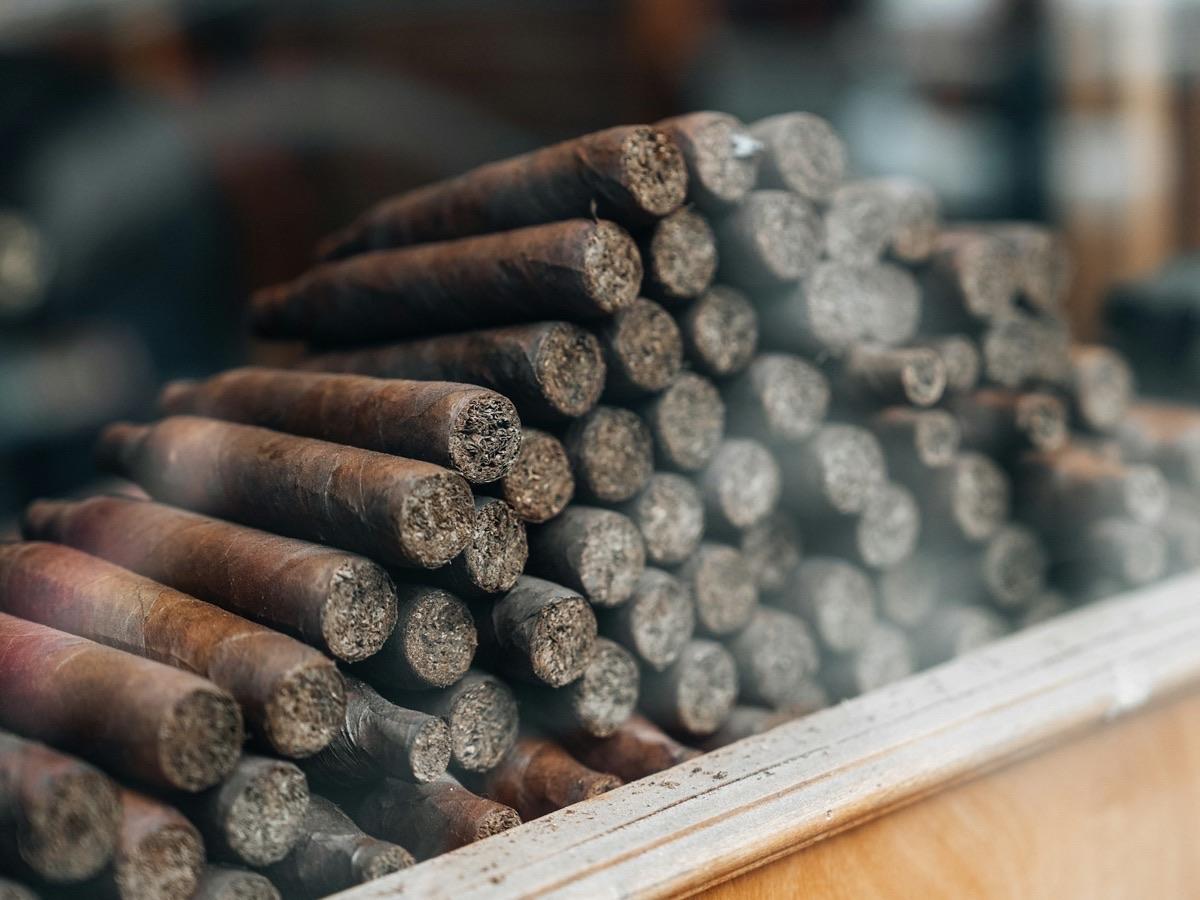
A cigar burns slowly, by design. On each puff, air drawn in at the foot brightens the ember, and the heat passes to the tobacco just behind it, which gives off smoke and then burns in turn. Because the filler is most of the tobacco, it decides most of this: whether the cigar stays lit between puffs, whether the burn line stays straight and whether the smoke stays cool enough to taste clean. The binder and the wrapper must burn in step with it, as the Binder and Wrappers topics explain, but the filler sets the pace.
How the classes burn
The filler classes burn at different speeds. Volado, the thin leaf from the bottom of the plant, burns easily; Habanos values it above all for that, and blenders use it to keep the cigar alight. Seco burns at a steady, moderate pace. Ligero, thick and oily, burns slowly and with difficulty, and needs the heat of the leaves around it, which is why rollers put it at the center of the bunch.
A blend burns well only when these speeds are balanced. With too much ligero, a cigar draws hard, burns unevenly and keeps going out. Fast-burning leaf at the center can make the core burn ahead of the outer leaves, the fault called tunneling. Blenders such as Litto Gomez of La Flor Dominicana say the leaves in a blend must burn at similar rates, and they choose the leaves, and how long each is fermented, with that in mind.
The chemistry of the leaf
Whether a leaf burns well at all depends partly on what it took from the soil. Potassium helps tobacco catch and keep burning, and chlorine works against it; in one study, leaf that held more chlorine than potassium would not burn at all. Chlorine reaches the plant from the soil, from fertilizer and from irrigation water, which is one reason leaf from some fields burns better than leaf from others. Calcium and other minerals affect the burn and the ash as well, as Ash Formation, in the Cigar Anatomy topic, explains.
Seed matters too. Litto Gomez remembers Habana 2000, a Cuban variety bred after the blue mold epidemic and planted by some growers during the cigar boom of the 1990s, as a handsome leaf that did not burn.
Fermentation and moisture
Fermentation changes how a leaf burns as well as how it tastes. Habanos calls it indispensable to a cigar's smoking quality, growers agree that cutting it short ruins the leaf, and ligero, the hardest leaf to burn, gets the longest fermentation of all.
Moisture matters at every step. Leaves are moistened before rolling so that they can be handled without breaking, which leaves a freshly rolled cigar damper than it should be when smoked. In Cuba, cigars therefore rest in the escaparate, a conditioning room kept at 16 to 18 °C and 65 to 70 percent relative humidity, where they lie in cedar-lined drawers and shed the moisture gained in rolling; Habanos says they are smokeable after a week, and better the longer they stay. Factories elsewhere rest their cigars too, often for longer, so that the leaves within each cigar settle together.
After a cigar leaves the factory, its moisture still decides how it burns. Kept too humid, the filler swells, the draw tightens, the cigar burns poorly and tends to tunnel. Kept too dry, it burns hot and fast and turns harsh. Habanos recommends storing cigars at 16 to 18 °C and 65 to 70 percent humidity, held steady; Why Humidity Matters, in the Storage & Humidity topic, explains the reasons.
Packing and airflow
A cigar's air travels through the channels between its filler leaves, and those channels are made by the person who bunched it: by folding each leaf rather than twisting it, aligning the leaves from the foot to the head and keeping the compression the same along the whole bunch. Loose filler leaves wide channels, so the cigar draws too easily and burns hot and fast. Tight filler closes them, so the cigar is hard to draw, gives little smoke and goes out. A draw machine, used on the bunch before the wrapper goes on, catches many of these faults, and Three Ways of Preparing La Tripa shows how each way of folding the leaves shapes the channels.
When the burn goes wrong
Several burn faults can start in the filler. Canoeing, one side burning faster than the other, usually starts with an uneven light, but unevenly packed filler can cause it too. Tunneling, the center burning ahead of the outside, is usually a moisture problem, though fast-burning leaf at the core can cause it. A cigar that keeps going out may be too humid, too tightly packed or too heavy in ligero. A runner, a streak racing ahead along the wrapper, is different: it usually follows a seam or a thick vein in the wrapper rather than anything in the filler. Construction Defects, in the Cigar Anatomy topic, describes each fault and what to do about it.
How the burn changes as the cigar shortens
The filler burns differently at the end of a cigar than at the start, even though the leaves are the same. On every puff the smoke passes through the unburned tobacco between the ember and the mouth, and leaves some of its moisture, oils and nicotine behind there. As the cigar shortens, that stretch of tobacco grows shorter, warmer and more loaded, so the smoke arrives hotter and more concentrated, and the last third burns hotter and tastes stronger than the first. Smoking it more slowly keeps the ember cooler and the flavor clean. How Strength Builds During the Smoke, in the Strength vs. Body topic, explains the same process from the side of strength.