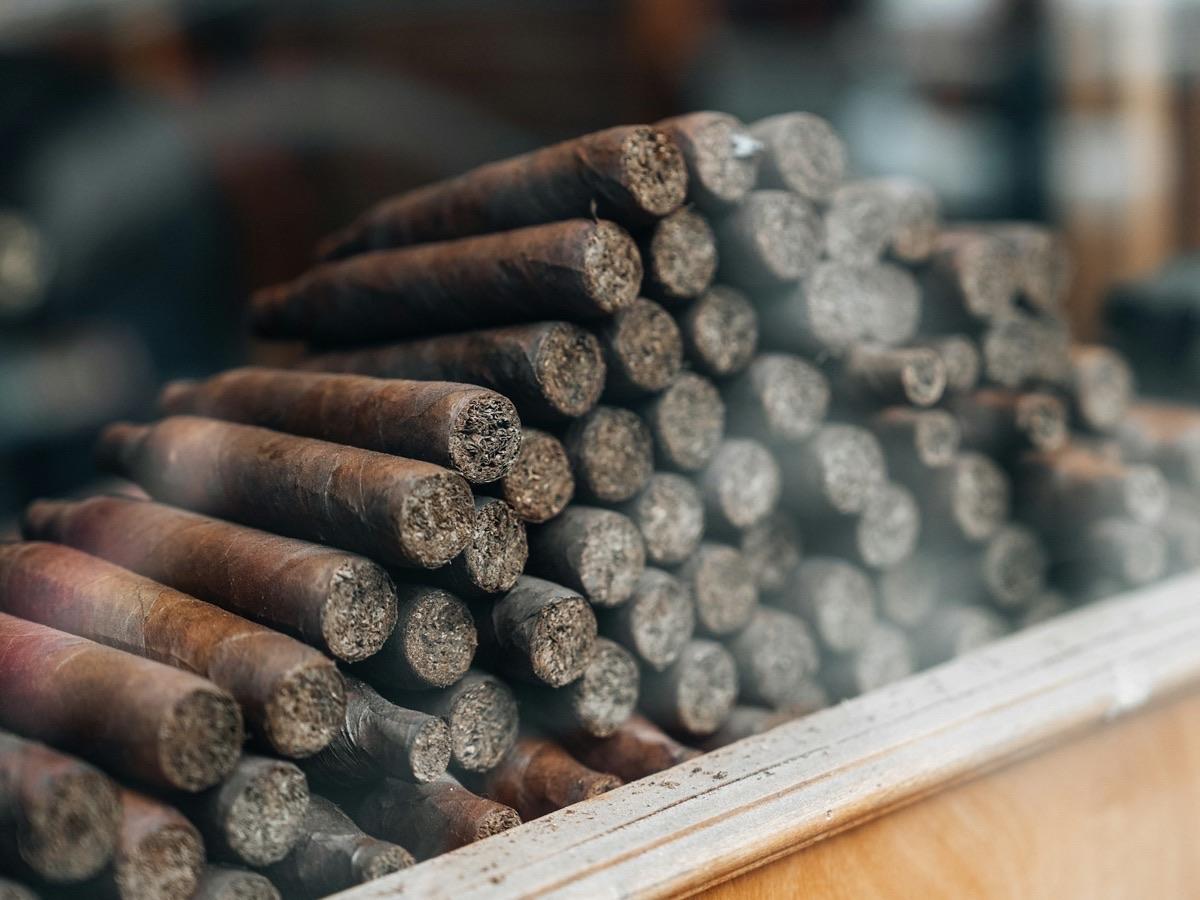
After a leaf's position on the plant, the biggest influence on how it smokes is where it grew. The same Cuban seed planted in Nicaragua, the Dominican Republic and Honduras gives three different tobaccos, because soil and climate shape the leaf as much as its genes do. Blenders treat origin the way they treat leaf position, as another means of building a blend, and with it they make two kinds of cigar: those whose filler comes from one place, and those that combine several.
Single origin and the puro
A cigar whose wrapper, binder and filler all come from one country is a puro. Every Habano is one, since Cuban cigars use only Cuban leaf. Elsewhere a puro is a choice. The Padrón 1964 Anniversary Series and the My Father Le Bijou 1922 are Nicaraguan puros, the Fuente Fuente OpusX a Dominican one, the Plasencia Cosecha 149 a Honduran one, and the Casa 1910 Cuchillo Parado a Mexican one.
Some cigars narrow the origin further. A single-region cigar takes all its tobacco from one valley or island: the Sicario Linea Ometepe is rolled only from tobacco grown on Ometepe, in Lake Nicaragua. A single-farm cigar takes it from one property, as the La Flor Dominicana Double Ligero Lancero did, with all its inner leaf from one farm in La Canela. And a single-harvest cigar uses leaf from one year. Habanos' Reserva and Gran Reserva releases use leaves all from one harvest, aged for at least three and five years. Plasencia named its Cosecha 149 for the family's 149th harvest, that of 2014, from which all its tobacco comes.
The appeal of a single origin is clarity: with one country, one region or one farm, the character of the place is easy to taste. The difficulty is that one origin has to supply everything a blend needs, leaves that burn well, leaves that carry aroma and leaves that carry strength. A whole country can usually do that. One farm or one harvest yields only so much, which is why single-farm and single-harvest cigars tend to be small releases.
Even a puro is a blend of a kind. A Habano's filler mixes volado, seco, ligero and sometimes medio tiempo. Nicaraguan puros often combine leaf from Estelí, Condega and Jalapa, and Honduran ones from several regions: the Cosecha 149 takes its filler from Jamastrán, Olancho and Talanga.
Blended filler
A blended filler combines leaf from several countries or regions, each chosen for what it adds. The Davidoff Escurio blends dark Brazilian leaf from Bahia with Dominican tobacco. Davidoff's Winston Churchill The Late Hour combines Dominican filler with Nicaraguan leaf from Estelí and Condega, and the Condega leaf is first aged for six months in casks that held Scotch whisky. The Liga Privada No. 9, made in Estelí, puts Nicaraguan and Honduran filler under a Connecticut Broadleaf wrapper. In Mexico, the Turrent family blends its dark San Andrés leaf with Nicaraguan tobacco, which it adds for strength, in the Casa Turrent 1880. And Casdagli rolls its Daughters of the Wind in Costa Rica from Dominican and Peruvian filler.
Blending gives the blender more tools: an easy burn from one leaf, aroma from another, strength from a third. Its risk is the reverse of the puro's. Leaves from different places may not burn at the same pace, and blenders say they must pair leaves that burn at similar rates, as Combustion explains. Neither approach is better by definition. A single origin shows the character of a place; a blend shows the judgment of the blender.
The main filler origins
The table sets the main filler-growing countries side by side, with the areas each is known for and one cigar whose filler comes from there.
| Country | Main filler areas | Known for | Example |
|---|---|---|---|
| Cuba | Vuelta Abajo and Semi Vuelta, in Pinar del Río; Remedios, in central Cuba | Sun-grown leaf from Criollo-type plants, the only filler in a Habano | Hoyo de Monterrey Double Coronas |
| Nicaragua | Estelí, Condega, Jalapa, Ometepe | Strong leaf from Estelí, medium from Condega, subtle from Jalapa, sweet and earthy from Ometepe | Padrón 1964 Anniversary Series |
| Dominican Republic | Cibao Valley, including La Canela | Mild, aromatic Olor Dominicano and stronger Piloto Cubano; strong leaf from La Canela | Fuente Fuente OpusX |
| Honduras | Jamastrán, Talanga, Copán | Cuban-seed sun-grown filler, Corojo among it | Plasencia Cosecha 149 |
| Mexico | San Andrés valley, in Veracruz | Dark Negro San Andrés leaf, used as filler and binder | Casa 1910 Cuchillo Parado |
| Brazil | Bahia | Dark Mata Fina and Cubra leaf | Davidoff Escurio |
| Peru | Tarapoto valley | Leaf used mostly in blends with other countries' filler | Casdagli Daughters of the Wind |
Several of these countries grow Cuban-seed tobacco, so much of the difference between them comes from soil and climate rather than seed. The paragraphs below add what the table cannot.
The filler of a Habano is grown in Cuba's registered zones, under the rules of the Habanos protected designation of origin. The Vuelta Abajo supplies most of it, the Semi Vuelta grows filler and binder, and the Remedios region of central Cuba grows the filler for José L. Piedra, a brand made by hand with short filler.
Nicaragua shows most clearly how much the region matters. Most of its filler comes from Cuban-seed varieties such as Criollo '98 and Corojo '99, yet leaf from Estelí, the country's best-known region, is prized for its strength, leaf from Condega is more medium-bodied, and leaf from Jalapa is subtle enough to be grown for wrapper. Ometepe, an island in Lake Nicaragua formed by two volcanoes, Concepción and Maderas, is the youngest of the four as a source of cigar leaf: the Plasencia family planted its first trial acre there in 1994. Its well-drained volcanic soil gives a sweet, earthy leaf, and one Estelí maker found in it the aroma and sweetness of Jalapa leaf with more richness and strength.
The Dominican Republic's filler grows in the Cibao Valley in the north. Its two classic varieties are Olor Dominicano, a native tobacco known for mildness and aroma, and Piloto Cubano, a Cuban-seed tobacco known for strength, which came to the country in 1962 from the Piloto area of Cuba. San Vicente, a hybrid grown there, yields more leaves per plant than Piloto, though purists find it less flavorful. In La Canela, a hot, dry corner of the valley, the climate gives stronger, spicier leaf, so a Dominican cigar is no longer necessarily a mild one.
Honduras grows large amounts of Cuban-seed, sun-grown filler. Its main tobacco valley is Jamastrán, in the southeast near Danlí, where wrapper is grown as well; Talanga lies in the center of the country and Copán in the west, near Guatemala.
Mexico's San Andrés valley, near the Gulf coast in Veracruz, grows a dark leaf, Negro San Andrés, that many makers use as binder and some as filler; Te-Amo and Casa 1910 are made from Mexican leaf. Brazil's leading cigar region is Bahia, whose Mata Fina is dark, almost black, with an oily sheen; Arapiraca, in the state of Alagoas, is better known for wrapper. Peru grows tobacco in the Tarapoto valley, on the edge of the Amazon, and most of it goes into blends. Even the United States grows filler: J.C. Newman's The American, made in Tampa, uses filler from Pennsylvania and Connecticut. The Tobacco Regions topic covers each of these places.