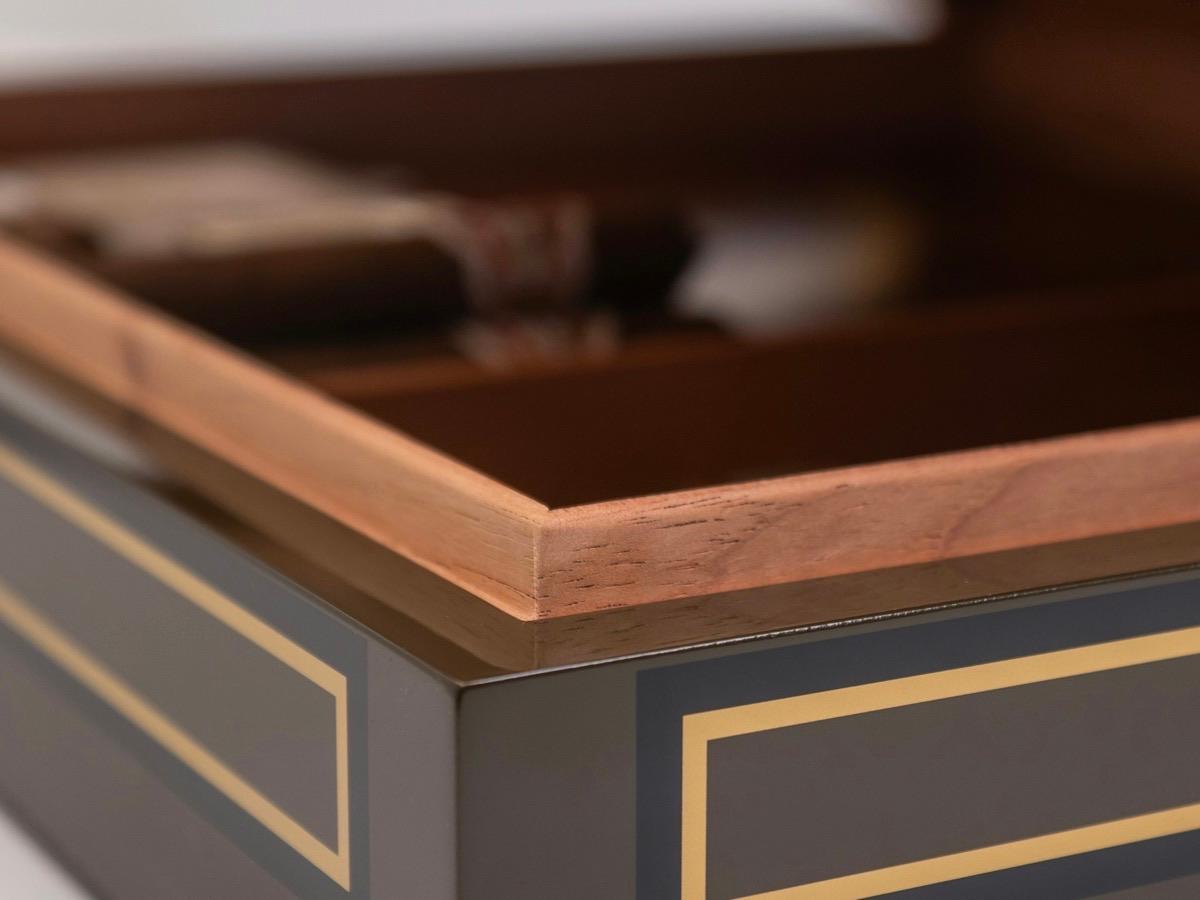
The first thing a new box does is disappoint, unless it is prepared: dry cedar absorbs water hungrily, and a box put straight to use will steal the moisture from its cigars and leave them dry and cracked. Seasoning saturates the wood once, ahead of time, so that from then on it holds humidity instead of taking it. This lesson covers why new cedar is dry, the two ways to wet it without ruining it, and how to tell when the box is ready. Seasoning a Humidor, in the Storage & Humidity topic, sets out the same job among the humidity lessons, and points to the science of the level itself.
Why a new humidor is dry
Spanish cedar is chosen for a humidor because it takes up and gives off water gently, but that works only once the wood already holds its own share. A brand-new box has sat in dry air since it was made, its timber at the humidity of a warehouse or a shipping box, far below the 65 to 70 percent a cigar wants. Put cigars in at that point and the cedar behaves like a sponge, as the old lesson had it: it draws water from the tobacco until the two reach an even, and far too dry, balance. The wrapper dries, the tobacco cracks and loses its oils and aroma, and no amount of refilling the humidifier afterward quite repairs it.
Wetting the wood with distilled water
Seasoning is done with distilled water and nothing else. Distilled water is pure, with the minerals and the chlorine of tap water removed, so it wets the wood without leaving a film or a smell behind; tap water can stain the cedar and add off flavors, which is the reason every guide, from the humidor makers to the cigar magazines, insists on distilled.
There are two simple methods, both aimed at moistening the wood rather than soaking it. The first is to wipe the interior, floor, walls, lid and dividers, with a cloth or sponge dampened in distilled water, enough to darken the wood, never puddled or dripping. The second is to set a small, clean dish or glass of distilled water inside, close the lid, and leave the box shut so the water evaporates into the cedar over a few days, topping the dish up as it lowers. Either way the wood is given the water, then left sealed for the moisture to settle evenly through it.
Seasoning packs
A seasoning pack is a simpler and more measured version of the dish. Boveda, the maker of the two-way humidity packs, sells a seasoning packet set to 84 percent relative humidity and says to leave it in the closed box for 14 days, with most of the water vapor released in the first week and the rest of the time spent letting the cedar's cell structure take the moisture in slowly. The company's claim for the two weeks is that it conditions the wood without the shock the wetter wipe-down method can cause. Both roads lead to the same outcome: cedar that has finally drunk its fill.
The seal, and when the box is ready
Seasoning is wasted on a box that leaks, so the seal is checked at the same time. The usual test is to shut a thin strip of paper, or a banknote, in the lid and pull: it should drag with some resistance all the way around, and slip out freely would mean a gap the humidifier will fight forever, a fault to fix before the box is used. With the seal sound and the wood wet, a hygrometer is left in the box to watch what happens. The box is ready when it holds the target level, 68 to 72 percent or thereabouts, without the dish or pack working hard, for two or three days in a row. Only then are the cigars added, and from that point the box keeps them rather than steals from them. Over-seasoning is a real risk too: too much water, or a wipe that soaks instead of dampens, can warp the lid or grow mold in the grain, so the rule is moisture, never saturation.