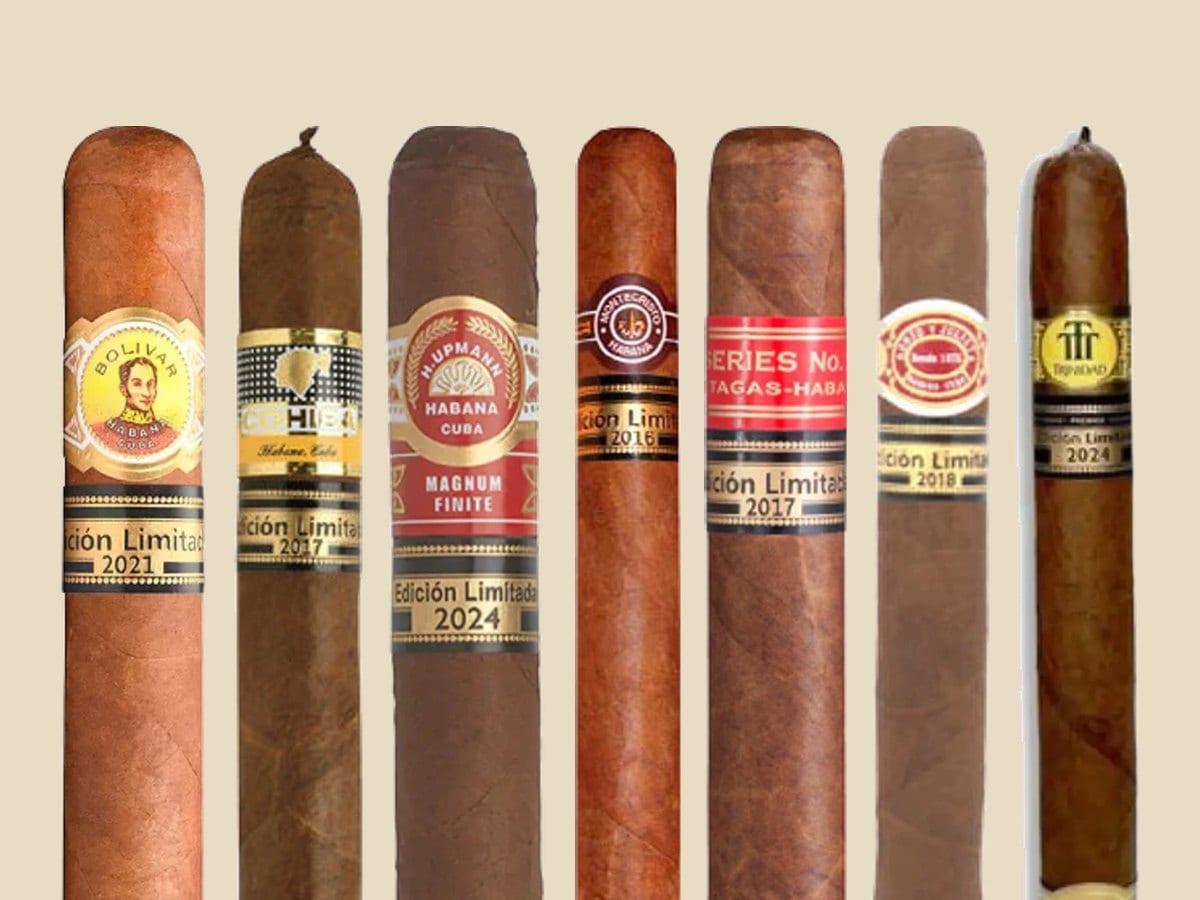
Almost everything a cigar maker sells is regular production, a fixed blend in a fixed set of sizes that the factory returns to again and again. A limited edition steps outside that steady routine. This lesson explains what a limited edition is, why makers release them, how the release is marked out as scarce, and what the word "limited" does and does not promise. The Types of Limited Editions lesson sorts the different kinds, and the Regional Editions topic covers the Cuban regional model in its own right.
What a limited edition is
A limited edition is defined by its end as much as by its beginning. The maker sets the number of boxes beforehand, has them rolled, and then ceases production of that blend and that size. The blend and the size are usually ones that appear nowhere else in the maker's range, so the cigar cannot simply be re-created by buying a regular vitola of the same brand once the edition has sold through. A cigar's size and shape is called its vitola, the Spanish word the trade uses for a cigar's factory form, by the mould it is rolled in; a limited edition very often appears in a vitola drawn up only for that release.
The wrapper, binder and filler come out of the same leaves as any other cigar from the same factory. What is different is the decision to stop, and the promise that follows from that decision: when the count is gone, it is gone.
Why makers release them
Makers release limited editions for a handful of reasons, and they often overlap in a single release. One is experiment. A limited edition lets a blender try a new leaf, a longer fermentation or an unusual size on a small scale, and if the cigar is well received, the blend can grow into a regular line. A second is commemoration: a maker marks its own anniversary, a milestone of a person or a place, or a moment in the year. A third is prestige. A rare, expensive release draws attention to the whole house and gives its loyal smokers something to seek out. A fourth is simply that scarcity sells, and a maker who can honestly say "only this many exist and no more will be made" has given buyers a reason to act.
How the release is marked out
Because the whole point is scarcity, every part of a limited edition is designed to show it. An uncommon vitola, a wrapper aged beyond the usual, a second band, a numbered box and a stated year all tell the same story, that this cigar is not part of the regular flow. The Cigar Boxes topic describes the boxes themselves and how their numbering and seals are read, and Cigar Anatomy describes the band and where it sits on the cigar. Numbering is the strongest signal: a box stamped with its place in a numbered run tells the buyer that the run has a fixed size, rather than an open-ended one.
What the word does not promise
Outside Cuba, "limited" is not a regulated term. No law fixes what it must mean, so the same word is used for a run of a few thousand cigars and a run many times larger. The only honest measure is the size of the run and whether the maker is known to stop. A "special" or "limited" label on an ordinary cigar means nothing by itself; what matters is a number, a one-off blend, and a house with a record of not re-releasing. The Cuban programmes, which do have written rules, are covered in the next lesson.