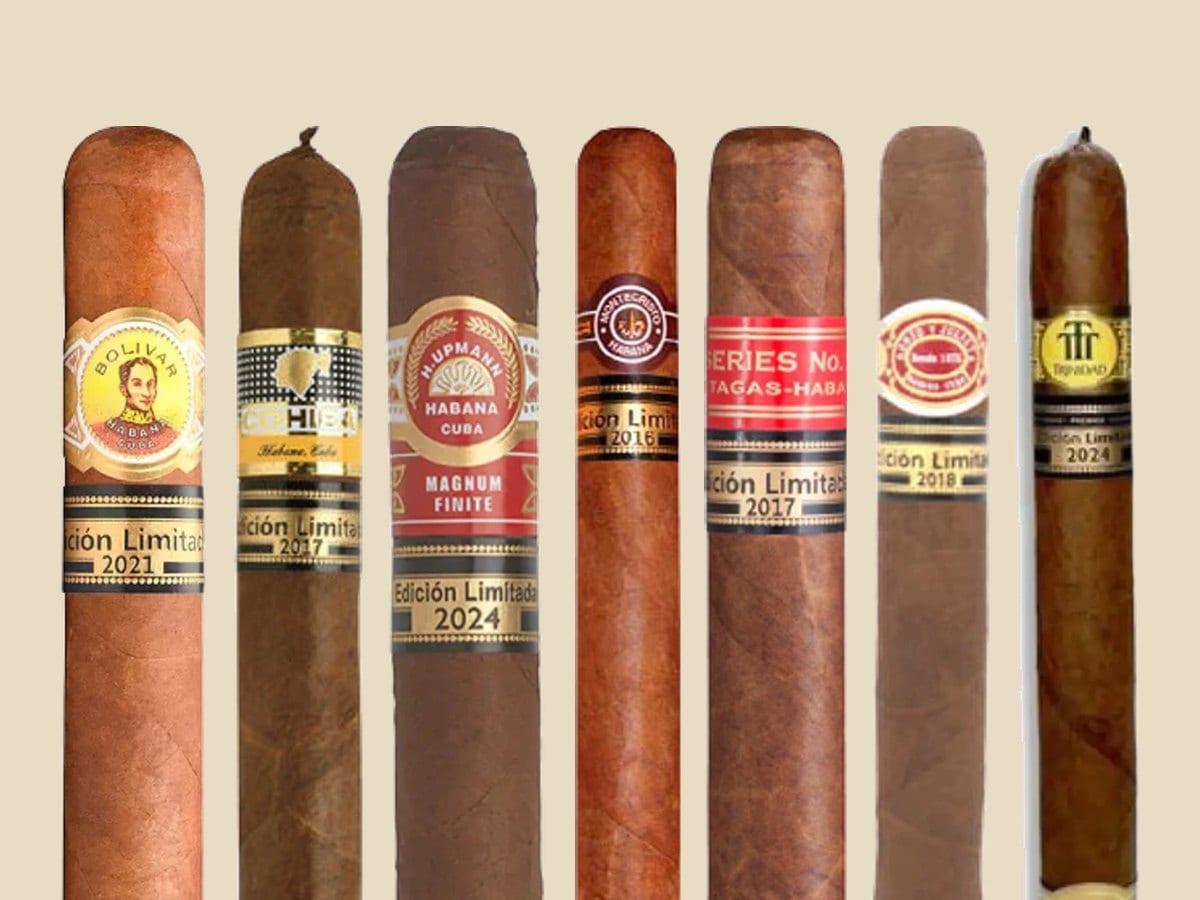
The word "limited" covers several different things, and a collector who wants to judge how scarce a release really is has to know which kind it is. This lesson sets out Cuba's Edición Limitada and Edición Regional programmes and their written rules, touches on the island's aged-leaf Reserva, Gran Reserva and Añejados lines, and then describes how limited releases work outside Cuba, where the rules are looser. The Regional Editions topic treats the regional model in depth, and Major Cigar Brands profiles the houses named here.
Cuba's Edición Limitada
Cuba has made an annual Edición Limitada every year since 2000. The programme is run by Habanos S.A., the company that markets and distributes all of Cuba's cigars, and its rules are written down. The cigar is made in a vitola that is not normally found in that brand, and only a small number are made. The leaf is aged at least two years before the cigars are rolled, and the wrapper is a darker, more ripened leaf than the brand's usual one, which is why the release reads as a maduro, from the Spanish for "ripe." Each cigar carries an extra black-and-gold band naming the year of release, and each box an extra black-and-gold seal with the same information. Habanos chooses which brands and which vitolas appear each year, and several brands have taken turns in the series rather than one brand claiming it every year.
In the programme's early years the two-year rest was applied to the wrapper alone; later the whole blend came under it, so that today the wrapper, binder and filler all rest at least two years before rolling. The point of the rule is to put something into the cigar that a regular release cannot provide on demand, leaf that has already rested, and to show it in the darker wrapper. The year on the band does the rest: it dates the cigar, so that the same brand's limited edition from one year is a different object from the next year's.
Cuba's Edición Regional
The Edición Regional programme began alongside it, in 2005, and covers the cigars that Cuba sets aside for a single market. A regional edition is distributed in only one country or region, is made in one of the less well-known of Cuba's brands, and appears in a vitola not normally used for that brand, so that the regional release is easy to tell from the regular one. The blend is the brand's standard one, with no special aged leaf, and the boxes are numbered. The second band is silver and burgundy and names the territory the cigar was made for, such as a country or a region, where the Edición Limitada band instead names the year. The Regional Editions topic explains how the programme began, how the brands are chosen and how the releases have multiplied.
Reserva, Gran Reserva and Añejados
Cuba also releases aged-leaf lines that sit close to the limited editions without being the same thing. The Reserva, first made by Cohiba in 2002, and the Gran Reserva, first made by Cohiba in 2009 with its Siglo VI, are rolled from the leaves of a single marked harvest, a cosecha, aged before rolling: the Reserva from leaf aged at least three years, the Gran Reserva from leaf aged at least five years. The Añejados date from 2015 and are different again, whole batches of already-made cigars that Habanos has aged in their boxes for at least five years and then re-released, labelled only once the aging is done. None of these lengthen the Edición Limitada rules; they are parallel programmes built on age rather than on an uncommon vitola.
Limited releases outside Cuba
There are no central rules outside Cuba, so New World makers define "limited" for themselves. One common form is the recurring annual or anniversary line: the same name returns each year in a fresh, numbered release, scarce in any given year but never gone for good. Arturo Fuente's Fuente Fuente OpusX has run as such a line since it appeared in 1995, and Padrón's Family Reserve, begun in 2009, is a numbered annual series tied to the family's milestones. Davidoff keeps the same rhythm from the Dominican Republic: each year it releases a "Year of the ..." edition named for the coming year's animal in the Chinese zodiac, such as the Year of the Snake for 2025 and the Year of the Horse for 2026, in a one-off vitola, alongside a yearly Limited Edition. A second form is the one-off small batch, a single blend of a set size that is not repeated. A third is the shop or event exclusive, a cigar made for one retailer or one festival and sold nowhere else. The table compares the two Cuban programmes with a New World recurring line on the attributes that matter to a collector.
| Cuban Edición Limitada | Cuban Edición Regional | New World recurring limited line | |
|---|---|---|---|
| Who decides | Habanos picks the brand and vitola each year | A distributor picks a brand and vitola for its market | The maker decides |
| Where it is sold | Worldwide, in small numbers | One country or region only | Usually worldwide, sometimes one retailer |
| The blend | Special, with leaf aged at least two years and a darker wrapper | The brand's standard blend | Varies; often aged or unusual tobacco |
| The vitola | Outside the brand's usual range | Outside the brand's usual range | Often a new size each year |
| The second band | Black and gold, naming the year | Silver and burgundy, naming the region | Varies with the house |
Read across the rows and the two Cuban programmes differ mainly in the blend and in the band. The Edición Limitada is a special, aged blend sold everywhere and dated by year; the Edición Regional is a standard blend in an unusual size, sold in one place and named for it. A New World recurring line sits in between, with the maker's own word and its output as the only check on how "limited" it really is.