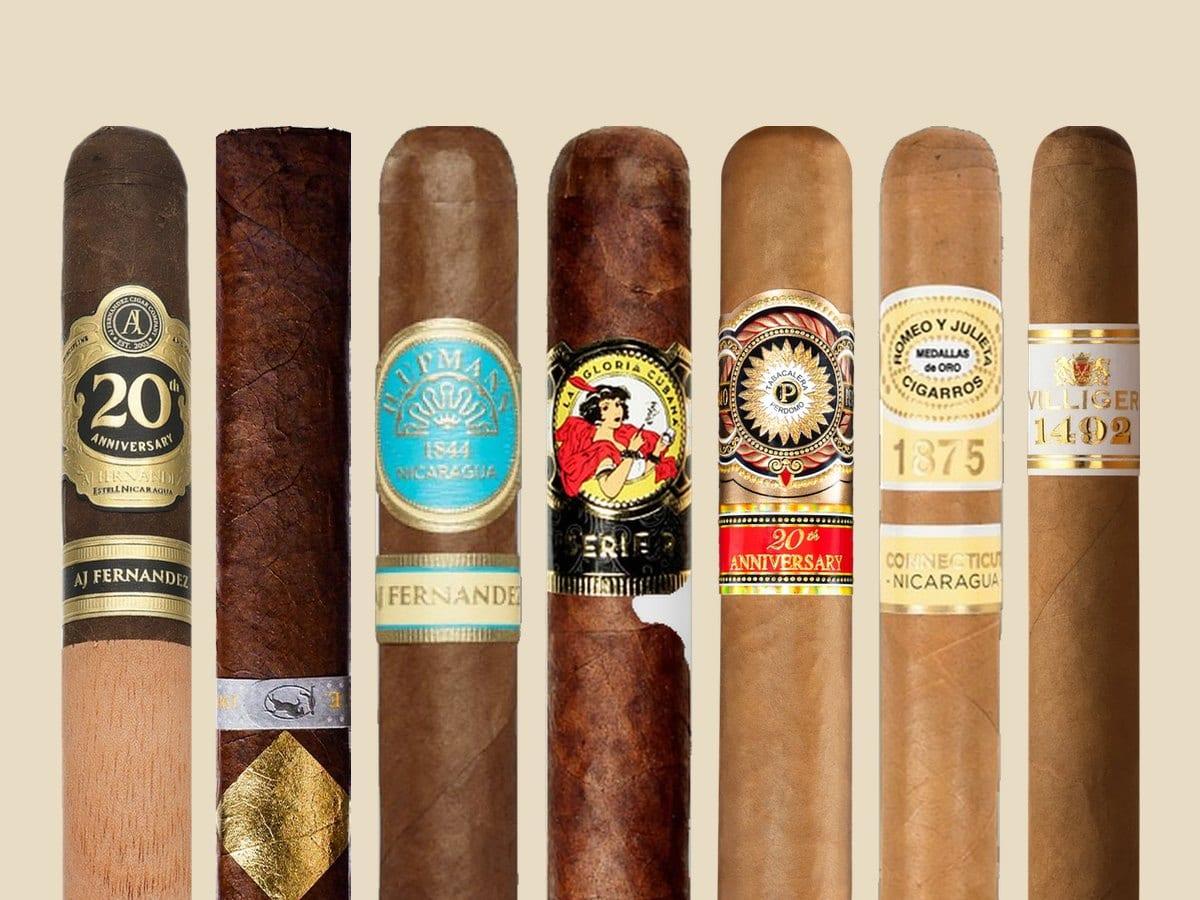
The premium cigar trade has always had two kinds of company. One owns farms and factories and makes millions of cigars under many names. The other is a brand: a name, a set of blends and a group of loyal smokers, with the rolling done wherever the owner can find the right hands and the right leaf. Boutique brands belong to the second kind. This lesson explains what the word means in the trade, how the category arose, which brands defined it and where they are made, how some were bought by large groups, and how United States regulation shaped them. The makers that own their factories have lessons of their own, among them Arturo Fuente, Padrón, Oliva, My Father Cigars and Rocky Patel.
What "boutique" means
There is no legal or official definition of a boutique cigar. In the trade the word describes a company that is small in volume, is led by its founder, and sells its cigars largely on the reputation of the person who blends them. The blend, or liga in Spanish, is the recipe of tobaccos for wrapper, binder and filler, and in a boutique company it is usually chosen by the owner rather than by a factory's staff. Production is small next to the large groups, and many releases are made once, in a numbered quantity, and not repeated.
The word does not tell you whether the company owns a factory. Many boutique brands do not. They work as contract brands: the owner designs the blend, often buys or selects the tobacco, and pays an established factory, a fábrica or tabacalera in Spanish, to roll the cigars to that specification. The factory supplies the building, the rollers, the quality control and often the leaf itself. A few boutique companies did build or buy factories of their own, but even those usually began by renting someone else's skill.
The difference between factory and brand matters to anyone reading a cigar band. The name on the band is the brand; the name of the factory is often printed only on the box, or not at all. Two cigars from different brands may come from the same factory floor, and one brand may use several factories for different lines. Alec Bradley, told in its own lesson, is a clear example: it has owned no factory and has used Raíces Cubanas and the Plasencia family's factories in Honduras and Nicaragua, and Kelner in the Dominican Republic.
The contract factories
A small number of factories make a large share of the boutique cigars sold today, and their names recur throughout this lesson. In Estelí, in northern Nicaragua, the main ones are My Father Cigars, the García family's factory, which has made Tatuaje cigars since the family moved there; Aganorsa Leaf, formerly called TABSA (Tabacos Valle de Jalapa S.A.), which makes cigars for Illusione, Warped and nearly all of Viaje; Tabacalera A.J. Fernandez, which makes The Tabernacle for Foundation; and Joya de Nicaragua and Nicaragua American Cigars (NACSA), which roll for Dunbarton Tobacco & Trust. Plasencia, the Honduran-Nicaraguan family of growers and makers, has made cigars for many outside brands in both countries; Oliva began in a Plasencia factory in Honduras before it opened its own.
In Danlí, in southern Honduras, the best-known contract factory is Raíces Cubanas, run by the Endemaño family. It made most of Alec Bradley's cigars for years and has rolled for Viaje, Illusione and other small brands. In and around Santiago de los Caballeros, the heart of the Dominican cigar industry, Ernesto Pérez-Carrillo's Tabacalera La Alianza made the first cigars for Crowned Heads; the Kelner Boutique Factory, opened by Hendrik Kelner Jr. around 2012, makes its own Smoking Jacket cigars and the British brand Casdagli; and Tabacalera William Ventura, in Tamboril just outside the city, made the first Caldwell cigars.
How the category arose
The cigar boom of the 1990s gave the boutique brand its start and its first setback. Imports of premium cigars into the United States had stood at about 100 million a year through the 1980s. They rose to 117.8 million in 1993, 176.3 million in 1995 and about 293 million in 1996. Demand drew hundreds of newcomers into the trade; one distributor counted about 200 brands started during the boom. Many had no factory and no tobacco of their own. When the boom ended in 1997 and the bust ran for about two years, shops were left with unsold stock and most of the new brands disappeared.
The survivors showed how a small brand could last. Some, like Alec Bradley, kept working through established factories. Others, like La Flor Dominicana, built a factory of their own. Litto Gomez, a former jeweler, and his wife, Ines Lorenzo-Gomez, began making cigars in the Dominican Republic in 1994 (some sources give 1996 for the brand) with five rollers turning out about 3,000 cigars a week; by 1997 they had 43 rollers and about 60,000 cigars a week, in a factory in Tamboril. Sales of premium cigars in the United States began to climb again in 2001.
The new wave that followed in the 2000s differed from the boom brands in one important way. Its founders were mostly people who already knew cigars well: shop owners, buyers, salesmen and enthusiasts who had smoked widely and wanted a particular cigar that no one was making. At the same time, Nicaragua became the center of the work. Cuban cigar makers who had left the island, such as the García family described below, brought their skill to Miami and then to Estelí; growers such as Eduardo Fernández, who entered Nicaraguan tobacco in 1998, expanded their farms; and factories there took outside clients, some making half their cigars for other brands. Estelí became the place where a newcomer with a blend in mind could find a factory to make it.
Tatuaje and the García family
The brand most often named as the start of the modern boutique wave is Tatuaje, Spanish for tattoo, founded by Pete Johnson. Johnson, whose tattoos gave the brand its name and who had worked as a cigar buyer in Beverly Hills, met José "Pepín" García, a Cuban master roller who had settled in Miami. García had opened a small factory, El Rey de los Habanos, on Calle Ocho in Miami's Little Havana, and Johnson's Tatuaje was his first client. The first Tatuaje cigars, the Brown Label, were released in 2003, rolled in Miami by García's workers.
Johnson has said the brand "really took off" when its Taino, a 7⅝ inch by 49 ring gauge cigar, was ranked the No. 4 cigar of 2005 in the best-known annual list of the year's top cigars. Sources disagree on its score, 92 or 93 points. Demand outgrew the Miami workshop, and in June 2006 the García family opened a factory in Estelí, first called Tabacalera Cubana and later known as My Father Cigars. By 2013 most Tatuaje production had moved there, with a small amount still rolled in Miami.
Tatuaje also showed how a boutique brand uses scarcity. In October 2008 Johnson released The Frank, the first of his Monster Series, a box-pressed 7⅝ by 49 cigar sold in 666 numbered coffin-shaped boxes of 13 cigars, 8,658 cigars in all, through 13 chosen shops. A new monster followed in later years. Limited, numbered releases of this kind became one of the habits of the boutique trade.
Illusione and Viaje
Dion Giolito, a former punk drummer from Reno, Nevada, opened his own cigar shop there in 2004 and soon wanted a cigar of his own. In 2005 he had his first 7,000 cigars made in Honduras, through a Honduran producer, and the Illusione brand made its debut at the industry's trade show in Las Vegas in 2006. Its cg:4 was ranked the No. 7 cigar of 2007, and Illusione cigars appeared on the same annual list six times by 2015, among them the Epernay in 2009, 2010 and 2011. The Epernay is still made at Raíces Cubanas in Danlí, while most of the other Illusione lines moved to Aganorsa Leaf in Estelí.
Andre Farkas, who had worked in cigar retail and as a talent agent in Los Angeles, started Viaje in January 2008 (some sources say 2007). On January 1, 2009, he moved production to Raíces Cubanas in Honduras, where the regular Viaje Exclusivo is made; later releases have come from Aganorsa Leaf and other factories. Viaje is built almost entirely on small, seasonal and limited releases. The Exclusivo itself began as a private blend Farkas made for his own smoking before he decided to sell it.
Warped, Crowned Heads and the second generation
Kyle Gellis smoked his first cigar, a Montecristo No. 2 given to him by his father, at 16, and launched Warped while still in college; sources give 2007 or 2008. His first blends were rolled at El Titan de Bronze, one of the last old cigar workshops on Calle Ocho in Miami. In 2014 he began working with Aganorsa's factory in Estelí on Flor del Valle, and later lines were developed with Max Fernández, son of Aganorsa's owner.
Crowned Heads came out of a large company's reorganization. When C.A.O., a Nashville cigar company that had become part of General Cigar, moved its operations to Virginia, four former employees, Jon Huber, Mike Conder, Michael Trebing and Nancy Heathman, stayed in Nashville and announced their own company in February 2011. Its first cigar, Four Kicks, shipped on November 8, 2011. It was made by Ernesto Pérez-Carrillo at Tabacalera La Alianza in Santiago, with an Ecuadorian Habano wrapper over Nicaraguan binder and filler. A Sumatra-wrapped blend that Pérez-Carrillo had preferred at the time was finally released in 2020 as the Four Kicks Capa Especial. In 2025 Conder retired; Tim Ozgener became chief executive and Huber president.
Brands that built their own factories
Some newer companies went further and set up factories of their own in Estelí, usually in partnership with a Nicaraguan cigar maker. RoMa Craft Tobac was announced in January 2012 in Austin, Texas, by Skip Martin and Michael Rosales. Its cigars, starting with CroMagnon, are made at Fábrica de Tabacos NicaSueño in Estelí, which Martin co-owns with the Nicaraguan cigar maker Esteban Disla; sources date the factory to 2011 or 2013. James Brown, who moved to Estelí full time in 2013, founded Black Label Trading Company that year and in February 2015 announced his own factory there, Fábrica Oveja Negra.
In the Dominican Republic, Robert Caldwell founded Caldwell Cigar Company in early 2014. Its first cigars were rolled at Tabacalera William Ventura, a small factory in Tamboril, and in 2015 Caldwell announced a larger factory of its own, still run with the Ventura family; later sources describe the company as producing with the Ventura family's factories rather than in a factory it owns.
The grower as brand owner
At the other end of the supply chain, a grower can become a brand. Eduardo Fernández, advised by the Honduran grower Néstor Plasencia, entered Nicaraguan tobacco in 1998. His company, Aganorsa, grows tobacco in Jalapa, Condega and Estelí, the three traditional growing areas of northern Nicaragua, on about 1,200 acres in 2019, from its own seed varieties called Corojo '99 and Criollo '98. Its Estelí factory, opened in 2002 as TABSA, closed for a time and reopened, and by 2019 it made more than seven million cigars a year, about half of them for other brands. In April 2018 the family's sales company, Casa Fernández, renamed itself Aganorsa Leaf, and the factory took the same name soon after. A company that owns its own fields and sells its leaf to rivals is the opposite of a contract brand, yet it is often the supplier on which the contract brands depend.
Founders from inside the trade
Two of the best-known newer companies were founded by people who had run production at Drew Estate, the Estelí company founded in New York in 1996 by Jonathan Drew and Marvin Samel. Steve Saka, Drew Estate's former president and chief executive, founded Dunbarton Tobacco & Trust with his wife, Cindy, in 2015; its first cigar, Sobremesa, is rolled under contract in Estelí. The Cigar Personalities lesson Steve Saka tells that story in full.
Nick Melillo began in the cigar trade in 1996, at 18, working in a tobacco shop in Connecticut. He joined Drew Estate in March 2003, lived in Estelí, and handled blending, tobacco buying, fermentation and production planning, rising to vice president of international operations. He left in 2014 and founded Foundation Cigar Company in Connecticut in 2015. Its first cigar, El Güegüense, named after a Nicaraguan folk drama and meaning "the wise man", used Corojo wrapper from Jalapa and was made at Aganorsa's factory in Estelí. The Tabernacle, a dark Connecticut Broadleaf cigar, is made at Tabacalera A.J. Fernandez. One of Foundation's cigars made the best-known annual list of top cigars in 2016, the year after the company began.
The brands compared
The table below sets the boutique and newer brands in this lesson side by side on the same points: who founded them, when, where the cigars are made and the first cigar or line that made their name. It shows how many of them depend on the same few factories, and how many of those factories are in Estelí.
| Brand | Founder(s) | Founded | Where made | First cigar or line that made its name |
|---|---|---|---|---|
| La Flor Dominicana | Litto Gomez and Ines Lorenzo-Gomez | 1994 (some sources 1996) | Own factory, Tamboril, Dominican Republic | Built during the boom; one of its survivors |
| Tatuaje | Pete Johnson | 2003 | El Rey de los Habanos, Miami; then My Father Cigars, Estelí | Brown Label; the Taino, No. 4 cigar of 2005 |
| Illusione | Dion Giolito | 2005–2006 | Honduras (Epernay at Raíces Cubanas, Danlí); most lines at Aganorsa Leaf, Estelí | cg:4, No. 7 cigar of 2007 |
| Viaje | Andre Farkas | 2008 (some sources 2007) | Raíces Cubanas, Danlí, and other factories | Exclusivo; small seasonal releases |
| Warped | Kyle Gellis | 2007 or 2008 | El Titan de Bronze, Miami; Aganorsa Leaf, Estelí | Flor del Valle (2014) with Aganorsa |
| Crowned Heads | Jon Huber, Mike Conder, Michael Trebing, Nancy Heathman | 2011 | Tabacalera La Alianza, Santiago, Dominican Republic | Four Kicks |
| RoMa Craft Tobac | Skip Martin and Michael Rosales | 2012 | Own factory, NicaSueño, Estelí | CroMagnon |
| Black Label Trading Company | James Brown | 2013 | Own factory, Oveja Negra, Estelí (from 2015) | Black Label lines from its own factory |
| Caldwell | Robert Caldwell | 2014 | Tabacalera William Ventura, Tamboril, Dominican Republic | Caldwell's first lines with the Ventura family |
| Dunbarton Tobacco & Trust | Steve and Cindy Saka | 2015 | Joya de Nicaragua and NACSA, Estelí | Sobremesa |
| Foundation | Nick Melillo | 2015 | Aganorsa Leaf and Tabacalera A.J. Fernandez, Estelí | El Güegüense; The Tabernacle |
Read down the "Where made" column and the pattern is clear. Of eleven companies, seven make all or most of their cigars in Estelí, and only three, La Flor Dominicana, RoMa Craft and Black Label, own the factory that rolls them. The rest are brands in the strict sense, whose owners control the blend and the release, not the building.
What sets boutique production apart
The differences between a boutique cigar and one from a large group lie less in the rolling, which may happen in the same factory, than in scale and choice. A boutique release can be as small as Tatuaje's 666 boxes of The Frank, so it can use a tobacco that exists only in small quantity, such as a particular year's crop from one farm, which a brand selling millions of cigars could not buy enough of. The owner can also hold tobacco back to age before it is rolled, or decide that a blend will be made once and never again. Releases like Tatuaje's Monster Series, Viaje's seasonal cigars and Dunbarton's Muestra de Saka, a series of small, irregular batches named after the muestra, the sample cigar a factory rolls to test a blend, are built on that freedom.
The same scale brings risks. A contract brand depends on its factory's capacity and on its access to tobacco, both of which belong to someone else. Several of the brands in this lesson have changed factories over the years, and some have kept several at once for that reason. The brands that grew largest either built their own factories or, as the next section shows, were sold.
When large groups bought boutique brands
As the newer brands grew, the large cigar groups bought several of them. In October 2008 Oettinger Davidoff took over Camacho, the Eiroa family's company in Danlí, Honduras, to add a full-bodied brand for the United States; the Camacho lesson covers that company. On October 20, 2014, Swisher International announced it would buy Drew Estate in its entirety, for an undisclosed price; Drew Estate kept its managers and its Estelí factory as a Swisher subsidiary. Scandinavian Tobacco Group, which owns General Cigar, bought Room101, the brand Matt Booth had sold since 2009, on June 10, 2022, and made Booth its creative director. On March 1, 2023, the same group completed its purchase of Alec Bradley for $72.5 million. In each case the founders stayed on, as managers, consultants or brand ambassadors, because the brand's value lay largely in their names.
The FDA rule and the courts
United States regulation shaped the boutique trade more than any other outside force, because the United States is its largest market and because the rules weighed most on small companies that launch many new cigars. In May 2016 the Food and Drug Administration (FDA) issued its "deeming rule", which brought cigars under the Tobacco Control Act of 2009; it took effect on August 8, 2016. Under the rule, a cigar on the market on February 15, 2007, the so-called predicate date set by the law, was grandfathered. Any cigar introduced after that date needed the FDA's review, through a claim of substantial equivalence to a grandfathered product or a full premarket application, and a cigar introduced after August 8, 2016, could not be sold until it was authorized. For a boutique brand whose business is new releases, that threatened the whole model.
Small makers responded by getting their cigars on sale before the deadline. Every Foundation brand went on sale before August 8, 2016, and Dunbarton shipped its Mi Querida straight after the trade show that summer so that it would reach shops in time. The industry's associations went to court. In August 2023 Judge Amit Mehta of the federal district court in Washington vacated the deeming rule as it applied to premium cigars, finding that the FDA had failed to consider the evidence on how they are actually used. The Court of Appeals for the District of Columbia Circuit upheld that decision on January 24, 2025 (reissued on March 26, 2025), but sent the case back so that the parties could argue over how a premium cigar should be defined. On April 15, 2026, the district court re-adopted its eight-part definition unchanged: a whole-leaf wrapper, a binder of 100 percent leaf tobacco, filler that is at least half long filler by weight, rolling by hand, no filter or non-tobacco tip, no flavor other than tobacco, nothing but tobacco, water and vegetable gum, and a weight of more than 6 pounds per 1,000 cigars. Cigars that meet all eight tests are outside the rule; the court said the FDA may still write a new rule of its own. The Industry lessons Regulation and Legal — USA, EU, Russia and Hand Rolled. Premium is Premium cover the case in detail.
Why the boutique brands matter
The boutique companies remain small next to the large groups, but they changed how a premium cigar is launched and sold. They put the blender's name in front of smokers, made limited and numbered releases a normal part of the market, and turned a handful of factories in Estelí, Danlí and Santiago into workshops for dozens of independent labels. The large groups have taken notice, as the purchases of Drew Estate, Room101 and Alec Bradley show. For the smoker, the practical lesson is to read beyond the band: knowing who blended a cigar and which factory rolled it often tells you more about it than the brand name alone.