A banker's cigar factory
Hermann Upmann came to Havana from Germany in the early 1840s. Accounts of his arrival differ: the brand's Cuban owner says he settled in the city in 1840, while other histories place his arrival in 1843, when he came to look after the affairs of Gravenhorst & Co., an import-export house from Bremen. The sources agree on what followed. In 1844 he bought a small cigar factory at 85 San Miguel Street and began making cigars under his own name, and he ran a banking business alongside it that served, among others, the city's tobacco dealers and manufacturers.
The two businesses fed each other. The bank gave the factory capital and a list of well-connected clients, and the cigars gave the bank something to offer those clients. Upmann is often said to have sent cigars to his banking customers in cedar boxes stamped with his name, and he is sometimes credited with being among the first to pack cigars in cedar at all. The idea fits the brand's later reputation for presentation, but the claim of being first cannot be proved, and it is safer to say that H. Upmann was one of the houses that turned the cedar box into a branded object rather than a plain container. The Cigar Boxes topic tells the wider story of how Havana's boxes became status objects.
The cigars soon earned their own name. Through the second half of the 19th century the brand won gold medals at international exhibitions, and the medals are still printed on its boxes. The number varies with the source: the brand's Cuban owner counts gold medals at no fewer than eleven international fairs, while other histories count seven. By about 1900 the factory, by then on Paseo de Tacón, was making the brand in more than 200 sizes and selling about 25 million cigars a year. In Britain the cigars reached smokers through J. Frankau & Co., the London house that became the brand's sole British importer from the 1850s, as the Cigar Personalities lesson Joseph Frankau (UK) describes.
War, bankruptcy and new owners
The family connection to Germany became a liability in the First World War. Hermann Upmann retired in 1890, and the business passed to his nephew Heinrich and then, from 1914, to two younger relatives, the brothers Hermann and Albert Upmann. When Cuba declared war on Germany in April 1917, the bank was closed for about 30 months; in December 1917 the firm was put on the United States' list of enemy traders, and the brothers were interned in 1918. Historians have since argued that the family's businesses served as cover for German intelligence work during the war, which is why they were treated so harshly.
The bank never recovered. Bank examiners found that money and securities belonging to depositors had been used for speculation, the brothers were arrested in May 1922, and both the bank and the cigar business went bankrupt. The criminal charges were later dropped, but the family's part in the brand was over. The cigar business was saved by its British importer: in 1922 J. Frankau & Co. bought the brand and the factory at auction, reportedly for 30,000 Cuban pesos, and after about three years of talks with the creditors production resumed. Under Frankau the brand also gained one of its lasting features. In December 1933 the first H. Upmann cigars packed in aluminium tubes went on sale, a way of keeping a single cigar fresh in a pocket or on a long trip.
In the 1930s Frankau, by then owned by the Freeman family's J. R. Freeman & Son, sold the Havana factory and the brand to Menéndez, García y Cía., the company of Alonso Menéndez and José Manuel "Pepe" García, which had launched Montecristo in 1935. The year of the sale differs between sources, which give either 1935 or 1937; the most detailed recent history of Montecristo gives 1937 and a price of about £100,000. Frankau kept the right to sell H. Upmann in Britain. Menéndez and García made both brands under one roof, and by Benjamín Menéndez's later account the blend of the early Montecristo was the same as H. Upmann's, the difference being a lighter wrapper selected for Montecristo from more than 70 shades. In 1944, as the brand approached its hundredth year, the company built a new factory on its leaf-warehouse site at Amistad 407–409, close to the Partagás factory, and H. Upmann and Montecristo were made there until 2003.
Two H. Upmanns after 1960
On 15 September 1960 the Cuban government nationalized the cigar industry, and soldiers took over the H. Upmann factory along with the rest. The brand became state property, and the Menéndez and García families left Cuba. The Habanos SA lesson The History of Cuban Cigars tells that part of the story, and Cigar Personalities covers the people who left.
In Cuba the brand carried on under the state monopoly, today Habanos S.A. Its cigars are made totalmente a mano con tripa larga, entirely by hand with long filler, meaning whole leaves that run the length of the cigar, using leaf from the Vuelta Abajo in Pinar del Río. The brand's owner describes its strength as light to medium, and smokers usually find it more about aroma than power. Since leaving Amistad in 2003 the H. Upmann workforce has moved more than once within Havana, and the sources do not agree on every address; around 2012 it moved into the old Romeo y Julieta building at 852 Padre Varela (Belascoaín) Street. Habanos S.A. ranks H. Upmann among its six global brands, the names sold everywhere and given the heaviest marketing, alongside Cohiba, Montecristo, Romeo y Julieta, Partagás and Hoyo de Monterrey.
The modern Cuban range is built around the Magnum line. A vitola is a cigar's size and shape, and Magnum is the name H. Upmann gives to its thick, medium-length sizes. The Magnum 46, a corona gorda of 46 ring gauge (46/64 of an inch across) and 143 mm, was joined by the Magnum 50 in 2008 and the Magnum 54 in 2016. The brand added a Half Corona in 2011, presented its first Reserva, an H. Upmann No. 2 made from the 2010 harvest, in 2014, and its first Gran Reserva, a Sir Winston from the 2011 harvest, around 2017. A Reserva is a release of tobacco aged at least three years before rolling, and a Gran Reserva of tobacco aged at least five. In 2018 it presented the Propios as an Edición Limitada, the annual series of special sizes made with longer-aged leaf.
The best-known single cigar is the H. Upmann No. 2, a pirámide (a cigar that tapers to a point at the head) of 52 ring gauge and 6⅛ inches, about 156 mm. It has long stood in the shadow of the Montecristo No. 2, which has the same shape, but in 2022 it was named the best cigar of the year in the most widely followed annual ranking, with 98 points. Spain marked the award with a special release of the 2022 production.
The brand also has a place in American political history. By the account of Pierre Salinger, President John F. Kennedy's press secretary, Kennedy asked him in February 1962 to buy as many H. Upmann petit coronas as he could before the U.S. trade embargo on Cuba took effect, and Salinger came back with about 1,200 before the President signed the order. The story was told by Salinger himself, years later; some in the trade say the cigar was the machine-made Petit Upmann rather than a hand-made petit corona.
The non-Cuban H. Upmann
The Menéndez and García families rebuilt their business abroad. In 1961 they founded a company in the Canary Islands, where they made cigars under new names such as Montecruz and also made H. Upmann cigars. In 1972 the American company Consolidated Cigar bought a controlling interest in the Canary Islands firm, and Consolidated began selling a non-Cuban H. Upmann in the United States in 1975, later moving production to La Romana in the Dominican Republic, at the factory now called Tabacalera de García. Consolidated became part of Altadis U.S.A. after the Spanish and French tobacco monopolies merged as Altadis in 1999, and the Industry topic's Major Producers (Companies) lesson follows those mergers.
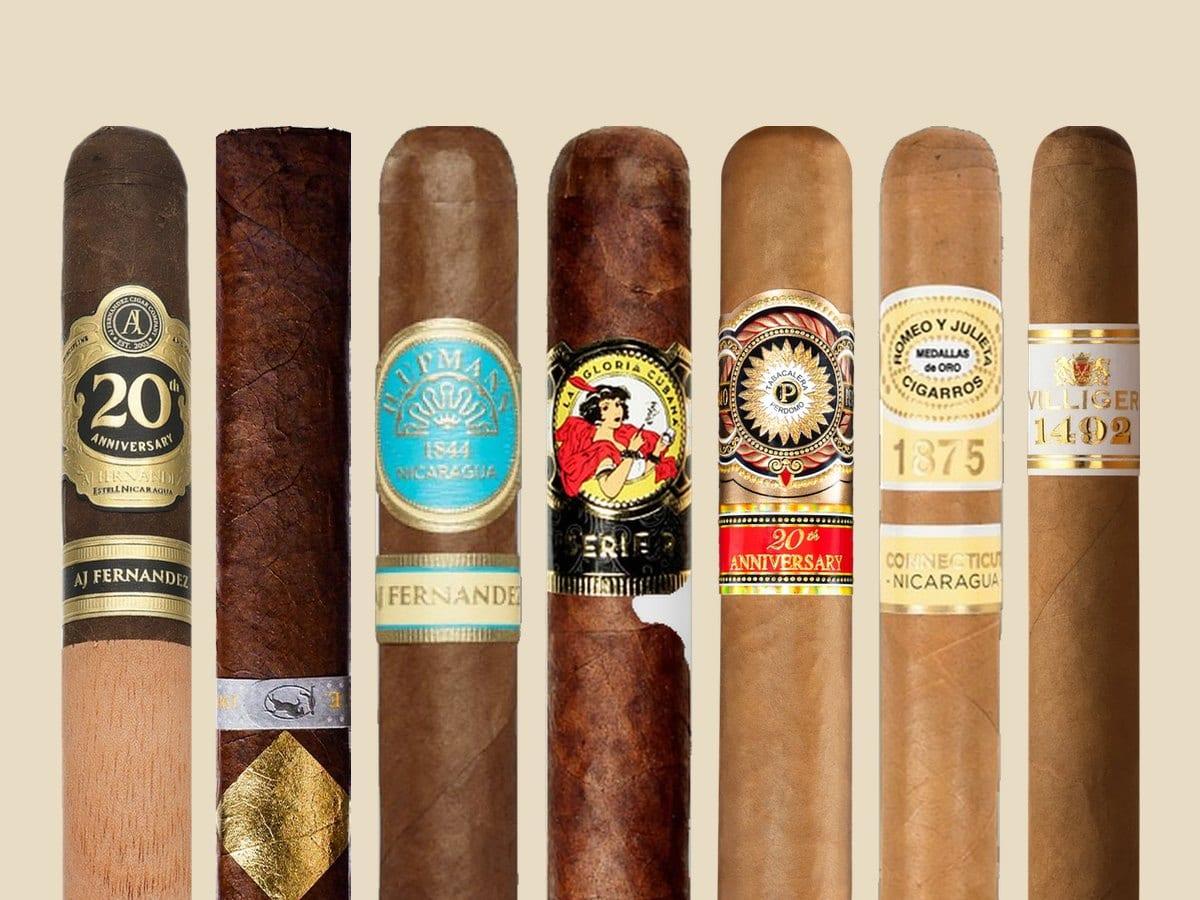
The American H. Upmann is a different cigar from the Cuban one, made from Dominican, Nicaraguan, Honduran and other leaf, and it is sold in the United States, where the Cuban H. Upmann cannot be. Its lines have leaned on the founder's banking story: The Banker, launched in 2014 and made at Tabacalera de García, comes in boxes styled like a bank vault's contents, and later sizes carry names such as Ingot and Daytrader. Altadis has also turned to outside makers. In 2017 it launched H. Upmann Nicaragua by AJ Fernandez, rolled in Estelí by the Nicaraguan maker Abdel Fernández, and in 2026 that line added the Sunrise, a milder cigar with an Ecuador Connecticut-seed wrapper over Nicaraguan binder and filler.
Ownership on the two sides has moved apart again. When Imperial Brands, which had bought Altadis in 2008, sold its premium cigar business in 2020, it divided the sale in two: the American business, including Altadis U.S.A. and its H. Upmann, went to Gemstone Investment Holding for €185 million, while the rest, including Imperial's half of Habanos S.A. and the Tabacalera de García factory, went to Allied Cigar Corporation, as the Habanos SA topic explains. Both sales were completed on 29 October 2020. The result is the same pattern seen with Montecristo, Romeo y Julieta and Partagás: one name, one founder and one cedar-box story, and two unrelated cigars, which the Cuban vs Non-Cuban topic sets side by side.