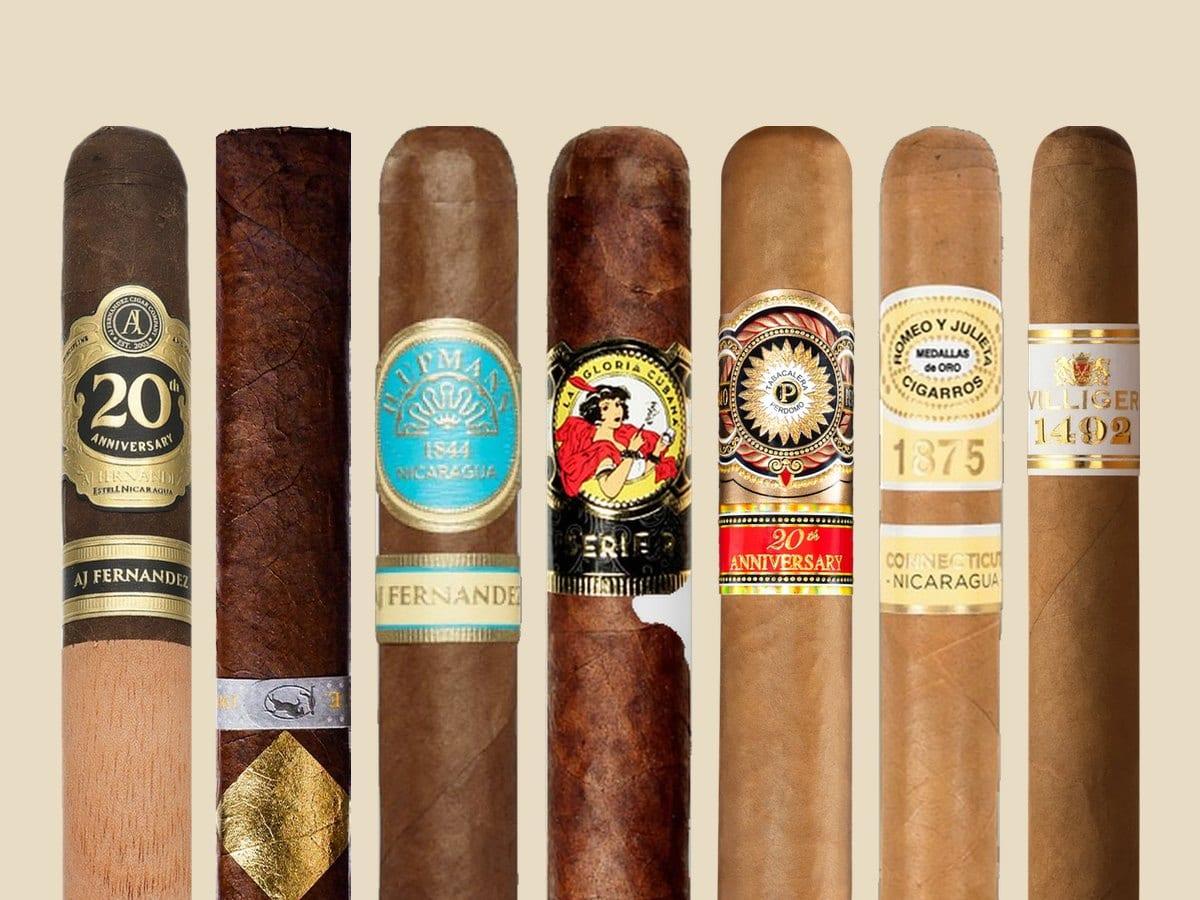
Perdomo is one of the companies that turned the cigar boom of the 1990s into a lasting business. Many brands born in those years disappeared when demand fell in 1997, as the Cigar History lesson Cigar Boom (90s) and the Boutique and Newer Brands lesson in this topic describe. Perdomo survived by moving to Nicaragua, buying land and building one of the largest factories in Estelí. This lesson follows the family from Cuba to Miami and Estelí, explains how the company grows and ages its tobacco, and sets out its main cigars. The Tobacco by Nation lesson Nicaragua and the Tobacco Regions lessons Estelí (Nicaragua), Condega (Nicaragua) and Jalapa (Nicaragua) describe the country and the valleys where its leaf grows.
The family in Cuba
The family's cigar history begins in Cuba. A profile of Nick Perdomo Jr. from 2001 says his great-grandfather emigrated from Italy to Cuba and settled in a town called San José. Sources disagree on where that town lies. The family's own history names San José de las Lajas, about 17 miles (27 km) southeast of Havana, where Silvio Perdomo, Nick Jr.'s grandfather, grew up; the 2001 profile places San José about 32 miles (51 km) west of the capital. Another account makes Silvio himself the immigrant from Italy. The company's newer material speaks only of four generations, from the great-grandfather to Nick Jr.'s son.
Silvio Perdomo entered the trade as a young man. By the family's account he served his apprenticeship at the Cuesta y Cía factory in the early 1930s, worked at H. Upmann from 1937 to 1945, and then held a managerial post at Partagás until 1959. The H. Upmann and Partagas lessons in this topic tell the story of those two Havana houses. His son, Nicholas Perdomo Sr., began his own apprenticeship in 1948 at the Marín y Trujillo factory, joined his father at Partagás, and, by the family's account, later rose to a senior post at H. Upmann.
The revolution of 1959 ended both careers. Silvio Perdomo was arrested and, by the family's account, held first for three years in the prison on the Isla de Pinos and then for about twelve more in La Cabaña, the old fortress in Havana, and four other prisons; a later profile published on the company's site gives fourteen years in all. He reached the United States in 1974. Nick Sr. fought against the new government, was shot twice, and escaped execution, the family says, when he was taken from a hospital and sheltered at the embassy of Uruguay. With help from the Catholic Church he emigrated to the United States, where his first job was as a janitor near Washington, D.C. The family lived in Baltimore and moved to Miami in 1976. These details come from the family and have not been confirmed in independent records.
Nick's Cigar Co. in Miami
Nick Perdomo Jr. was born in about 1965; one trade profile calls him a Miami native, while the company's older biography has the family arriving in Miami from Baltimore when he was a boy. He did not start in tobacco. After school he joined the United States Navy, where he trained as an air traffic controller, and then did the same work near Miami International Airport, a job he described as paying about 75,000 dollars a year.
In August 1992, at about 26, he opened Nick's Cigar Co. in Miami, first working out of a garage. It began with three torcedores, the rollers who make a cigar by hand, and two packers: Nick Jr. and his wife, Janine, who packed the cigars into plywood boxes. He kept his airport job. For about 19 months he worked at the cigar shop from 6:30 in the morning to 3:25 in the afternoon and in the control tower from 3:30 until 11:30 at night. The company says it sold about 9,500 cigars in 1992, the year the couple's son Nicholas was born. Money was short: by Nick Jr.'s own account the company had 13 dollars in the bank at one point in 1994.
Then the boom arrived. By 1995 the Miami workshop was at full capacity and behind on orders. The early cigars used Ecuadorian wrappers and Central American filler, in the fuller style American smokers were starting to want, and the Perdomo Reserve averaged 90.4 points on a 100-point scale in a tasting of the whole range in 1998.
The move to Estelí
With Miami full, Perdomo looked to Nicaragua, where Joya de Nicaragua and Padrón had shown since the 1960s and 1970s what Estelí tobacco could do. Most accounts, including two trade profiles of 2000 and 2001, date its first factory in Estelí to 1995, when Nick Jr. flew trained rollers from Miami to teach the new workforce; he later recalled that they first rolled "trumpets" instead of torpedoes. An account based on a 2010 interview gives 1997, the year Nick Sr. came out of retirement to run the Nicaraguan factory. Nick Sr. lived in Nicaragua year-round from about 1996 and ran production there while his son ran sales from Miami. A second factory, in Ybor City, the old cigar district of Tampa, opened in 1997 and did not last, because costs in the United States were too high.
The first Estelí plant was soon too small. In 1999 the company built a new factory to its own design, Tabacalera Perdomo, down the road; a report written that year gave it 72,000 square feet, more than three times the old one, and later accounts give 88,000 square feet (about 8,200 m²). Locals call it El Monstro, "the monster". In 2001 the company employed 622 people in Central America and 24 in the United States and expected to make more than 10 million cigars that year. In 2003 its vice president said the work force had grown from five people to close to 600, and the company already made its own cellophane and boxes.
It also rolled cigars for others. In April 1999 the American brand C.A.O. lost the Costa Rican factory that made its L'Anniversaire, a box-pressed maduro, and asked Perdomo to make it; Perdomo's blend won a tasting against another factory's. By 2003 Perdomo also made cigars for an American mail-order seller and a distributor. Its own brands of those years included the Perdomo Reserve, La Tradición Cabinet Series, Dos Ríos, Inmenso, Cuban Bullet and Perdomo², an early box-pressed cigar, pressed square in the box rather than round. The Perdomo Reserve Edición de Silvio, named for the grandfather, was the company's most expensive cigar in 2003 and was finished with a Cuban-style triple cap.
Nick Perdomo Sr. died in the mid-2000s; one account gives 2004. The Estate Selección Vintage, or ESV, was released in 2005 in his honour.
From seed to box
The company calls itself vertically integrated, which means it controls every stage from seed to finished cigar instead of buying leaf or boxes from others. It grows tobacco in all three of Nicaragua's main northern regions: Estelí, whose leaf is the strongest; Condega, between Estelí and Jalapa, whose leaf sits in the middle; and Jalapa, near the Honduran border, known for fine wrapper. A profile published in 2018 gave the farms 1,200 acres (about 485 hectares). The company began growing its own leaf around 1999, beside the new factory, and the same profile said the family had farmed its plantations for 19 years.
The best known of the farms is Finca Natalie, in Estelí, named after Nick and Janine's daughter. Its 86 plots lie within the rim of an old crater and are watered one by one by drip irrigation. The farm has four curing barns, each filled with about 9.72 million leaves a season, for close to 39 million leaves a year. Seedlings are raised in greenhouses and inspected before they go to the field, and oxen still plough the rows. The company gives the whole process as 3,054 steps.
Leaves are picked by hand, priming by priming, from the bottom of the plant upward, and hung on eucalyptus sticks to air-cure in the barns for 45 to 65 days, depending on their size. Then they go into the pilón, the large pile in which tobacco ferments under its own heat. Each of Perdomo's pilones weighs about 3,600 pounds (about 1,630 kg) and is rebuilt by hand several times, with heat and moisture checked every day. The company says its filler ferments for at least three years, under a team led by Aristides Garcia, a tobacco man with more than 75 years in the trade. After rolling, every cigar's draw is tested, each is inspected 17 times, and the finished cigars rest for six to eight months in a climate-controlled aging room, depending on the wrapper, before they are banded, wrapped in cellophane and boxed by hand in boxes made at the company's own box factory.
Like most Nicaraguan makers, Perdomo builds its cigars from three parts: the capa, or wrapper, the leaf on the outside; the capote, or binder, which holds the bunch together; and the tripa, or filler, a blend of seco, viso and ligero, the mild, medium and strong leaves from the lower, middle and upper plant. Almost all of its blends use Cuban-seed Nicaraguan tobacco for binder and filler. The wrapper sets the character of each version, and most lines come in the same three: an Ecuadorian Connecticut, the pale, mild leaf grown under cloth in Ecuador from Connecticut seed; a Nicaraguan Sun Grown, grown in open sun and darker and spicier; and a Nicaraguan maduro, a wrapper fermented longer until it turns dark and sweet.
Since the 2010s the company has also grown its own shade wrapper. Its Nicaraguan Shade Grown comes from a hybrid of Cuban and Cameroon seed made by hand pollination, grown on a 600-acre (about 243 ha) farm in Estelí. Cameroon tobacco, from Central Africa, is known for a thin, toothy leaf with a natural sweetness, and the cross was meant to add that to Cuban-seed strength. The plants grow for 100 to 120 days under cloth that cuts the sun by 30 to 40 percent; the leaf ferments for 18 to 24 months and is then aged in bales for at least ten years before it is used.
Bourbon barrel aging
What sets Perdomo apart is what it does to its wrappers before rolling. After fermentation and years of aging in bales, the wrapper leaf is packed into barrels of American white oak that once held bourbon, the American whiskey that by law must be aged in new charred oak barrels, so distillers sell on every barrel after a single use. The leaf picks up a little of the wood and spirit, and the company describes the barrel as a further stage of fermentation. Only the wrapper goes into the barrel in most lines; in the Double Aged 12 Year Vintage the binder and filler do too.
The time in the barrel depends on the leaf. The company gives about eight months for Ecuadorian Connecticut, ten for Nicaraguan Sun Grown and fourteen for Nicaraguan maduro, the thickest of the three, and at least ten months for its own Shade Grown. The method began with the Perdomo Reserve 10th Anniversary Champagne, the company's best-known cigar. Nick Perdomo Sr. called the barrel-aged leaf the "Champagne" of wrappers, and the family kept the method to itself for some years. The release year is not settled in the sources found: one trade report says the Champagne debuted in 2004, and the company's own pages give no year.
Perdomo was not the first maker to age tobacco in spirit barrels, and others have taken up the idea since. The Arturo Fuente lesson in this topic describes the Añejo, whose Connecticut broadleaf wrapper rests in cognac barrels in the Dominican Republic; the Camacho lesson describes the American Barrel-Aged of 2015, whose Honduran Corojo filler rested in bourbon barrels; and the Condega (Nicaragua) lesson tells how Davidoff ages Condega leaf in Scotch-whisky casks. Perdomo's distinction is that it has made barrel-aged wrapper the basis of most of its range rather than of a single cigar.
The cigars
Most Perdomo lines come in the three wrappers described above, over the same Cuban-seed Nicaraguan binder and filler, so the lines differ mainly in the age of their tobacco and the time it has spent in barrels. The table lists the main lines in production in 2026 and a few important earlier ones. The year is the year of first release where sources give one; ring gauge is the diameter in sixty-fourths of an inch.
| Line | Year | Wrapper | Note |
|---|---|---|---|
| Reserve 10th Anniversary Champagne | 2004 by one account | Ecuadorian Connecticut | First Perdomo line with a bourbon-barrel wrapper; tobacco aged at least six years |
| Estate Selección Vintage (ESV) | 2005; revived 2016; box-pressed 2019 | Connecticut, Sun Grown, Maduro | Made in honour of Nick Perdomo Sr. |
| 20th Anniversary | 2012 | Sun Grown and Maduro; Connecticut later | Tobacco aged at least eight years |
| Double Aged 12 Year Vintage | 2014 | Connecticut, Sun Grown, Maduro | Ten years in bales, two in bourbon barrels; first release 240,000 cigars per wrapper |
| Habano Bourbon Barrel-Aged | 2015 | Connecticut, Sun Grown, Maduro | Replaced the earlier Perdomo Habano; tobacco aged six years |
| Factory Tour Blend | 2015 | Connecticut, Sun Grown, Maduro | First made for visitors to the Estelí factory |
| Lot 23 | Not settled | Connecticut, Sun Grown, Maduro | Tobacco from one plot of one farm in Estelí, aged five years |
| Reserve 10th Anniversary Sun Grown and Maduro | 2020 | Nicaraguan Sun Grown or Maduro | Box-pressed; wrappers ten and fourteen months in barrels |
| Inmenso Seventy | 2021 | Sun Grown, Maduro | 70 ring gauge; revives the Inmenso of about 2000 |
| 30th Anniversary | 2023 | Connecticut, Sun Grown, Maduro | Tobacco aged 15 years |
| Legacy | 2025 | Connecticut, Nicaraguan Shade Grown, Maduro | First blend of Nicholas Perdomo III |
| Legacy Father & Son | 2026 | Shade Grown, Maduro, Connecticut | Limited; blended by Nick Jr. and his son |
| Fresco | Not stated | Connecticut, Sun Grown, Maduro | Inexpensive bundle cigar |
The Champagne is the company's signature. Its wrapper is an Ecuadorian Connecticut, and by most accounts the name "10th Anniversary" marks the company's first ten years, though one account ties it to the Perdomo Reserve line. A profile published on the company's site said five million Champagne cigars were sold in the United States in 2017 alone. In 2020 the company added box-pressed versions with Nicaraguan Sun Grown and maduro wrappers.
The anniversary lines show how Perdomo uses age. The 20th Anniversary was shown at the American trade show in August 2012 for the company's twentieth year and reached shops in September 2012, first in Sun Grown and maduro, with a Connecticut version added after customers asked for one. The 30th Anniversary marked the thirtieth year, 2022, but the company held it back until its tobacco was ready; it was shown at the trade show of 2023 and shipped to shops from 17 November 2023. Its tobacco is aged 15 years before rolling, and its wrappers are barrel-aged as well. The Double Aged 12 Year Vintage, shown in July 2014, takes the idea furthest: all of its tobacco spends ten years in bales and then two years in bourbon barrels.
Other lines answer different needs. Lot 23 applies the winemaker's idea of a single vineyard to tobacco: all its leaf comes from the same plot, one of the family's farms in Estelí. When it first appeared is not settled in the sources found; it had won an award by 2012. The Habano Bourbon Barrel-Aged, shown in 2015, replaced the earlier Perdomo Habano with older tobacco and barrel-aged wrappers. The Factory Tour Blend began as a cigar for visitors to the factory, where the company says more than 1,000 tobacconists come each year, and went on general sale in 2015. The Inmenso Seventy, shipped from May 2021, revives an Inmenso of the early 2000s at a 70 ring gauge, more than an inch thick. Fresco is the everyday cigar of the range, sold in bundles rather than boxes.
The family today
The company is still owned and run by the family. Nick Perdomo Jr. is president and chief executive, and Janine Perdomo is chief operating officer. Their son, Nicholas Perdomo III, born in 1992, studied business, worked through every stage of production and became national director of sales. He blended the Legacy, named in honour of his father, which went on sale in May 2025 with three wrappers, one of them the family's Nicaraguan Shade Grown. In May 2026 father and son released the Legacy Father & Son, a limited line in which each blended one version and the third was made together; it reached shops across the United States in August 2026.
The company has not published recent production figures. The 2018 profile gave more than 4,000 employees, 1,200 acres of tobacco and a capacity of 80,000 cigars a day, and called Perdomo one of the five largest cigar brands in the world; these figures come from the company and have not been checked independently. In 2010 it reported more than 2,000 employees, and a newspaper report of the same year called its factory the second largest in Nicaragua. Perdomo sells under its own name in the United States, through its own national sales team based in the Miami area, and the company says it absorbs the federal excise tax on its cigars rather than passing it on. Abroad it works through national distributors; in Germany, which Nick Perdomo calls one of the brand's top markets, a new distributor, Kopp Tobaccos, took over the whole range on 1 February 2026.
Ratings and awards
The company's cigars have done best in readers' polls and in recent blind tastings. In the readers' awards of a European cigar journal, Lot 23 was voted the best-value Nicaraguan brand in 2012; the 20th Anniversary Maduro Epicure the best Nicaraguan cigar in 2014, and the 20th Anniversary line the best-value Nicaraguan cigar in 2015, a title shared with Oliva Serie V; the Reserve 10th Anniversary Champagne the best Nicaraguan brand in 2018; the Habano Bourbon Barrel-Aged the best Nicaraguan brand in 2019; the Reserve 10th Anniversary Box-Pressed Maduro Epicure the best Nicaraguan cigar in 2021, when the same journal also placed it first among its 25 cigars of the year; and the 30th Anniversary Maduro the best Nicaraguan brand in 2024. In blind tastings the 30th Anniversary Sun Grown Epicure, 6 by 54, scored 93 points and was placed 16th in a leading annual list of the 25 best cigars of 2024, the first Perdomo found in that list.