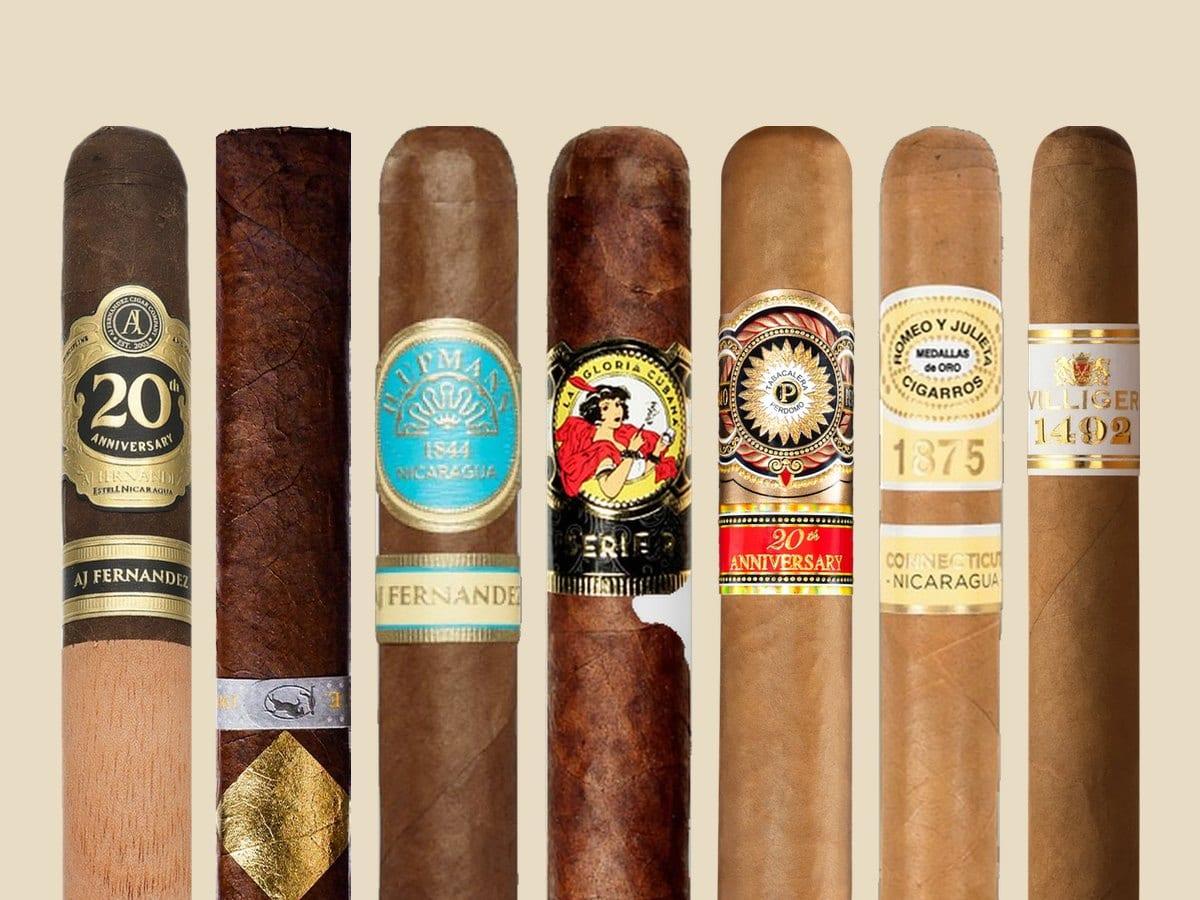
Romeo y Julieta has had two lives in Cuba and a third abroad. A partnership founded it in the 1870s, a businessman with a gift for publicity made it famous in the first half of the twentieth century, and the state took it over in 1960. Since then a second Romeo y Julieta, owned by a different company and blended from different leaf, has grown up in the Dominican Republic and Nicaragua. This lesson follows the brand through all three: the founders and Pepín Rodríguez, the factories, the Churchill, the Cuban range and its special releases, and the cigars sold under the same name in the United States.
The founding
Habanos dates the brand to 1875 and says the name comes from Shakespeare's tragedy Romeo and Juliet, which was "Romeo y Julieta" in Spanish. The founders were two Spaniards in Havana, Inocencio Álvarez and José García, known as Manín. The date is less certain than the names. A Cuban history of the house gives 1870 and notes that other sources say 1875, while two reference works on Havana cigars say the trademark was registered in 1873; one of them adds that it is not clear what the 1875 date rests on. Habanos keeps to 1875, and it marked the brand's 145th anniversary in 2020 and its 150th in 2025.
The early medals came quickly. In the late nineteenth century the brand won awards at tasting exhibitions, and the medals still crowd its labels. The partnership did not last as long: the founders worked together for little more than a decade. According to the Cuban history of the house, the brand and its factory were sold in 1900 to Prudencio Rabell, and in 1903 they passed to a group of businessmen led by José Rodríguez Fernández.
Pepín Rodríguez and his factory
José Rodríguez Fernández, called Don Pepín, was a Spaniard who, by most accounts, had run the Cabañas factory in Havana before he took over Romeo y Julieta. His partners were three other Spaniards, Ramón Argüelles, Baldomero Fernández and Antonio Rodés, and the firm later traded as Rodríguez, Argüelles y Cía. Cuba had only just come out of its war of independence, and much of the Havana trade had been bought up by an American trust, so a family firm needed money and a name that people abroad would remember. Rodríguez had the name. He also made other brands, among them Don Pepín, María Guerrero, after a Spanish actress, and Flor de Rodríguez.
He built a new factory for the brand on Belascoaín Street, number 2A, close to the Malecón, Havana's sea wall. It was finished in 1905, and the date stood on its highest gable for many years. One account gives a staff of 1,100, of whom 750 were torcedores, the rollers who make the cigar by hand; another gives 1,500 people. By 1910 the factory made about 20 million cigars a year, most of them for the United States and Britain, and other large markets included France, Spain, Switzerland, Argentina and Uruguay. Belascoaín is now called Padre Varela, and the building, long in ruins, was demolished in 2011.
Bands, labels and publicity
A Havana box carries a set of printed labels, the habilitaciones: the vista, the large picture inside the lid; the bands, anillas, around each cigar; and smaller seals and edgings. Cuba's first trademark law of 1884 gave these labels legal names, and they served both to sell the cigar and to make forgery harder. Romeo y Julieta's labels show a scene of the two lovers and the brand's exhibition medals.
Rodríguez saw earlier than most how much the band could do. He printed personal bands for his best customers, so that a cigar carried the name or arms of the man who smoked it, and Habanos credits him as one of the first to treat the band as a reason for the brand's success. Habanos says that no fewer than 20,000 different bands were in use at his peak; other accounts give about 2,000, and no original record has been found that settles the figure. He promoted the brand himself, travelling widely in Europe and the Americas, and in later life he lived mostly in Paris. Accounts of the brand also say he raced a horse named Julieta in several countries to spread the name; the story is widely repeated, but no contemporary record of it was found. Rodríguez died before the revolution, in 1954 according to the usual accounts.
Winston Churchill and the Churchill
Winston Churchill was the brand's best-known customer. Habanos says his name appeared on some of the brand's bands after his visit to Havana in 1946 and was given to the brand's best-known size, the Churchill, 178 mm long with a 47 ring gauge, which the factories call the Julieta No. 2. The date and the details of the story are disputed: Habanos itself gave 1947 in 2004, and one reference work doubts that Churchill ever smoked the size. The Iconic Cigars lesson Romeo y Julieta Churchill tells the story of the size, and the Cigar Personalities lesson Winston Churchill (UK) tells his.
Nationalization and the factory on Padre Varela
The Cuban government nationalized the cigar industry in September 1960, and the Romeo y Julieta company was taken over with the rest. Production moved, probably soon after, to a larger building a few hundred metres along the same street, at Belascoaín (now Padre Varela) 852. That building had been the factory of El Rey del Mundo before the revolution, and in the 1940s it made eighteen brands. It was later named after Antonio Briones Montoto, a Cuban revolutionary killed in 1967, so the Briones Montoto factory that many writers call the Romeo y Julieta factory is not the one Rodríguez built.
Romeo y Julieta was made at Padre Varela 852 for about forty years. As the building decayed, more of the work went to other factories, and around 2000 the brand left. The building was then used to train young rollers, more than 200 a year, and after a renovation H. Upmann moved in around 2012, as the Major Cigar Brands lesson H. Upmann explains.
Where the Cuban cigars are made today
Habanos does not name a single factory for the brand, and sources disagree. Many writers still give the Briones Montoto building as its home. In 2011 a detailed survey of Havana's factories found that the building, by then H. Upmann's, still rolled some Romeo y Julieta, but that most of the brand was spread among other Cuban factories. One of them is the Francisco Donatién factory in Pinar del Río, which in 2011 made mostly Trinidad and some Romeo y Julieta, as the Major Cigar Brands lesson Trinidad describes. The leaf is Cuban throughout: Habanos says the filler and binder come from the Vuelta Abajo in Pinar del Río, and the cigars are made totalmente a mano con tripa larga, entirely by hand with long filler, meaning whole leaves that run the length of the cigar.
The Cuban range
Habanos describes Romeo y Julieta as the classic medium-strength Havana, balanced and aromatic, and says it has one of the widest ranges of sizes, or vitolas, of any of its brands. Each vitola has a market name, the vitola de salida, and a factory name, the vitola de galera, which describes the format and is shared across brands. Much of the range is built on the Churchill name. Habanos added the Short Churchills, a robusto, in 2006; the Wide Churchills in 2010, the brand's first cigar of 55 ring gauge; and the Petit Churchills in 2012. The Petit Royales followed in 2017.
The brand also keeps older coronas and corona-sized cigars. The Exhibición No. 4 is a thicker corona of 48 ring gauge. The Cedros de Luxe sizes are each wrapped in a thin sheet of cedar, with the band on the cedar rather than on the cigar. The Romeo No. 1, No. 2 and No. 3 are sold in aluminium tubes, tubos, which protect a single cigar carried in a pocket.
In 2020, for the brand's 145th anniversary, Habanos presented the Línea de Oro at the Festival del Habano in Havana, the brand's first line of medium to full strength. Its three sizes, Dianas, Hidalgos and Nobles, are all thick, and the Nobles is a figurado, a shaped rather than straight cigar. The line came in boxes of lacquered sycamore dyed the brand's red and reached shops only in 2021 and 2022, about two years late. On 2 May 2022 Habanos set its price in every market at the level of Hong Kong, together with Cohiba, Trinidad and Montecristo's Línea 1935; the Cohiba lesson and the Habanos SA lesson Chinese Influence describe that change.
The table sets the main current sizes side by side. Sizes are given as ring gauge, in 64ths of an inch, by length in millimetres, and the year is the year Habanos presented the size, where it has given one.
| Cigar | Introduced | Size | Note |
|---|---|---|---|
| Churchills | Name from the late 1940s | 47 × 178 mm | Factory name Julieta No. 2; sold earlier as the Clemenceau |
| Short Churchills | 2006 | 50 × 124 mm | Robusto; launched with a new tube |
| Wide Churchills | 2010 | 55 × 130 mm | Factory name Montesco; the brand's first 55 ring gauge |
| Petit Churchills | 2012 | 50 × 102 mm | Factory name Petit Robustos; about 20 minutes' smoking |
| Petit Royales | 2017 | 47 × 95 mm | Short, thick format |
| Exhibición No. 4 | Not given | 48 × 127 mm | Factory name Hermosos No. 4 |
| Cedros de Luxe No. 2 | Not given | 42 × 142 mm | Corona in a cedar sheath |
| Romeo No. 1, No. 2, No. 3 | Not given | 40 × 140, 42 × 129, 40 × 117 mm | In aluminium tubes |
| Línea de Oro Dianas, Hidalgos, Nobles | 2020 | 52 × 145, 57 × 125, 56 × 135 mm | Medium to full; Nobles a figurado |
The table shows how the brand has grown. Its classic sizes are slim, from 40 to 48 ring gauge, while almost every size added since 2006 is 50 or thicker, following smokers' move to shorter, wider cigars.
Reserves, aged cigars and special releases
Habanos uses Romeo y Julieta for most of its kinds of special release. The brand's first Reserva, the Churchills Reserva Cosecha 2008, was presented in 2012 and made from leaf of the 2008 harvest (cosecha) aged at least three years. In 2015 came a Gran Reserva of the Wide Churchills from the 2009 harvest, aged five years and made in 5,000 numbered boxes. The Añejados, cigars aged in their boxes in Cuba before sale, also began with Romeo y Julieta, a Pirámides of 52 × 156 mm, presented in 2014 or 2015 (Habanos gives both); a later Churchills Añejados in tubes was aged for ten years.
The brand appears among the Ediciones Limitadas, the yearly limited editions made in sizes outside the regular range and with leaf aged at least two years. The Capuletos of 2016, 53 × 153 mm, was the first cigar in the Sobresalientes format, and the Tacos of 2018, 49 × 168 mm, revived a size of the 1970s. The Limited Editions lessons cover the programme. Romeo y Julieta has no regional editions, cigars made for one country or region only, because Habanos keeps its global brands out of that programme, as History & Background in the Regional Editions topic explains. Its special sizes are sold worldwide instead: the Maravillas 8 of 2020, 55 × 155 mm in boxes of eight, opened the series of cigars for the Chinese New Year described in Chinese Influence; the Cupidos of September 2023, a 55 × 148 mm figurado, is sold only through Habanos' own franchised shops and specialist dealers; and the Amantes, 53 × 153 mm, marked the brand's 150th anniversary at the Festival del Habano in February 2025.
The Romeo y Julieta of the Dominican Republic and Nicaragua
The American Romeo y Julieta began with the family that lost the Cuban one. Rodríguez's son was stripped of the company after the revolution and went to the United States, where Wally Frank, who owned the cigar distributor Hollco Rohr, kept the trademark alive by making a few machine-made Romeo y Julietas in Kingston, New York, and selling them across state lines. Frank offered every year to buy the name, and every year the son refused, expecting Cuba to open again. After the son died in 1976, Frank bought five trademarks from his widow in Spain: Romeo y Julieta, Saint Luis Rey, Juan López, Gispert and Quintero.
Handmade production started in 1978, when Manuel "Manolo" Quesada began making Romeo y Julieta at his MATASA factory in the Dominican Republic, with a Cameroon wrapper over Dominican filler, a common blend of the time. Quesada made the brand in small quantities, including a Vintage line in the 1990s. In 1997 the Spanish tobacco monopoly Tabacalera bought Hollco Rohr; two years later Tabacalera merged with the French monopoly SEITA to form Altadis, and production moved to Tabacalera de García, Altadis's large factory in La Romana. By 2019 that factory made about 20 million Montecristo and Romeo y Julieta cigars a year, as the Major Cigar Brands lesson Montecristo explains. In 2017 Romeo y Julieta was Altadis's best-selling premium brand.
The American range has grown into a family of lines. The 1875 is the core Dominican line, and the Reserva Real a fuller one. Romeo by Romeo y Julieta reached shops in May 2012, a Dominican cigar with an Ecuadorian wrapper; its Piramide, rated 92 points, was placed third in a leading annual ranking of 2012, and a Toro en Tubo was 25th in 2013. Altadis has also turned to Nicaraguan makers: the Plasencia family made the Romeo 505 Nicaragua of 2016 and the 1875 Nicaragua of 2018, and A.J. Fernández and Rafael Nodal made the Reserva Real Nicaragua, announced in January 2020.
Ownership and sales
The two Romeo y Julietas share a name, a founding date and a Shakespeare label, and nothing else; the Cuban vs Non-Cuban topic sets such pairs side by side. The American brand followed Altadis into Imperial Brands, which bought Altadis in 2008. In 2020 Imperial sold its premium cigar business in two parts: the American business, with Altadis U.S.A. and its Romeo y Julieta, went to Gemstone Investment Holding, while Imperial's half of Habanos and the Tabacalera de García factory went to Allied Cigar Corporation. Both sales closed on 29 October 2020, as the Montecristo lesson and the Habanos SA lesson Chinese Influence explain.
On the Cuban side Romeo y Julieta is one of the six global brands that Habanos sells in every market and promotes most heavily, with Cohiba, Montecristo, Partagás, Hoyo de Monterrey and H. Upmann. Habanos does not publish sales by brand, but in 2016 a senior Habanos executive said that Cohiba had become the first brand by value and Romeo y Julieta the first by number of cigars, as the Montecristo lesson relates.