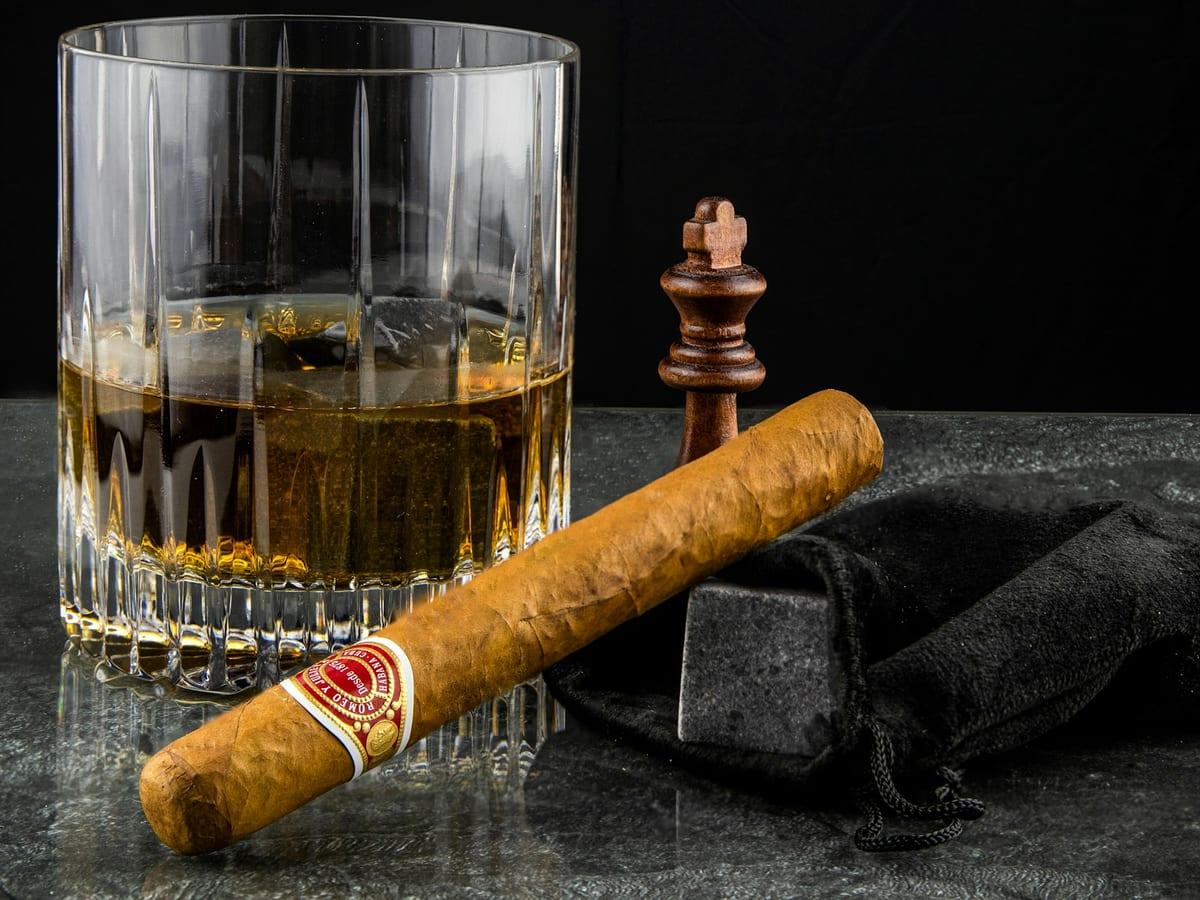
A cigar and a drink meet in the mouth and the nose, and they change each other. The same Partagás Serie D No. 4 can taste harsher after a high-proof whisky and sweeter after an aged rum, sharper after a dry red wine and rounder after a cup of coffee with milk. None of this rewrites the cigar; the wrapper, the filler and the burn are the same. What changes is how the mouth reads them. This lesson sets out the small number of physical links behind most pairings, the three basic moves a taster makes, and a simple way to choose a drink. The six lessons that follow apply them to spirits, wine and Champagne, beer, non-alcoholic drinks, food and the newer, experimental pairings. How to Taste and Describe, in the Tasting Notes topic, explains how to read what the cigar itself is doing; Body: Flavor, Weight, and Intensity, in the Strength vs. Body topic, explains the body you are matching against.
The few things the mouth and nose agree on
Taste is not all in the head, but a good deal of pairing is, because the mouth reacts to a short list of physical things, and so does the cigar's smoke.
Sweetness is the great softener. Sugar reduces the mouth's sense of bitterness and takes the edge off heat, which is why a sweet rum gentles a peppery cigar and a teaspoon of sugar mutes the bitterness of coffee. Where a cigar leans bitter and spicy, a little sweetness in the drink balances it; where a cigar is itself sweet, a sweet drink can push the two into the same key and let the shared notes ring louder, which tasters call a complement.
Fat coats. Milk, cream, the oils in an aged spirit and the fat in food all leave a film on the tongue that softens roughness and makes the smoke feel heavier and rounder. This is the reason creamy, milky or buttery drinks and foods tame a strong, dry cigar, and the reason a glass of whisky can seem fuller than the same spirit taken neat between puffs of a lighter smoke.
Tannins dry. The tannins in red wine and in some teas grip the proteins of the mouth and leave a clean, slightly drying feeling behind. Against a rich, fatty drink or dish that grip reads as refreshment, cutting through the coating; against the cigar itself, a dry red wine can make the mouth feel ready for the next puff instead of full of the last one.
Alcohol dissolves and carries. Ethanol is a solvent, and it holds and delivers the aromatic compounds of both the drink and, taken together with smoke, the cigar, which is a large part of why a spirit opens a cigar's flavor and why a higher-proof spirit reads as hotter and stronger. The same solvent effect has a health cost, which the section below sets out.
Carbonation and cold reset the palate. The bubbles in sparkling water, soda, beer or Champagne rise and physically scrub the tongue, and cold dulls the mouth's sensitivity a little and lowers how strong a cigar feels, so a chilled, fizzy drink acts as a cleaner and a cooling-off between puffs.
These mechanisms are what pairing is built from. A single drink usually works through two or three of them at once: a stout is sweet, bitter and fizzy; a creamy coffee is fat, sweetness and warmth; a dry Champagne is acid, fizz and cold.
The three moves
With those mechanisms in hand, a taster has three moves to choose from. The guide below uses them throughout the topic.
The first is to complement, to match like with like. A cigar with cocoa and coffee notes beside a chocolate stout, or a cedar-and-wood cigar beside an oak-aged spirit, puts the drink and the smoke on the same flavor and lets each one's notes seem bigger. Complement is the safest move, because nothing fights anything.
The second is to contrast, to set one thing against its opposite. A sweet rum against a strong, peppery cigar makes the sweetness and the pepper both stand out, each defined by the other; a sharp, acidic drink against a rich, dark maduro brightens the heavy smoke. Contrast is bolder, and easier to get wrong, but it is where hidden notes come out.
The third is to cleanse, to reset the mouth so the cigar can be tasted fresh. Sparkling water between puffs with a full-bodied cigar does exactly this, washing the tongue of the last draw's residue without adding a flavor that would argue with the next one. A taster can move between all three within a single smoke: a complement for the first third, a contrast in the middle, a cleanser toward the end as the cigar grows fuller.
Matching weight to body
The most useful habit of all is to match the weight of the drink to the body of the cigar, the fullness and richness of its smoke on the palate, which Body: Flavor, Weight, and Intensity separates from strength, its nicotine. A light-bodied cigar, such as one wrapped in Connecticut Shade, is easily buried, so it suits a lighter drink: a pilsner, a light rum, a mild coffee, a gentle white wine. A full-bodied cigar, dark and rich, can stand beside a cask-strength whisky, a peated Scotch, an espresso or an aged, full rum. Between them, a medium-bodied cigar goes with bourbon, an aged rum, a red wine or a mid-roast coffee.
This is a tendency, not a law, and the contrast move deliberately breaks it. A full cigar with a sweet dessert wine, or a pale, mild cigar set against a strong pour for effect, can be chosen on purpose. The point of the rule is simply that each side should be able to speak: when a mild cigar meets a cask-strength spirit, the drink tends to drown the cigar rather than serve it. As a rule of thumb, the drink should be able to stand next to the cigar without covering it, and the cigar should still be the main event.
Temperature, order and the taster
Two more things move a pairing, and neither is on the tasting wheel. Temperature changes what is released and what is felt: cold slows a drink's aromatics and lowers the perceived strength of a cigar, while warmth, as in coffee or a warmed spirit, brings a drink's oils and sweetness forward. And order matters more than many tasters admit. The common advice for a spirit applies widely: sip after you release the smoke, not before you draw, so that the drink does not coat the tongue just as the smoke arrives; wait, and the two stay distinct enough to be judged.
Finally, pairing is personal. Two people can smoke the same cigar with the same drink and read it differently, because how fast each smokes, what each ate beforehand and how used each is to the smoke all shift the result. Keeping a note of what was paired and what it did, the way How to Taste and Describe teaches, turns a collection of one-off impressions into a usable memory. In Cuba, where rum and coffee remain the customary companions of a Habano, the tradition grew out of the same practical habit: a known drink, taken with a known cigar, read again and again until the match became obvious.
The cigar stays the center, and the cautions
Two cautions close the lesson. The first is practical: a pairing serves the cigar, and not the other way round. A drink or a plate is there to bring out the smoke, and a pairing that calls more attention to itself than to the cigar has failed whatever it cost.
The second is a health caution that belongs to every lesson where alcohol appears, and it is worth stating before the spirits, wine and beer lessons that follow. The National Cancer Institute records that alcohol is a Group 1 carcinogen, in the same category as tobacco, and that the two together are worse than either alone: people who use both alcohol and tobacco have a much higher risk of cancers of the mouth, throat, larynx and esophagus than people who use either one, and for cancers of the mouth and throat the harms of the two combine in a way that is more than additive, multiplied rather than added. Alcohol also makes the lining of the mouth absorb harmful chemicals from smoke more readily. Until 2026 the U.S. Dietary Guidelines advised adults who drink to keep to two drinks a day or fewer for men and one or fewer for women; the edition published in January 2026 dropped those numbers and simply advises drinking less. Either way, the less, the lower the risk. None of these facts takes away from how a pairing tastes; they are simply the price tag on the alcohol half of it, and they are the reason the non-alcoholic lesson exists alongside the rest.