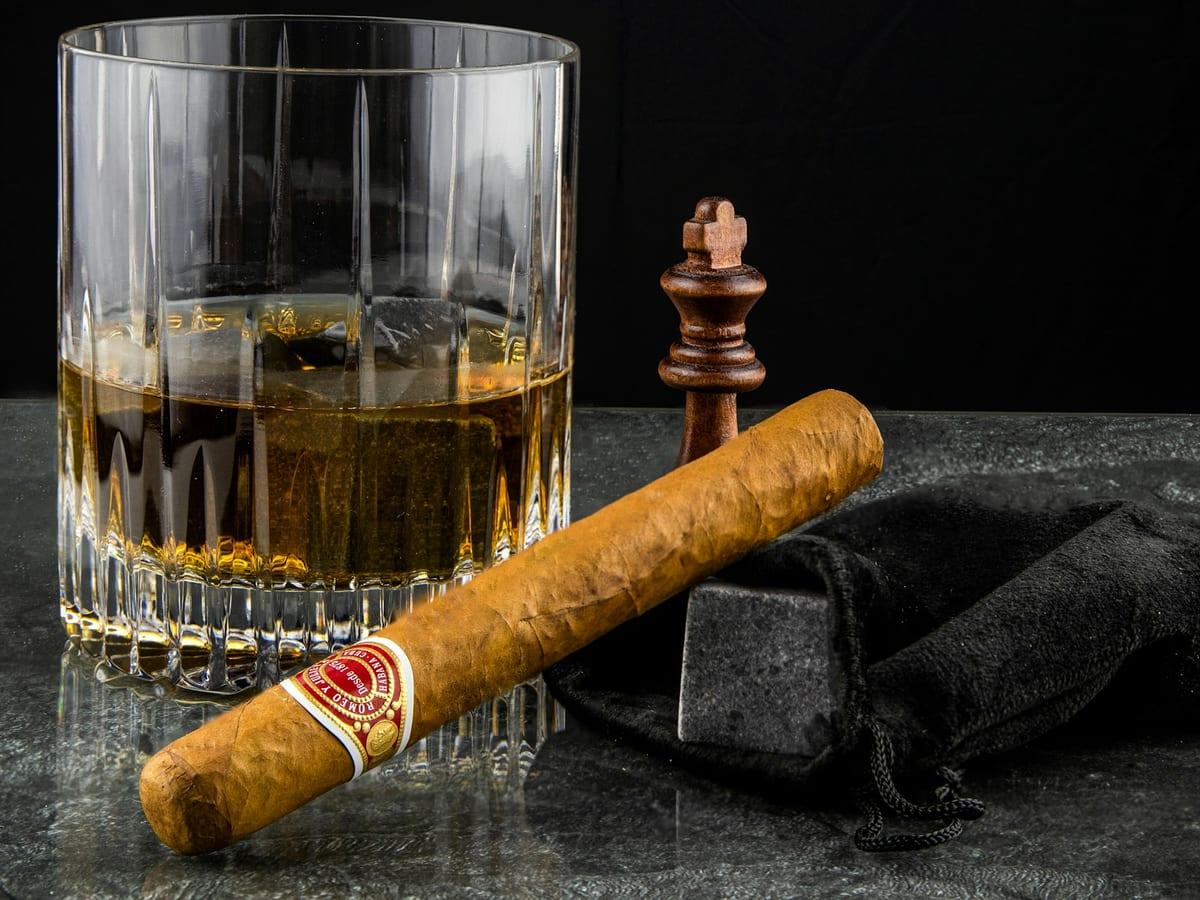
A cigar often comes after a meal, and for good reason: a meal leaves the plate and the palate in a steady state, and a full stomach slows the cigar's nicotine, which Strength: Nicotine and Ligero explains. But food can also be paired with the smoke itself, and it is the trickiest of the seven lessons because food coats the mouth and can hide the very notes a taster wants. Done well, the fat, acid, salt and sweetness of a dish do exactly what a drink does, matching or contrasting the smoke and readying the mouth for the next draw. This lesson covers how to match food to body, what to eat with each strength, and when to eat it.
Matching food to the cigar
The first and simplest rule is the body-matching one, carried over from Introduction to Pairing. A mild cigar needs delicate food, because a heavy dish fills the mouth and buries it; a full cigar needs rich food, because a light dish disappears against it. The second rule is the two moves again. An echo pairs a note in the food with the same note in the smoke, nuts against a cigar's cedar, chocolate against a maduro's cocoa. A contrast sets the food against the smoke, acid against richness, a sharp dressing against a creamy wrapper, so that each one makes the other easier to taste. Either move works; the beginner does better with the echo, since opposite flavors are easy to set imperfectly.
What to eat with each strength
The table lays the usual foods against the three strengths of cigar.
| Cigar strength | Example foods | Why |
|---|---|---|
| Mild, such as Connecticut Shade | Sushi, a light salad, mild cheese | Cleanses without filling the mouth, and the acid lifts the cream |
| Medium, such as Habano or Corojo | Roasted pork, grilled salmon, a meat sauce | Adds savor to the spice and earth without covering them |
| Full, such as a maduro | Grilled steak, barbecue ribs, dark chocolate | Deepens the smoke's char and sweetness with more of the same |
Read down the table and the reasoning is the same as the wine and beer lessons. A mild cigar beside sushi or a vinaigrette salad stays the center of the mouth, the lemon or vinegar cutting its creaminess but not its flavor. A medium Habano or Corojo brings spice and wood, and roasted pork or grilled salmon meets it with fat and savor, an echo that fills the smoke out without fighting it. A full maduro is the dark end of the scale, and its natural partners are the dark dishes: grilled steak mirrors its char, ribs its smoke and sweetness, and dark chocolate its cocoa, the single most reliable food match in the topic, because chocolate and a maduro are built from the same compound family and the two nearly merge.
Timing the food
Food is not a drink, and when it is eaten decides as much as what is eaten. The usual advice is to smoke the first third of the cigar alone, to read its flavor before the mouth is altered; then introduce the food in small portions, chewed slowly, between the first and second thirds, so the dish has time to leave its flavor and fat behind for the smoke to work through; and to keep the bites small throughout, because a large mouthful coats the tongue and drowns the cigar for the next several draws. If a pairing does run too rich, a plain, neutral bite — bread does this best — resets the mouth the way a rinse of water does between puffs. A full meal is for before the smoke, not during it; the food that comes with the cigar is a taste, not a dinner.
The one caution is the plate's. Food pairing is easier to overshoot than any drink in the topic, because fat and salt both dull the palate once they build up, so a taster who eats through a whole steak with a maduro often wakes up halfway through the cigar with the smoke gone quiet. Small, spaced bites keep the food a partner rather than a blanket, and that is the difference between a pairing and a plain, if pleasant, meal.