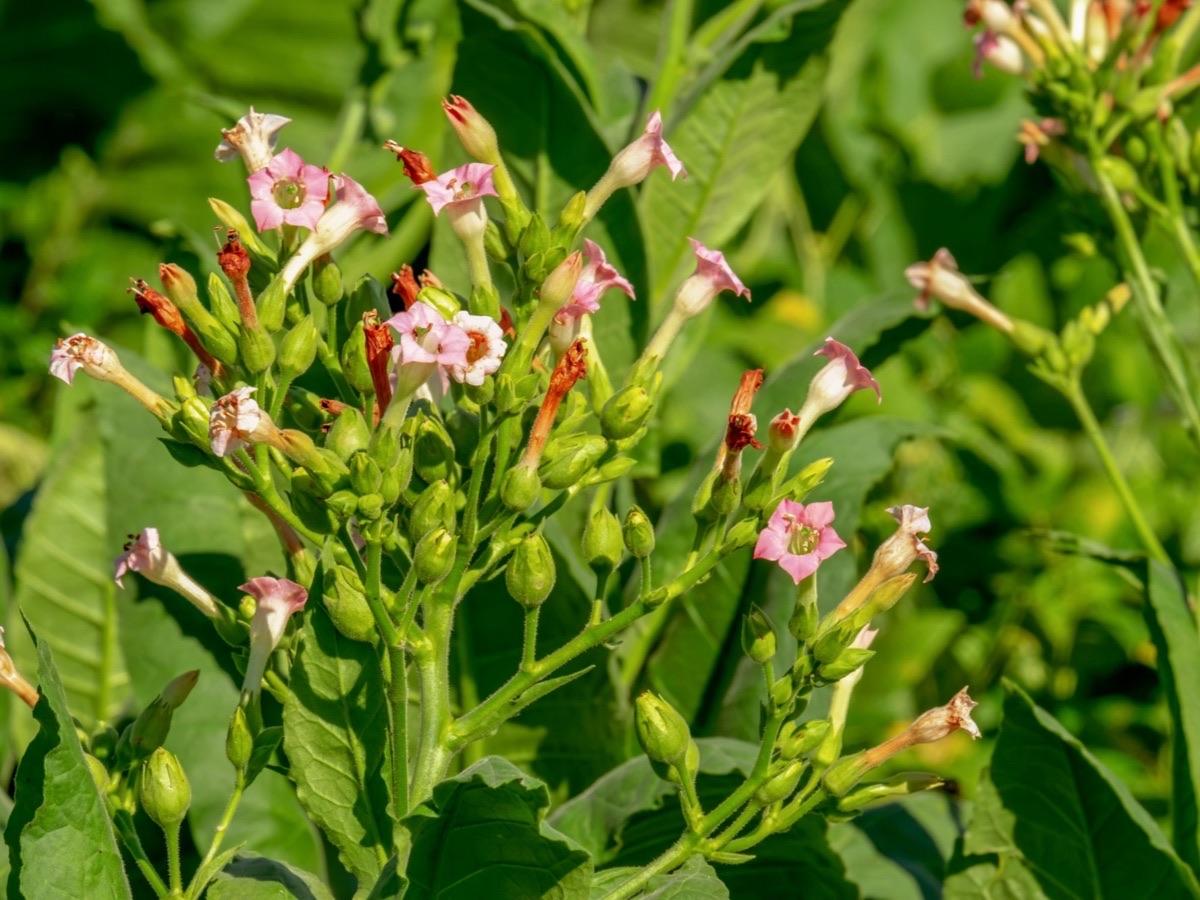
A tobacco plant grows fast and takes what it needs from the soil in a few weeks, so what it is given, and when, shows in the cured leaf: in its size and body, its color, its elasticity and the way it burns. This lesson explains what the main nutrients do for cigar leaf, how much fertilizer growers in Cuba, Connecticut, Kentucky and Nicaragua use, when and how they apply it, and the organic and mineral sources they choose. Soil Preparation Before Planting, in the Tobacco Farming topic, covers the soil itself, its acidity and organic matter, and Yield vs Quality Balance the field trials that weigh nitrogen against wrapper grades. Stress Factors describes the signs of hunger and excess in the leaf.
What the leaf needs
Nitrogen drives growth. It makes the leaves larger, thicker and glossier and keeps the plant growing longer, and in the right amount it gives the cured leaf its body and life. Connecticut's agricultural experiment station, after trials on Havana Seed in the 1930s, found that too little nitrogen left the cured leaves dead, yellow, inelastic and dry and made them hold fire poorly, while too much gave the most weight but more dark leaves, heavier and coarser. Excess nitrogen also costs wrapper: in a Kentucky trial in 2019, raising the nitrogen on Connecticut Broadleaf above the recommended rate added a little weight but cut the share of wrapper and binder, as Yield vs Quality Balance explains.
Potassium, the potash of the old bulletins, matters most for how the leaf behaves. Connecticut's trials found that leaf short of potash was harsh, dry, short and not elastic and held fire poorly, and Cuban research puts the potassium a leaf needs to burn well at more than 2 percent of its dry weight. Binder Elasticity and Torcedor Skill, in the Binder topic, and Ash Formation, in the Cigar Anatomy topic, explain what potassium does for the binder's stretch and the ash.
Magnesium keeps the leaf green and full. When it runs short, the lowest leaves turn pale from their tips and edges inward, a disorder growers called sand drown, which Stress Factors describes. Chlorine is the one element growers keep out. It holds moisture in the leaf and spoils its burn, so Cuban rules forbid any fertilizer that contains it, and guidance in Kentucky limits chloride to 50 pounds an acre and the cured leaf to under 1 percent.
How much
The table compares fertilizer rates from four cigar regions, as their sources give them.
| Crop and place | Nitrogen | Phosphorus | Potassium | Other |
|---|---|---|---|---|
| Cuba, shade-grown wrapper (tentative guidance) | 130 to 150 kg/ha | 30 to 45 kg/ha | 150 to 170 kg/ha | Magnesium 20 to 25 kg/ha |
| Cuba, sun-grown, primed | 110 to 125 kg/ha | 35 to 50 kg/ha | 140 to 160 kg/ha | Magnesium 15 to 30 kg/ha |
| Cuba, sun-grown, stalk-cut | 100 to 120 kg/ha | 30 to 50 kg/ha | 130 to 150 kg/ha | Magnesium 15 to 30 kg/ha |
| Connecticut Havana Seed, 1930s trials | 200 lb/acre (about 224 kg/ha), all organic | 150 lb/acre of phosphoric acid | 200 lb/acre of potash | 50 to 60 lb/acre of magnesia |
| Connecticut Broadleaf, Kentucky and Tennessee (2020) | 150 to 175 lb/acre (about 170 to 195 kg/ha) | By soil test | 200 to 225 lb/acre under some contracts | Sulfate of potash |
| Habano 98 filler, Jalapa, Nicaragua (2018) | About 1,170 kg/ha of mixed fertilizers in three doses | No urea |
Read down the table and two things stand out. Cuba gives its shade-grown wrapper more nitrogen than its sun-grown tobacco, not less, and Cuban wrapper trials found the best results with 140 to 190 kilograms of nitrogen a hectare. And the old Connecticut rate was the highest, because the valley's sandy soils held little nitrogen of their own, about 0.15 percent, which the station said made heavy feeding necessary. Cuba's rates are only a guide: in Pinar del Río the doses are set for each field from soil analyses by the agriculture ministry's soil service. None of these sources sets a fixed ratio of potassium to nitrogen; Connecticut gave about as much potash as nitrogen, and Cuba and Kentucky a little more potassium than nitrogen.
When and how
Cigar tobacco gets its fertilizer early. Cuban guidance names three moments, at planting, at the first earthing-up and at the aporque, the earthing-up of the stalk, with the largest share last; in Pinar del Río almost no nitrogen is given at the first. Cuban trials on shade-grown wrapper gave 40 percent of the nitrogen 8 to 10 days after planting and 60 percent at 18 to 20 days, using ammonium nitrate, superphosphate, potassium sulfate and magnesium sulfate. A grower in Jalapa, Nicaragua, applied three doses at 8, 16 and 23 days after planting, ending with potassium nitrate. In Kentucky and Tennessee, Connecticut Broadleaf gets all its nitrogen before planting, or half to two-thirds before and the rest two or three weeks after. In every case the nitrogen is in the ground within about three weeks of planting, long before the plant is topped.
On Cuban wrapper farms with drip irrigation, fertilizer can be dissolved in the irrigation water, a method called fertigation, which feeds the plants a little at a time; Cuban guidance warns that its effect on the salt in the soil needs watching over the long term. Water and Irrigation, in the Tobacco Farming topic, describes the drip systems.
Organic and mineral sources
Connecticut's growers long fed their tobacco on organic nitrogen. The station's trial formula of the 1930s, for 200 pounds of nitrogen an acre, combined ground tobacco stems, cottonseed meal, linseed meal, dried fish, cottonhull ash, bone and magnesian lime; earlier tests at Poquonock had used cottonseed meal or castor pomace. Organic nitrogen is released slowly and is less easily washed out of sandy soil, and U.S. researchers suggested in 1923 that the magnesia in cottonseed meal, about 1 percent, explained the valley's preference for it in a district where the color of the cured leaf mattered so much.
Cuban growers combine manure with mineral fertilizer. In a trial in Granma in 2006–07, Habana 92 tobacco given 10 tonnes of cattle manure a hectare in the furrow seven days after planting, plus mineral fertilizer at 7 and 21 days, yielded the most, about 1.3 tonnes a hectare; manure alone released its nutrients too slowly. In Nicaragua, Plasencia composts tobacco stems and discarded leaf into fertilizer for its fields. The choice of mineral fertilizer matters too. A grower in Jalapa allowed no urea, which it said lowered the leaf's quality in the smoke, and Kentucky's guidance recommends sulfate of potash for Connecticut Broadleaf rather than muriate of potash, which brings chlorine.
Reading the plant
Growers can also measure what the plant has taken up. Cuban research on shade-grown wrapper found that the best wrapper came from middle leaves holding 4.3 to 4.7 percent nitrogen at harvest, and that readings of a chlorophyll meter, which measures how green the leaf is, predicted the yield of wrapper. The same meters help judge ripeness, as Timing and Maturity, in the Tobacco Farming topic, explains.