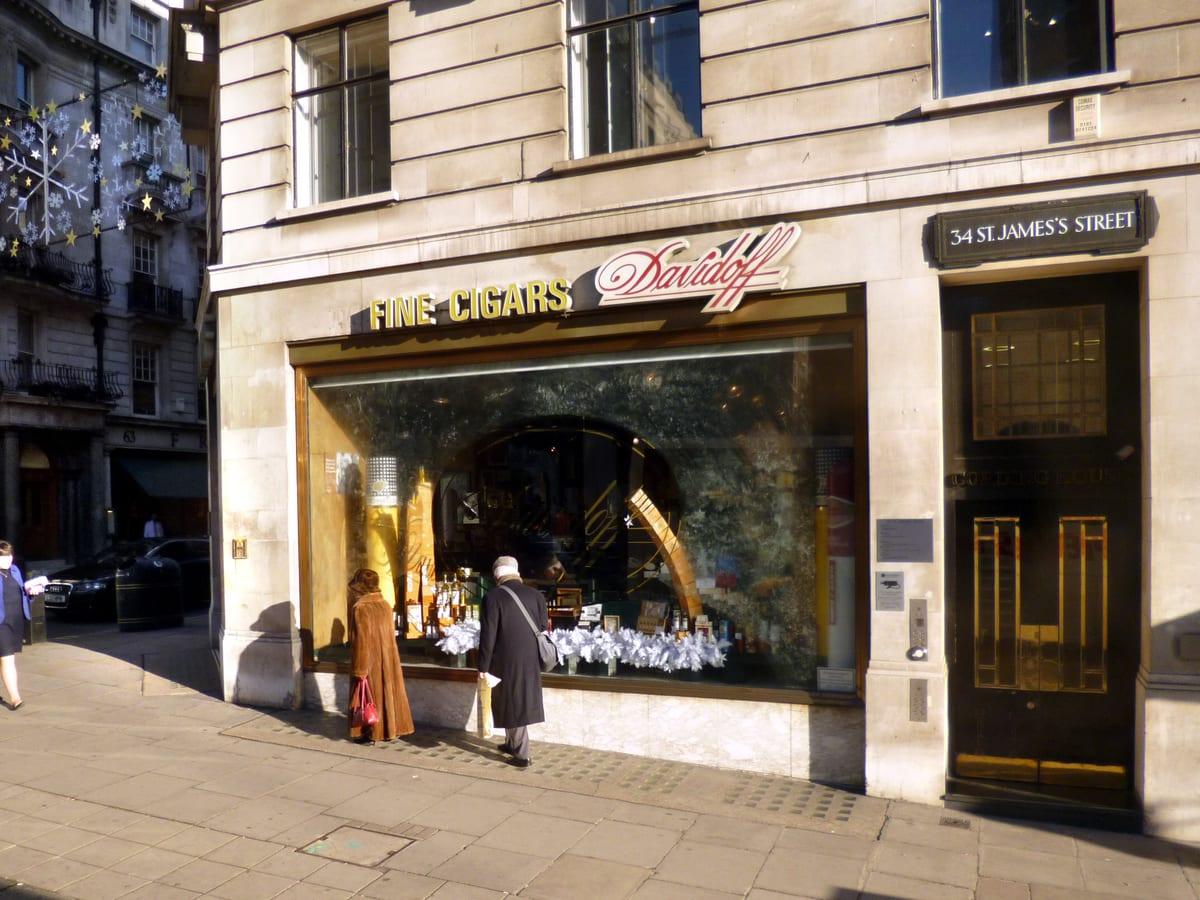
A habano is a cigar made in Cuba, and La Casa del Habano is the address Habanos S.A., the Cuban company that markets and exports the island's cigars, built to sell them in the way it wants them sold. This lesson explains what a Casa is, where the idea came from, what it keeps in stock and how the network has spread.
The concept
La Casa del Habano is a franchise, a shop and smoking lounge licensed by Habanos S.A. to a set of standards for authenticity, for how the cigars are stored, and for how customers are looked after. At its center is the humidor, the cabinet or room that keeps cigars at a controlled temperature and humidity; in a Casa the humidor is a large, cedar-lined room its customers walk into. Habanos recommends keeping its cigars at about 16 to 18 degrees Celsius and 65 to 70 percent relative humidity, and a Casa holds its stock to those conditions.
How it began
The concept began in Mexico City as an idea of Max Gutmann, who had fallen for Cuban cigars and wanted a shop that sold nothing else. With his partner Rodolfo Velasco he developed the design and negotiated with Cubatabaco, the Cuban state tobacco company, for almost three years. He wanted the first shop in Mexico City; Cubatabaco asked for Cancún, the resort city, and the world's first La Casa del Habano opened there in 1990. Gutmann later handed back the rights to the name for nothing, asking only that the Cubans remember who had been first. His company, Importadora y Exportadora de Puros y Tabacos (IEPT), went on to become Habanos' exclusive distributor in Mexico, and the Cigar Personalities topic's Max Gutmann lesson tells his full story.
What a Casa keeps in stock
A Casa sells Cubans and nothing else. Its shelves carry the full range of Habanos brands, among them Cohiba, Montecristo, Romeo y Julieta, Partagás, H. Upmann, Hoyo de Monterrey and Trinidad, from small everyday sizes to the largest and most expensive vitolas, the cigar sizes sold in that line. Because they are the showcase of the trade, the Casas are among the first shops to receive Habanos limited editions and regional and special releases, and they often keep older boxes as well, alongside cutters, lighters and ashtrays. The Habanos S.A. topic explains the importer network the Casas belong to.
The network
From Cancún the name spread first through the Americas and into Cuba itself, then to Europe, the Middle East and Asia, and it now numbers more than 140 shops and lounges. What unites them, from the Caribbean to the Gulf to East Asia, is the same promise: a genuine Cuban cigar, kept well and sold with some knowledge of how to enjoy it.