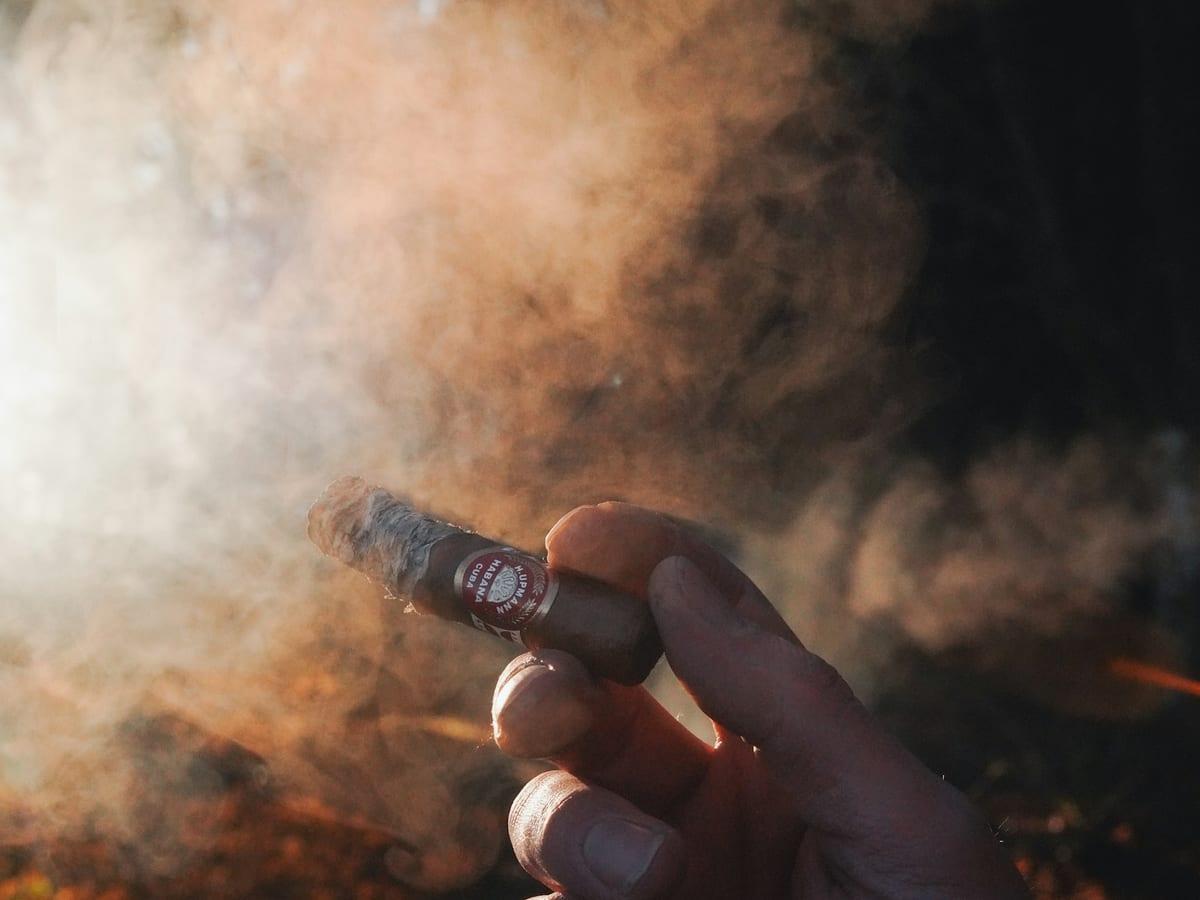
A cigar is not the same from its first puff to its last. Its flavor deepens, its body grows, and in most cigars the strength rises steadily toward the end. Reviewers describe cigars in thirds for exactly this reason. What makes the change surprising is that the blend itself does not change: the same leaves run from the foot to the head. What changes is what happens inside the cigar as it burns, and what has built up inside you.
Why Strength Builds
A cigar is its own filter. On every puff, the smoke has to pass through the unburned tobacco between the ember and your mouth, and it cools as it goes. Some of what it carries, moisture, oils, tars and nicotine among them, is left behind in that tobacco and builds up toward the head. A cut that leaves only a small opening, such as a punch or a wedge, collects even more of this toward the end and concentrates the flavor; a broad straight cut builds up less.
The path also gets shorter. As the cigar burns down, there is less tobacco between the ember and your mouth, so the smoke has less time to cool. The tobacco that is left has been warmed and loaded by every puff before it, so the final stretch delivers smoke that is hotter and more concentrated. None of this depends on the blend; it happens in every cigar, which is why even a mild one is noticeably fuller at the end than at the start.
The leaves are arranged to start gently. In a premium cigar the filler leaves run the full length, with the ligero at the center, so the last third is the same blend as the first. Cuban rollers go further and lay every filler leaf with its lighter-flavored tip toward the foot, so that the flavor intensifies as the cigar burns.
Finally, nicotine adds up in your body. It leaves the blood slowly, with a half-life of about two hours, so most of what you absorbed in the first half hour is still with you as you reach the final third. Part of what feels like a stronger cigar at the end is simply the total you have taken in.
The Three Thirds
The table follows a typical cigar from foot to head.
| Third | What happens in the cigar | What you usually notice | What to do |
|---|---|---|---|
| First | The smoke passes through the whole unburned cigar, which cools and filters it | Moderate strength; the wrapper and the lighter notes lead | Judge the flavor and the draw, and see how the cigar affects you |
| Second | The smoke gets hotter, and oils, moisture and nicotine collect in the tobacco ahead of the burn | Strength and body rise, flavors deepen, often with a warm, alert feeling | Keep a steady, moderate pace |
| Final | A short, preheated stretch of tobacco filters little, so the smoke arrives hotter and more concentrated | Usually the strongest third, and bitter if smoked too fast | Slow down, and put the cigar down when it turns harsh |
What Makes the Rise Steeper
Some cigars build gently and others climb fast. A blend heavy in ligero accelerates the rise, with a noticeable effect by the second third, while a filler made mostly of seco climbs gradually and gently, even in a long cigar. Size matters too: a slim cigar burns hotter, so its strength can build faster, while a thick one smokes cooler and builds more gradually, although over its longer smoke it delivers more nicotine in total.
Your pace has as much effect as the blend. Slow, measured puffs keep the build gradual, while fast puffing keeps the ember hotter and raises the amount of nicotine you take in, so the cigar feels stronger sooner. About one gentle puff a minute is a good rhythm. Condition counts as well, because a cigar kept too dry burns hot and fast and turns harsh earlier. The wrapper, by contrast, changes the rise less than people expect: a maduro or other dark wrapper adds body and sweetness rather than nicotine, so it can make a cigar feel fuller without making it much stronger, and a pale wrapper does not make a strong filler mild.
Pacing the Smoke
Knowing the curve lets you work with it. The first third is the time to judge how a cigar affects you before committing to the rest. In the second, a steady, moderate pace keeps the rise enjoyable rather than overwhelming. In the final third, where most cigars are strongest, slowing down and letting the cigar rest between puffs keeps the smoke cool and the flavor clean. There is no obligation to finish a cigar: when the smoke turns hot, bitter or too strong, it has given its best. And because the nicotine adds up, it helps to smoke after a meal rather than on an empty stomach, to keep water at hand and to pause if the nicotine starts to get to you.