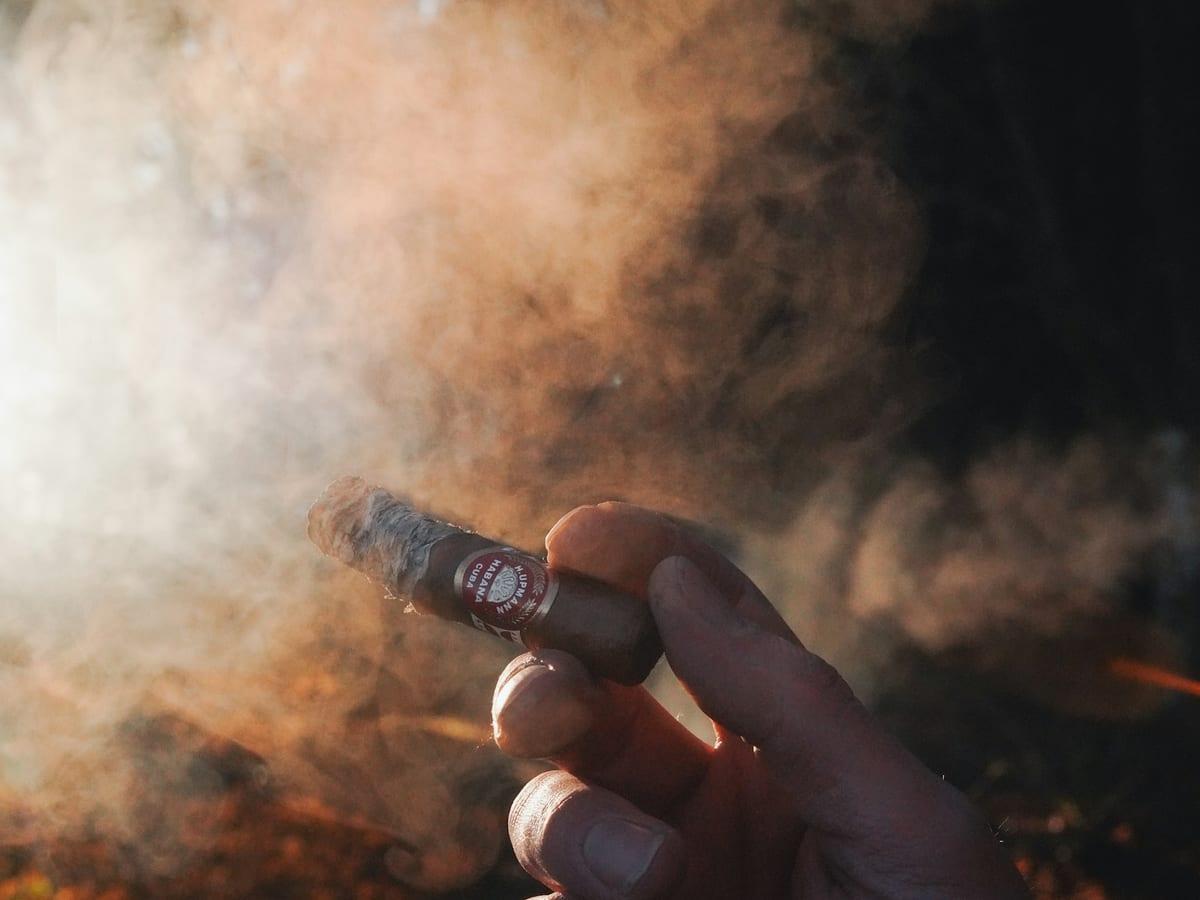
Few ideas cause more confusion among cigar smokers than strength and body, and the confusion is not limited to beginners. The two are related, and they often rise and fall together, which is exactly why they are so easily treated as one. But they are different qualities, they come partly from different parts of the cigar, and they affect the experience in different ways. Keeping them apart is what lets you choose a cigar for what you actually want from it.
Two Different Qualities
Strength, fortaleza in Spanish, is the nicotine effect. You feel it in your body rather than your mouth: as alertness, warmth, relaxation or, if the cigar is too strong for you, lightheadedness. It comes mainly from the filler, from the amount of ligero in the blend and from where and from what seed the leaf was grown, and the size of the cigar and your pace change how much of it you take in.
Body, cuerpo in Spanish, is the weight and fullness of the smoke on the palate. You feel it in your mouth, as richness, thickness and texture. It comes from the whole blend, from the wrapper's oils and sweetness, and from how long the leaf was fermented and aged.
Flavor is a third quality again: what the smoke tastes and smells of. A cigar can carry many flavor notes in a light body, or a single, simple flavor in a full one. Smokers describe strength on a scale from mild to full and body from light to full, and because the same word, full, appears on both scales, a "full" cigar on a shop label can mean either.
The Strength and Body Grid
It helps to picture every cigar on a grid, with strength on one side and body on the other. Most blends fall near the diagonal, from mild and light to strong and full, because ligero adds both. The confusion starts in the corners away from that line.
| Light body | Medium body | Full body | |
|---|---|---|---|
| Mild strength | A gentle, creamy smoke, as in many Connecticut Shade cigars | Balanced and easy, for almost any time | Rich flavor with little nicotine, as with a dark maduro over a mild filler |
| Medium strength | Light on the palate, with some kick | The middle of the grid | Full of flavor, with a moderate kick |
| Full strength | Plenty of nicotine and subtle flavor, as with a strong Nicaraguan filler under a pale wrapper | Strong, but not heavy on the palate | Dense, rich and stimulating, as in ligero-rich blends such as La Flor Dominicana's Double Ligero |
A Dominican robusto with a dark maduro wrapper over a mild filler is a good example of the top-right corner: it may taste of chocolate and coffee and still deliver only moderate nicotine, which makes it a cigar for savoring flavor without overstimulation. A Nicaraguan corona with a Connecticut Shade wrapper can sit in the opposite corner, delivering plenty of nicotine while its flavors stay subtle, strong in effect but light on the palate. A Nicaraguan or Honduran cigar with a dark wrapper and a ligero-rich filler delivers both, for a dense, rich and stimulating smoke.
Why the Confusion Happens
The commonest mistake is to judge strength by the wrapper. Many smokers assume that a dark maduro or oscuro wrapper means a strong cigar. Dark wrappers usually do add body and sweetness, but strength depends on the filler, above all on how much ligero it holds, so a Nicaraguan blend under a pale Connecticut Shade wrapper can be medium in body and full in strength.
Flavor misleads in the same way. A cigar with a rich, robust flavor does not necessarily deliver much nicotine, and a mild-tasting cigar can be strong if its filler is heavy in ligero. Pepper is the most misleading flavor of all, because its sharpness feels like power. It is a flavor, not a measure of strength, and a retrohale, letting some smoke out gently through the nose, brings out spice more than anything else, which can make a cigar seem stronger than it is.
Size is the third source of confusion. Thick cigars are often thought milder and slim ones stronger. A thick cigar does smoke cooler, and each puff may feel gentler, but it holds more tobacco, so over the whole smoke it can deliver more nicotine than a slim one of the same blend. How strong a cigar feels depends more on its blend and on your pace than on its girth.
Keeping Them Apart
The surest way to keep strength and body apart is to judge them separately, every time. The wrapper and the aroma tell you most about body, while the filler, its origin and the maker's description tell you most about strength. When you smoke, notice the two in different places: body in your mouth from the first puffs, strength in how you feel as the first third goes on. And when you keep tasting notes, give each cigar a strength and a body rather than a single score. After a few dozen cigars the difference becomes second nature, and the labels on boxes and in shops become much easier to read.