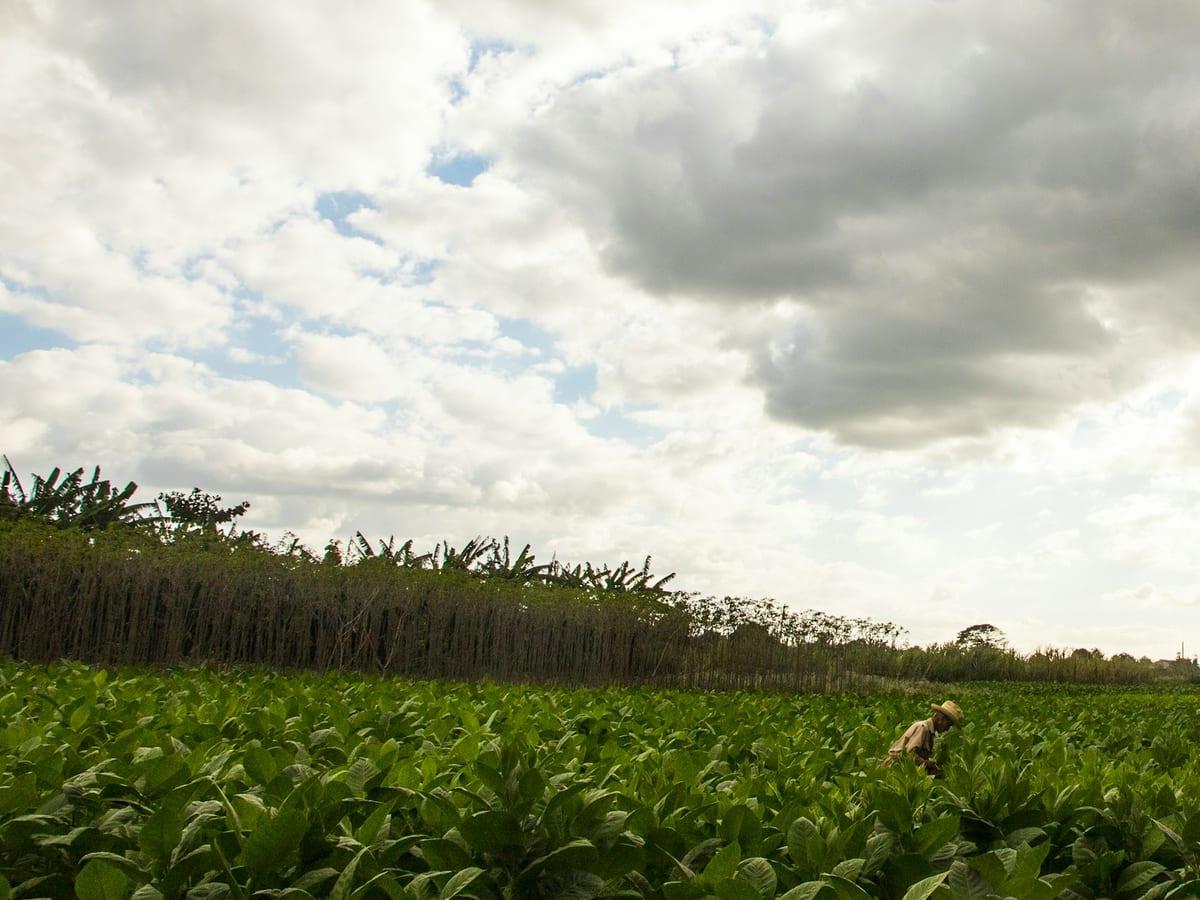
The United States is unusual among cigar countries. It grows a small amount of the world's wrapper and binder, chiefly in Connecticut and Pennsylvania, but its real weight in the cigar trade is as a consumer: the American market buys more premium cigars than any other, and it was the loss of that market to the embargo of 1962, more than anything else, that reshaped the world's cigar industry. This lesson follows the American path from a colonial cash crop to a specialty leaf region and a huge market, with the names and places that matter.
The colonial beginning
When the first English settlers reached Virginia, the tobacco they found was Nicotiana rustica, a harsh, small-leaved plant grown by Native peoples for ceremony, medicine and trade. The colony at Jamestown, founded in 1607, nearly collapsed until John Rolfe planted a milder Nicotiana tabacum seed, perhaps brought from the Spanish colonies, around 1610 to 1612. His crop is the leaf known today as Orinoco. It sold well in London and rescued the settlement, and tobacco became Virginia's staple, spread by the 1700s to Maryland and North Carolina and grown with enslaved labor on large plantations. That is the background of the American tobacco story, but the cigar part of it came later and farther north.
Connecticut shade and Broadleaf
The Connecticut River Valley began growing tobacco around the 1630s, near the town of Windsor, founded in 1633. For a long time it was pipe tobacco; by the Civil War the valley produced up to ten million pounds a year. Cigar wrapper came in the 1820s, and the valley developed three cigar tobaccos. Connecticut Broadleaf, a sun-grown leaf wanted for its size, began when B. P. Barbour of East Windsor brought seed from Maryland in 1833. Havana Seed, grown from Cuban seed, was planted from 1875. And in 1900 growers and researchers pulled together samples from Cuba and Sumatra and raised the first crop of shade tobacco, the thin, golden wrapper grown under tents of cloth; the first tent went up on River Street in Windsor.
Shade tobacco became the valley's signature wrapper, at its height covering more than 20,000 acres, and the tents are still built and worked in much the same way, as the Tobacco Farming and Wrappers topics describe. It has since shrunk to a handful of farms, because Central American growers can raise the same leaf more cheaply; by 2025 only about 35 acres of Connecticut shade remained, on one farm. Broadleaf, the sun-grown leaf, held on better and is now grown mostly in Kentucky, Tennessee and Pennsylvania. Whatever is left of the crop, the names "Connecticut Shade" and "Connecticut Broadleaf" still name two of the most-used wrappers in the world, on cigars made in Central America and the Caribbean as well as in the United States.
Florida's cigar cities
Florida became a cigar center because it was close to Havana. Francisco Vicente Martinez Ybor, a Spanish manufacturer, moved his Principe de Gales brand from Havana to Key West in 1869 to escape the unrest of Cuba's Ten Years' War, and other makers followed. In 1885 Ybor moved again, buying scrubland northeast of Tampa and founding Ybor City as a company town, with Ignacio Haya building a second factory the same year. Thousands of Cuban and Spanish tabaqueros, cigar workers, came after an 1886 fire gutted Key West, and Tampa took on the nickname "Cigar City." Output peaked in 1929, when the factories of Ybor City and West Tampa rolled more than 500 million "clear Havana" cigars, and the city called itself the cigar capital of the world.
The Depression and the cigarette crushed that. Mechanization cut the number of roller jobs, and almost every factory closed in the following decades. One still works: J. C. Newman Cigar Company, which moved to Tampa from Ohio in 1954 and rolls cigars on machines from the 1930s in its Ybor City factory, the last in the old district. The Cuban connection runs deep in Tampa families too: Arturo Fuente, whose descendants built one of the best-known premium brands, founded his business in Ybor City in 1912.
Pennsylvania and the filler leaves
North of the cigar cities, Pennsylvania grew its own broadleaf, called Pennsylvania Seedleaf, a sun-grown leaf used mostly as a wrapper for machine-made cigars and as filler and binder. It never had the prestige of Connecticut shade, but it supplied the enormous American machine-cigar trade through the 20th century, alongside Broadleaf raised in the Connecticut Valley and later in Kentucky and Tennessee. The business of leaf for cheap cigars was a different one from the hand-rolled premium trade, and it is the reason so few American names show up on premium cigars today: the country's tobacco went into volume, not into handmade top-leaf cigars.
The largest cigar market
What the United States does better than any other country is buy. For most of the 20th century it was the largest market for premium cigars, and Cuban cigars were its main premium import. The embargo of 1962 ended that, barring American import of Cuban cigars and sending the exiled makers and their seed to the Dominican Republic, Nicaragua and Honduras, as Cigar History explains. Mass consumption had already turned to cigarettes after James Bonsack's cigarette-rolling machine of 1881 mechanized the trade, and premium cigars became a shrinking luxury niche.
Then came the cigar boom of the 1990s. A leading cigar magazine, launched in 1992 by Marvin R. Shanken, reframed the cigar as a symbol of success, and premium cigar imports into the United States rose from about 100 million cigars a year in the late 1980s to about 293 million in 1996, before the market turned in 1997. The boom was American-led and it pulled the whole industry with it, helping the new Dominican, Honduran and Nicaraguan brands find their footing and making the United States again the market every maker wants. The country remains the largest buyer of premium cigars in the world, though its makers now work mostly overseas, and since 2016 the Food and Drug Administration has regulated cigars as it regulates other tobacco products, except for premium cigars, which the courts removed from its rules in 2023.