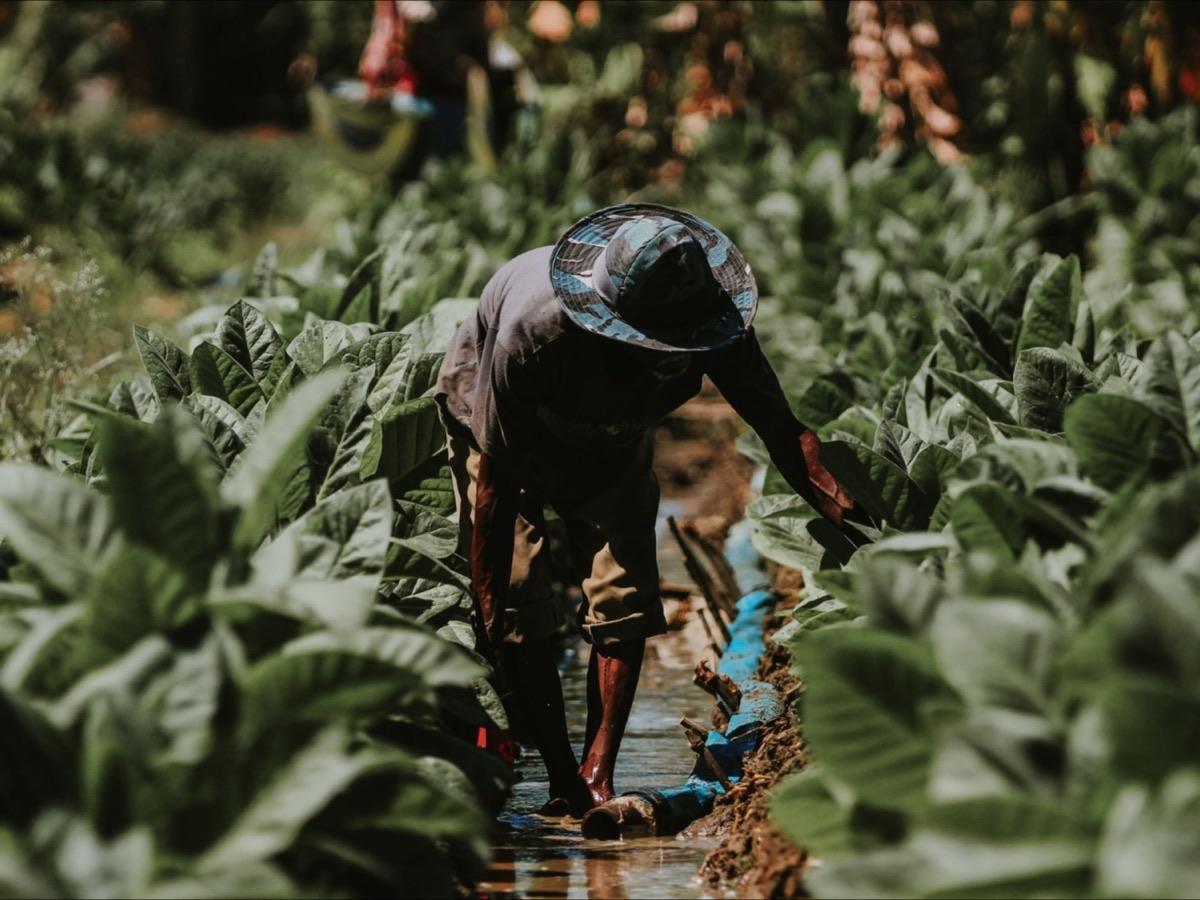
The regions that grow cigar tobacco differ in soil and climate, which the Tobacco Regions topic describes, and in the leaf they produce, which Origins, in the Wrappers topic, compares for wrapper. They also differ in how the tobacco is farmed: when it is planted, where its water comes from, whether it grows under cloth, how it is harvested and who owns the land. This lesson compares those practices across the main cigar countries.
At a glance
The table compares the main regions on the points that most shape their farming.
| Region | Season in the field | Water | Shade | Harvest | Who farms |
|---|---|---|---|---|---|
| Cuba | October to March | Furrow irrigation, some drip | Tapado for wrapper | Primed; sol en palo cut in pieces | Small farms selling to the state |
| Nicaragua | October to June | Furrow, sprinkler, drip | Mesh tents for wrapper | Primed | Makers' own farms and contract growers |
| Honduras | Varies by valley | Drip on some farms | Some | Primed | Makers' own farms and contract growers |
| Dominican Republic | November to February | Irrigated or rain-fed | A few wrapper farms | Primed | Small and large growers |
| Ecuador | Late June to December | Dry season under cloud | None needed | Primed | Large growers |
| Mexico, San Andrés | June to March, by variety | Rain-fed | None | Primed | Family growers, the Turrents above all |
| Connecticut | May to September | Rain, sprinklers | Tents for shade wrapper | Shade primed; Broadleaf stalk-cut | Family farms and leaf companies |
Read down the table and the Caribbean and Central America share one pattern: a dry-season crop, irrigated, primed by hand. The others follow their own climates. The sections below look at each region in turn.
Cuba
Cuba's farming is shaped by the state. The state company Tabacuba buys about 95 percent of what private growers harvest, sets the planting calendar and supplies the seed, which Cuba's Tobacco Research Institute breeds. Pinar del Río grows about 70 percent of the country's tobacco, and within it less than a quarter of the tobacco land holds the status of Vegas de Primera, first-class farms, required for growing leaf for Habanos. The farms are small: in San Juan y Martínez, 1,921 growers were contracted to plant about 3,000 hectares in the 2026–27 season, and in San Luis the average wrapper farm is about 1.2 hectares.
Cuba also keeps two ways of growing sun tobacco. In Pinar del Río, sun-grown leaf is sol ensartado, picked leaf by leaf and strung. In the central and eastern provinces, around Cabaiguán in Sancti Spíritus and in Granma, much of it is sol en palo, cut in pieces of stalk that carry two to four leaves each, as Priming and Harvesting explains. Wrapper grows under cloth in San Luis and in Partido. Oxen, furrow irrigation and handwork remain the rule, with drip irrigation and solar pumps spreading.
Nicaragua and Honduras
Nicaragua farms the dry season too, from October into June, but on a larger scale, and much of the land is farmed by the cigar makers themselves. In 2021 A.J. Fernandez grew about 1,600 acres (650 hectares) across five regions, and by 2024 the Plasencia family grew more than 4,000 acres (1,600 hectares) in Nicaragua and Honduras; other makers, such as Padrón, Perdomo, Aganorsa and My Father, grow their own leaf as well. Smaller growers often farm on contract, financed by the larger companies. The regions differ: Estelí has flat, volcanic soils, while Jalapa, near the Honduran border, is cooler and wetter, with a reddish-brown soil, and grows much of the country's wrapper. Growers stagger their plantings through the season and irrigate by furrow, sprinkler and drip.
Honduras grows tobacco in several valleys, among them Jamastrán, Talanga and Olancho, and its seasons vary: Plasencia sets out its first seedlings there in August, while the Eiroa family's El Corojo farm, in the Jamastrán valley, finishes its season in June. El Corojo covered 667 acres (270 hectares) in 2019, of which about 250 acres were planted, and it is watered by drip irrigation.
The Dominican Republic
The Dominican Republic grows mostly filler, in the Cibao valley around Santiago. Its season usually runs from November to February. Farms range from a few acres, worked by small growers around Jacagua, to holdings of thousands of acres, and the country planted about 150,000 tareas, some 9,400 hectares, in 2025. Much of the native Olor is grown on dry land without irrigation, while the larger growers irrigate and the drier north-west relies on canals. Wrapper is the exception: only a handful of farms grow it, under shade, among them Chateau de la Fuente, which had grown from 37 acres to about 300 acres (120 hectares) on four farms by 2023, La Aurora and Davidoff's farm at Yamasá.
Ecuador
Ecuador grows wrapper on large farms in the provinces of Los Ríos and Guayas, in a season that runs from seedbeds in May to a harvest that ends in December or January. During that dry season a thick, almost constant layer of cloud filters the sun, so no shade cloth is needed. In the rainy months the rivers flood: on one of Oliva's farms, the river covers the land every year by March. Growers rest their land: A.S.P. never used all its land at once in 2000, and kept some 800 cattle to fertilize the fields lying fallow.
Mexico
The San Andrés valley, in the state of Veracruz, plants with the rains rather than against them. The Turrent family, which grows more than half the valley's tobacco by its own estimate, plants its San Andrés Negro from the third week of June, when the heavy rains begin, and starts harvesting in early September; its Sumatra-seed tobacco is planted from mid-September and its Habano 2000 in January. The valley's nearly black volcanic soil is so rich in potassium that the Turrents add no potassium fertilizer. Their tobacco is primed, not stalk-cut.
The United States
Connecticut's crop grows in the short New England summer, set out after the last spring frost in May and June and harvested from July to September. It is two crops in one valley: shade tobacco under tents, primed leaf by leaf, and Connecticut Broadleaf in open fields, cut whole. Shade farming has shrunk to a handful of farms because of its cost, and the state now grows about 2,000 to 3,000 acres (800 to 1,200 hectares) of tobacco, mostly broadleaf. Unusually, Connecticut tobacco grows well on the same land year after year, and growers protect the soil with winter cover crops of rye. Broadleaf is also grown in Pennsylvania and, in trials, in Kentucky and Tennessee.
Brazil, Cameroon and Indonesia
Bahia, in Brazil, grows its cigar tobacco on about 2,000 hectares in the Recôncavo, at about 20,000 plants a hectare, harvested from late July to early October. Cameroon's wrapper, and that of the neighboring Central African Republic, comes from small farms: in 1998 one company worked with about 3,000 farmers who owned one or two acres each, and the work was done by hand, almost entirely by women, with no irrigation and no tractors. In Indonesia, the Besuki tobacco of East Java is grown in two seasons, Na-Oogst, planted at the end of the dry season and picked as the rains begin, and Voor-Oogst, the reverse, and a state plantation company planned to grow shade tobacco on about 750 hectares in 2024. In Sumatra's Deli region, Dutch planters adopted an eight-year fallow in 1890, so that each field grew tobacco only once in eight years.