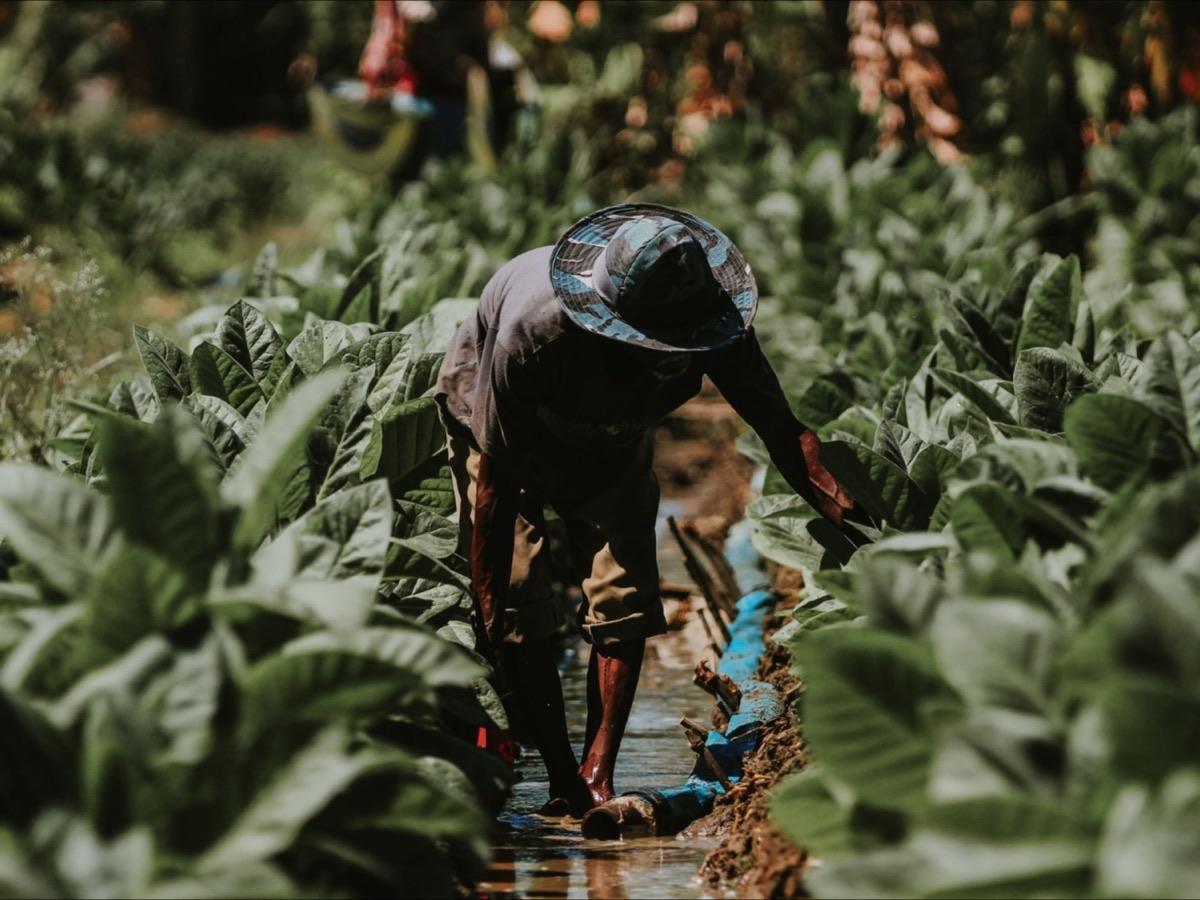
Timing in tobacco farming works on two scales. One is the season: when to plant a field so that the plants grow and ripen in the right weather. The other is the leaf: when a particular leaf is ready to pick. This lesson covers both, the growing calendars of the main cigar countries and how growers tell that a leaf is ripe. Plant Growth Stages describes how the plant develops in between, and Priming and Harvesting how the leaves are picked.
The growing calendars
The table compares the seasons of the main cigar-growing regions. The months are when the plants are set out in the field and when they are harvested; the seedbeds start a month or two earlier, as the Seed to Leaf topic explains.
| Region | Planting in the field | Harvest |
|---|---|---|
| Cuba | From 10 October to early January, mostly November | January to March |
| Nicaragua | From October, in staggered plantings | Into June |
| Dominican Republic | November and December | Usually ending in February |
| Honduras | Some from August; others in the dry season | Varies; El Corojo's season ends in June |
| Ecuador | Late June (seedbeds in May) | Until December or January |
| Mexico, San Andrés valley | San Andrés Negro from late June to August, with the rains | From September |
| Connecticut | Shade from mid- to late May; broadleaf in June | Early July to September |
| Brazil, Bahia | Late July to early October | |
| Indonesia, Besuki | Na-Oogst at the end of the dry season | As the rains begin |
The table shows two patterns. Most of the Caribbean and Central America grows tobacco in the dry winter months, after the hurricane season, and irrigates it. Ecuador, Mexico's San Andrés valley, Connecticut, Bahia and Java follow their own climates instead: Ecuador grows in its dry season under clouds, the San Andrés valley plants with the coming of the rains, and Connecticut grows through the frost-free summer. Honduras does both: Plasencia sets out its first seedlings there in the first week of August, while the Eiroa family's El Corojo farm finishes its season in June.
Why those dates
Cuba spreads its planting by plan. In recent seasons Tabacuba, the state tobacco company, has aimed to plant 10 percent of the crop in October, 55 percent in November, 30 percent in December and the last 5 percent in the first days of January, and the season officially opens on 10 October. Cuban guidance explains the limits. Planting too early brings conditions very favorable to disease. Planting too late makes the plants transpire excessively, and their leaves come out nearly black and heavily veined; growers add that it pushes the harvest into April, a month of pests and bad weather. Shade-grown wrapper is best planted between mid-November and the end of December.
Disease has moved calendars before. After blue mold struck Central America in 1980, growers gave up their traditional autumn planting; by 2001 most planted in January and finished by April or May, and the days of two harvests a year were over. By the 2010s and 2020s the big Nicaraguan growers were planting from October again.
Large growers stagger their plantings so that the harvest doesn't arrive all at once. Aganorsa staggers its fields in Nicaragua to make the best use of its curing barns and its workforce, and A.S.P., in Estelí, grows in two shifts, so that one planting is already in the barns while the other is still in the field.
When the harvest starts
The first leaves are picked anywhere from about 40 to 90 days after planting. Habanos puts the start of the Cuban harvest at about 40 days after planting out, and the Padrón family reported the same for Nicaragua in 1997. In Ecuador, Oliva takes the lowest leaves at about 55 days; in Mexico, the Turrent family harvests its Sumatra-seed tobacco 45 days after planting and its Habano 2000 after 55. A four-season study of shade-grown tobacco in Partido, Cuba, recorded the first leaves at 60 days, and studies of sun-grown tobacco in Nicaragua put the first cut at 75 to 90 days. Once picking starts, the pickers return every four to eight days, and a Cuban plant is stripped in about 30 days. The upper leaves take longest: on one grower's farms in Estelí, the ligero matures 15 to 20 days after the leaves below it.
What a ripe leaf looks like
A ripe leaf has stopped growing and changed in ways a grower can see and feel. A U.S. guide to cigar tobacco from 1910 described the signs. The first is a change of color, as the leaf turns slightly lighter. The leaf thickens, which a grower can feel by pressing it between thumb and forefinger, and it takes on a distinctly leathery feel. A ripe filler leaf, folded between the fingers, snaps or cracks and keeps the crease. Nicaraguan growers in Jalapa look for the leaf to turn from green to a pale yellow with a certain shine.
Wrapper is picked on the young side of ripe. The 1908 guide to Connecticut shade tobacco advised picking the leaves when they were fully developed: they change color slightly as they mature, but by the time an inexperienced eye can see the change, they are likely to be too ripe. Leaves left too long show it after curing. Trials in Connecticut in the 1920s found that plants topped later than early bloom gave overripe leaves with yellow, variegated and mottled colors.
Some Cuban growers now measure ripeness. A chlorophyll meter clipped onto the leaf reads how green it is, and Cuban guidance for shade-grown wrapper treats a reading of 39 SPAD units or more as the sign of a leaf ready to pick. Hiroshi Robaina, of the Robaina farm in Pinar del Río, explained why the eye can mislead: a leaf yellowing at the tip may be ripe only from the tip to the middle, and if the meter says the leaf is still partly green, it should not be picked.
Cut young: Connecticut Broadleaf
A stalk-cut plant has to be judged as a whole. As a Connecticut study put it in the 1920s, primed leaves are picked when the grower judges each one ripe, but stalk-cut varieties such as Havana Seed and Broadleaf are harvested when the plant as a whole is at its best, which is harder to judge. Connecticut Broadleaf is cut fairly young, no later than three weeks after topping. Guidance from Kentucky and Tennessee gives the reasons: to get the right body and thickness in the leaf, to keep the wrapper leaves whole, and to keep them out of harm from the weather in the field.