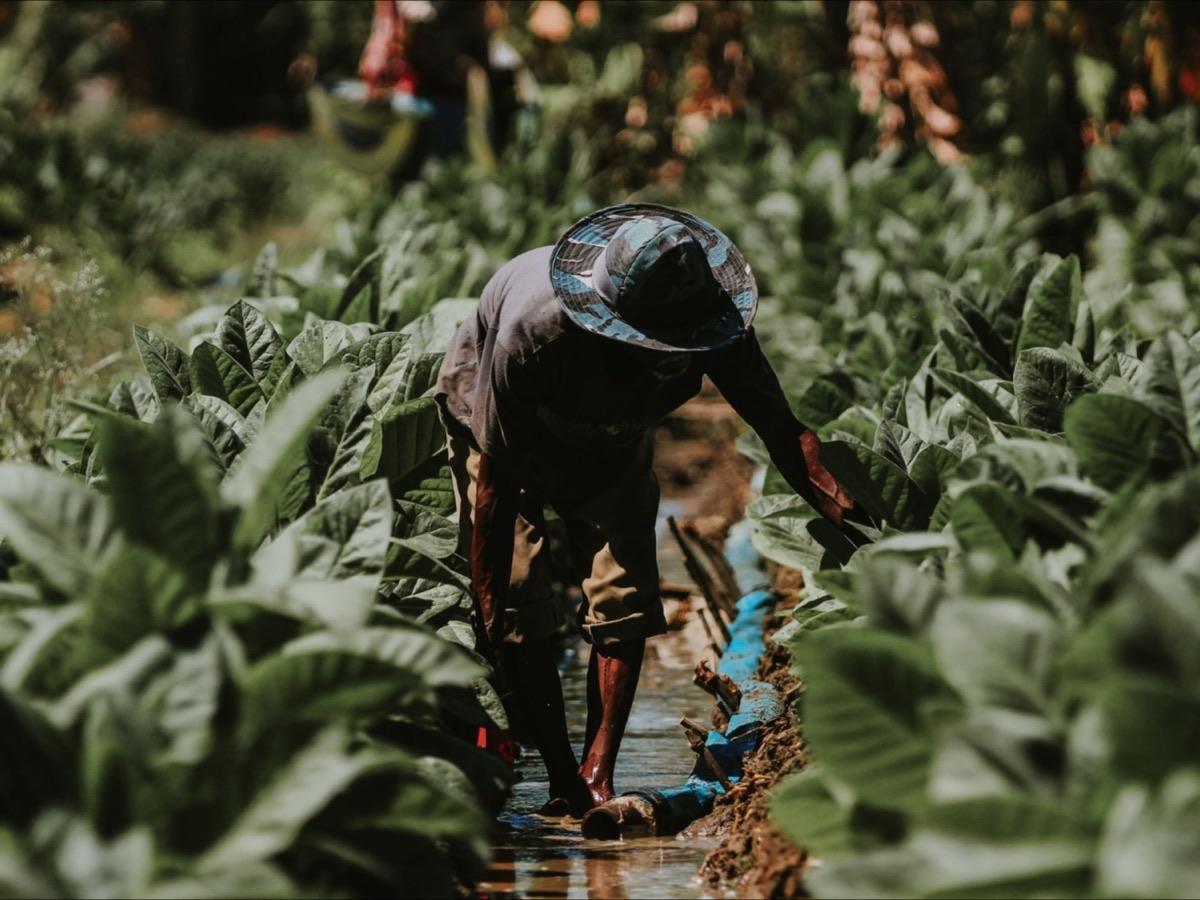
Topping and Suckering explains what topping does: it stops the plant from flowering and sends its strength into its leaves. This lesson explains the two choices topping involves. One is timing, the stage of growth at which the flower is removed. The other is height, how many leaves are left on the plant. Both change how much leaf the plant gives and what kind.
When to top
Growers describe the moment by the flower head. The bud stage, sometimes called the button, comes first; then the flower head lengthens and the first flowers open, the early-flower or early-bloom stage; then the plant reaches full bloom and goes on to set seed. Most cigar tobacco is topped somewhere between the bud and early bloom.
In Cuba, cigar tobacco is topped a la caja, at the bud, between 38 and 42 days after planting. Connecticut Broadleaf, by Kentucky and Tennessee guidance, is topped at early flower, about seven weeks after transplanting. Small growers in Jalapa, Nicaragua, top their sun-grown tobacco 50 to 60 days after planting.
Trials on Connecticut Havana Seed, a binder tobacco, in the 1920s measured what the timing does. Over three years, plants topped at the bud yielded 1,395 pounds of cured leaf an acre, those topped at early bloom 1,490, at full bloom 1,456, and those left untopped until the seed pods formed only 1,245. The researchers concluded that early bloom was the best time to top Havana Seed. Topping late also hurt the leaf: plants topped after early bloom gave overripe leaves with yellow, variegated and mottled colors.
Plants in a field don't all bud on the same day, so topping takes more than one pass. Cuban growers go through a field two or three times, and they lower the height as they go. If the first pass leaves eight pairs of leaves, 16 leaves, the second leaves seven pairs, 14 leaves, and a third, if one is needed, six pairs, 12 leaves.
How many leaves to leave
The height of topping is counted in the leaves left on the plant. The table compares the figures given for several cigar tobaccos.
| Tobacco | Leaves left after topping |
|---|---|
| Cuba, shade-grown wrapper (tapado) | 14 to 20, usually 16 to 18 |
| Cuba, sun-grown, picked leaf by leaf (sol ensartado) | 12 to 18, usually 14 to 16 |
| Cuba, sun-grown, cut on the stalk (sol en palo) | 8 to 14, usually 10 to 12 |
| Connecticut Broadleaf (Kentucky and Tennessee guidance, 2020) | 12 to 14 usable leaves |
| Connecticut Havana Seed (1920s) | 12 to 18 |
| Pennsylvania cigar leaf (1910) | 12 to 15, sometimes 20 |
| Connecticut Shade, modern varieties | Not topped |
Read down the table and the pattern follows the leaf. Plants grown for wrapper keep the most leaves, because a plant with more leaves grows each one thinner; modern Connecticut shade is not topped at all. Sun-grown plants are topped lower, and Cuba's sol en palo lowest of all. In Kentucky trials in 2019, researchers went further with broadleaf and advised topping to 12 leaves instead of 14, for larger leaves and shorter plants that are easier to handle.
What the height does to the leaf
A plant topped low has fewer leaves to feed, so each grows larger, thicker and heavier, with more body and more nicotine. The Connecticut trials on Havana Seed found that plants topped three or four leaves lower than usual gave the same weight of leaf, because the remaining leaves grew to make up for the lost ones, and much better quality: nearly twice the share of light and medium grades, a better burn, and a price 8.6 cents a pound higher.
Wrapper is different. A thin, elastic leaf is what a wrapper grower wants, and low topping makes the leaf too heavy and coarse for it, as a U.S. guide to shade-grown wrapper warned in 1908. That is why Cuba tops its wrapper plants higher than its sun-grown ones, and why Connecticut stopped topping its shade tobacco.
Topping for ligero
The upper leaves gain the most from low topping, and they become ligero, the strongest filler. Growers who want more ligero top their plants lower and harvest fewer leaves. Farmers who sell their tobacco by weight resist: Litto Gomez, of La Flor Dominicana, has said that if you tell a farmer to take four to six leaves off a plant, the farmer will tell you to go to hell. Filler Leaf Positions (Primings) and Strength, in the Fillers topic, explain what ligero brings to a cigar.