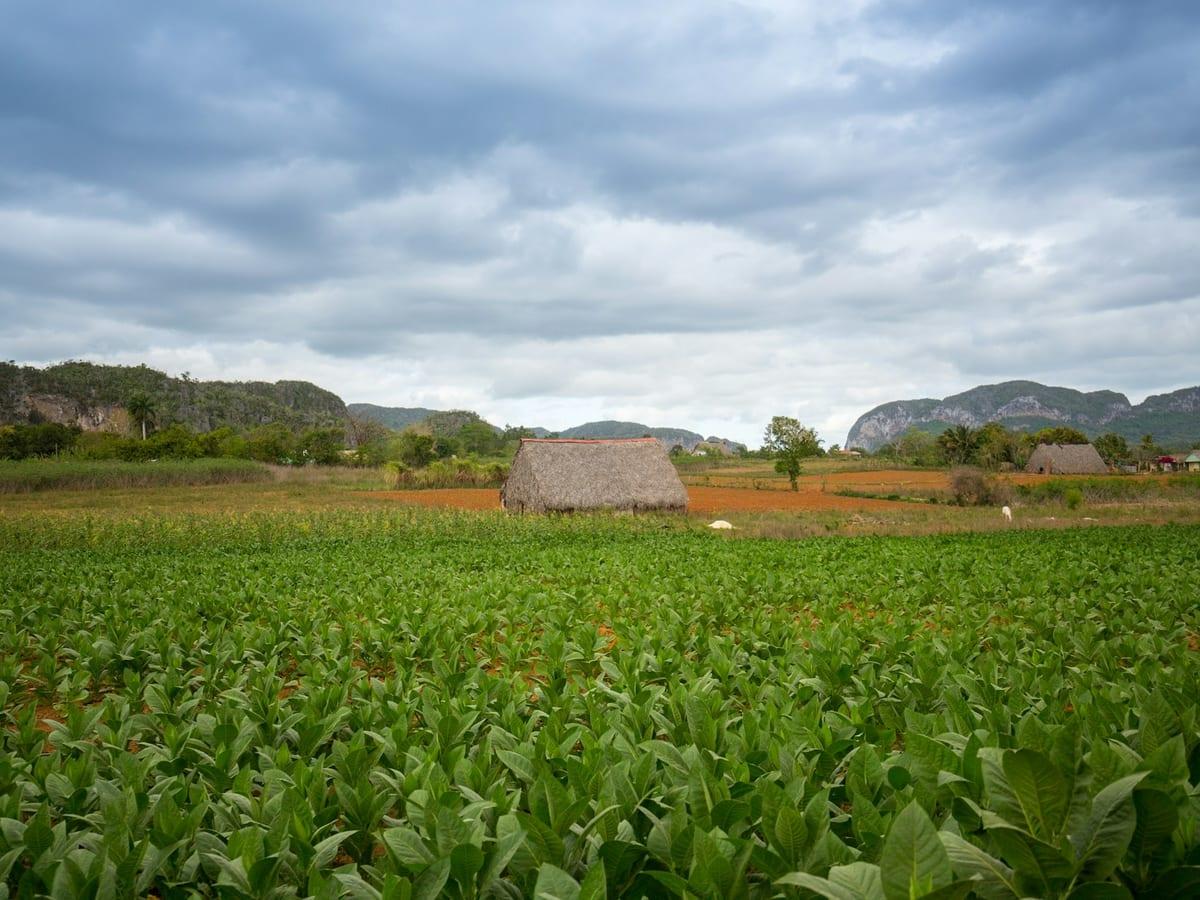
Every list of growing regions has an entry that exists mostly because a town is on the map of tobacco country, and Mao is that entry for the Dominican Republic. This lesson sets out what is actually known: where Mao is, what its climate is like, and why a dry town in Valverde is best understood as the northern limit of the Cibao rather than a distinct source of cigar leaf.
A dry town in the north-west
Mao, or Santa Cruz de Mao, is the capital of the province of Valverde, in the north-west of the Dominican Republic, near where the river of the same name meets the Yaque del Norte. It is the largest city of the country's north-west, but it is not a watery place: the region is semi-arid, the driest part of the north, and its recorded climate is hot, with rainfall of about 700 millimeters a year, roughly half the valley's wetter districts. On 31 August 1954 Mao recorded 43.0 °C, the highest temperature ever measured in the Dominican Republic.
That dryness matters for the lesson. The Cibao's tobacco wealth sits in its better-watered center; the north-west around Mao is the valley's dry margin, and its agriculture is more cattle and irrigated crops than the deep tobacco fields of Santiago and Moca. Tobacco is grown in the irrigated pockets of the province, but it is not the region's defining crop, and it does not have a distinct character that the trade names.
The honest place of a marginal district
The accurate way to place Mao is as the western, drier boundary of the Cibao, the place where the valley's tobacco thins out on the way toward Monte Cristi and the Haitian border. It is part of the country's tobacco geography, but a minor and largely undocumented part, and the finer-grained claims sometimes attached to it, robust wrapper leaf, a distinctive Mao filler, do not stand up to checking. The Dominican Republic lesson and the Cibao Valley lesson cover the country's real tobacco; Mao is the map's margin.
This is not a defect in the region so much as a useful lesson in reading region lists. Not every named place grows a distinctive, celebrated leaf, and a careful reader treats a name that has no documented leaf of its own as what it is: a boundary, a district, a town, and little more.