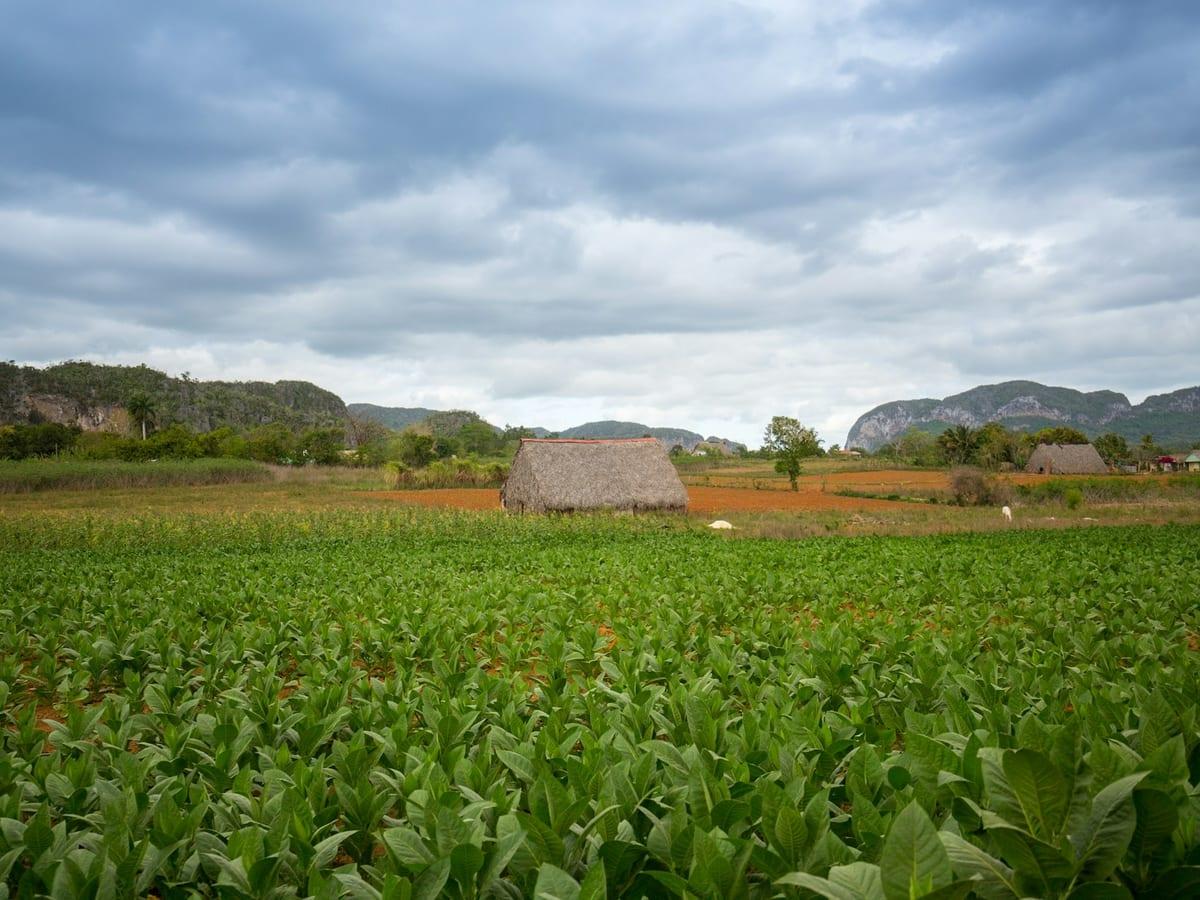
Brazil's cigar leaf is a dark, powerful thing from the humid coast, and Mata Fina is its best grade. This lesson covers the region and the leaf: the Recôncavo where it grows, how it is harvested, what it is used for, and Brazil's own cigar tradition. Mata Norte, the northern subregion of the same crop, is the next lesson. The Wrappers lesson follows the leaf into cigars, and Fillers gives Bahia its place among the origins.
The Recôncavo and its leaf
Bahia's cigar tobacco grows in the Recôncavo, the humid coastal lowland that circles the Bay of All Saints in the Brazilian state of Bahia, around the old towns of São Félix, Cachoeira and Cruz das Almas. The region is not volcanic; it is a wet, fertile Atlantic forest zone whose clay-rich soil and rainfall grow a thick, dark leaf. The name Mata Fina means, roughly, the fine forest, and it names both the district and its best tobacco.
The leaf is grown in full sun and harvested by cutting the whole stalk, rather than by priming, the method the Wrappers and Priming and Harvesting lessons describe. It cures dark and oily, almost black, with a natural sweetness, and that dark, sweet, strong character is Brazil's signature in a blend.
Wrapper, binder and filler
Mata Fina is versatile in a way few dark leaves are. It is used as wrapper, binder and filler, sometimes in the same cigar: Drew Estate's Liga Privada No. 9 uses Mata Fina as its binder, a dark, sweet spine under a Connecticut Broadleaf wrapper, while the same leaf wraps other cigars. The Herrera Estelí Brazilian Maduro and A.J. Fernandez's Días de Gloria Brazil both wear Mata Fina wrapper, and Davidoff's Escurio blends Bahian filler with Dominican tobacco, as Fillers records.
Brazil also has its own cigar tradition, which matters here. Geraldo Dannemann, an emigrant from the German city of Bremen, began making cigars in Bahia in 1873, and the Menendez family, the makers of Montecristo in Cuba before the revolution, settled in Brazil in 1977 and still make cigars there under the Alonso Menendez name. Brazil is, unusually among the origins, both a wrapper source and an old cigar-making country in its own right.
The dark sweet leaf
Mata Fina's lesson is that darkness is not the same as coarseness. A sun-grown, stalk-cut leaf from a humid tropical coast can be strong and still sweet, oily and still fine, which is why it wraps some cigars while binding others. Brazil's place in the world's blends rests on that leaf, and on the Recôncavo that grows it.