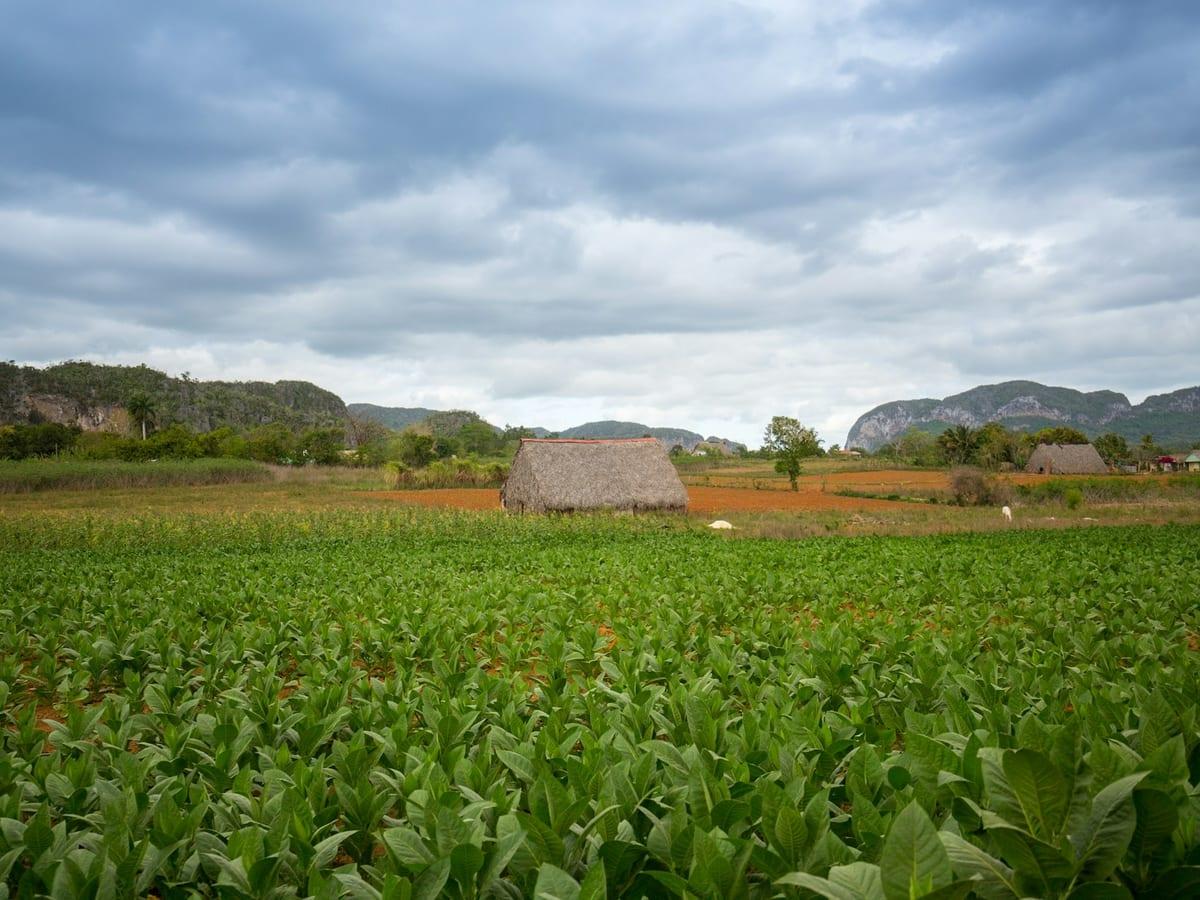
Ecuador's rise as a wrapper country happened around one river town, and this lesson is about that town and its immediate fields. It explains why Quevedo became the center: the cloud cover that replaces shade cloth, the volcanic soil, and the seed that grows there, with the growers and the cigars that carry the leaf. Los Ríos, the province Quevedo sits in, and Guayas, the neighboring province, have lessons of their own, and the three are one continuous wrapper district.
The town and the cloud
Quevedo sits in the west of Ecuador, in the lowland province of Los Ríos, on the river system that drains the western Andean slopes toward the Pacific. The land around it is flat, fertile and volcanic, but what made Quevedo famous is the sky: during the growing season, which runs from seedbeds in May to a harvest that ends around December or January, a nearly constant layer of thick gray cloud hangs over the region, filtering the sunlight much as a shade tent does. The Wrappers lesson puts it plainly: Ecuador grows wrapper without cloth.
That cloud changes everything. Wrapper needs a thin, elastic, fine-veined leaf, which shade produces by slowing and stretching the plant; in Cuba and Connecticut that shade is man-made cloth, and in Ecuador the cloud does the job free. Ecuador can therefore grow wrapper leaf more cheaply than anywhere that builds tents, which is why the world turned to it.
What grows around Quevedo
The seed is mostly foreign, and that is the point. Ecuador's two traditional varieties were Connecticut seed and Sumatra seed, and Cuban-seed Habano 2000 and Corojo 99 joined them, as the Seed to Leaf topic records. Around Quevedo those seeds give three families of wrapper: a light golden Connecticut leaf sold as Ecuador Connecticut, and darker, oilier Sumatra and Habano leaves, the three discussed in the Wrappers lesson.
The cigars show the reach of the leaf. Ecuador Connecticut, the light wrapper grown around Quevedo, wraps the Montecristo White Series and the Romeo y Julieta Reserva Real, and has wrapped Davidoff's signature cigar since 2001, when the maker moved its wrapper from Connecticut to Ecuador. The Sumatra-seed leaf of the same fields wraps Oliva's Serie V Melanio, the cigar that took cigar-of-the-year standing in 2014. From one river town, then, come the outside leaves of both the mildest and the boldest cigars.
The growers
The leaf is grown in large, professionally run farms. A.S.P. Enterprises, the Perez family's wrapper grower, and Oliva Tobacco, a Tampa leaf dealer that has handled Ecuadorian wrapper since 1975 and grown its own there since 1980, are among the largest; the Wrappers lesson names them. The growing business is the same one the Los Ríos and Guayas lessons describe: seed, cloud, harvest into the bale, and shipment to the rolling tables of the Dominican Republic, Nicaragua and Honduras.
Quevedo's lesson is the simplest in the topic, and the most consequential: natural shade on volcanic soil, in one coastal valley, supplies the outside leaf of a large share of the world's premium cigars.