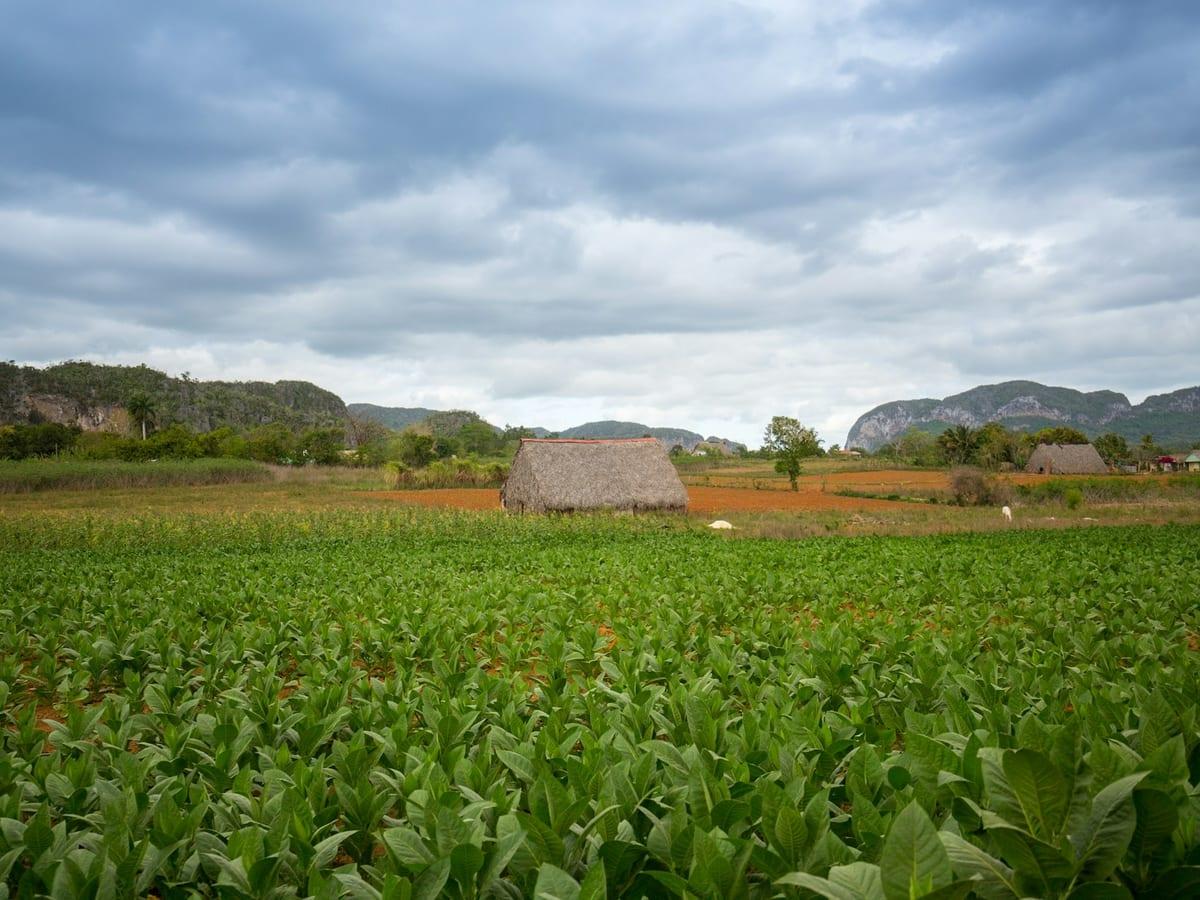
Every Habano, whatever its brand, is built from a small corner of western Cuba. This lesson is about that corner: where it lies, what its soil and climate are, and how its two great districts divide the work of growing a cigar's leaf, with the named farms and the grades that decide which fields feed the brand. Semi Vuelta, the zone that surrounds it, and the tapado wrapper crop, have lessons of their own; the Wrappers topic follows the wrapper leaf from San Luis to the sorting table.
The zone and its standing
Vuelta Abajo lies in the westernmost province of Pinar del Río, whose name means the pine forest by the river. Habanos calls it the finest cigar-growing land in the world, the main source of tobacco for Habanos, and the only zone that grows all types of leaf: wrappers, filler and binders. All the tobacco for the fillers and binders of long-filler Habanos comes from this zone, which is why its name, or that of one of its districts, appears on so many Cuban cigars.
The privilege is guarded twice over. Vuelta Abajo is protected as a denomination of origin, and within it less than a quarter of the tobacco-growing land holds the Vegas de Primera status required to grow tobacco for Habanos. A field either qualifies, by its soil, microclimate and grower, or it grows for something else. The Tobacco Research Institute and the regulatory council approve the fields, and the whole point of the system is that "Vuelta Abajo" names a tight grade, not a region on a map.
San Luis, the wrapper district
Two districts lead the zone, and they divide the cigar between them. San Luis, a small town in the heart of the zone, is known above all for wrapper. Its wrapper is grown under cloth, the tapado of the Wrappers lesson, on small farms; the district holds the world-famous El Corojo farm, the Cuchillas de Barbacoa farm, and the farm of Alejandro Robaina, the best-known Cuban tobacco grower of his generation, who gave his name to the Vegas Robaina brand. San Luis is one of the two districts whose finest fields supply leaves chosen for the Cohiba brand, the sign of the very top of Cuba's tobacco.
San Juan y Martínez, the filler and binder district
The other district is San Juan y Martínez, known for filler and binder, where the famous Hoyo de Monterrey plantation stands. This is where the body of the cigar is grown: the sun-grown leaf, from Criollo-type plants, that becomes the volado, seco and ligero of a blend, the leaves the Fillers topic names by their position on the plant. San Juan y Martínez is the other district whose finest vegas supply Cohiba, and it reaches deep into the actual business of the crop: in the 2026–27 season the municipality contracted 1,921 growers to plant about 3,000 hectares, and it harvests the bulk of Cuba's seed, as Seed to Leaf explains.
Why the four districts of the name matter
The cigar world uses "Vuelta Abajo" loosely, for all of western Cuba's tobacco, but the denomination is precise. Its districts, San Luis and San Juan y Martínez above all, are themselves protected as denominations of origin, and a cigar's documentation can name the district, even the farm, from which its leaf came. That precision is what makes the region believable: a wrapper from San Luis and a ligero from San Juan y Martínez are two different leaves from two different places, bundled into one cigar.
The lesson to hold onto is the simplest one. Vuelta Abajo is not a flavor so much as a place with rules: a sandy, slightly acid soil, a dry winter growing season, and a short list of fields good enough to count. Everything else in Cuban tobacco, the wrapper of Partido, the seed and short-filler leaf of Semi Vuelta, the names of the eastern regions, is measured against it.