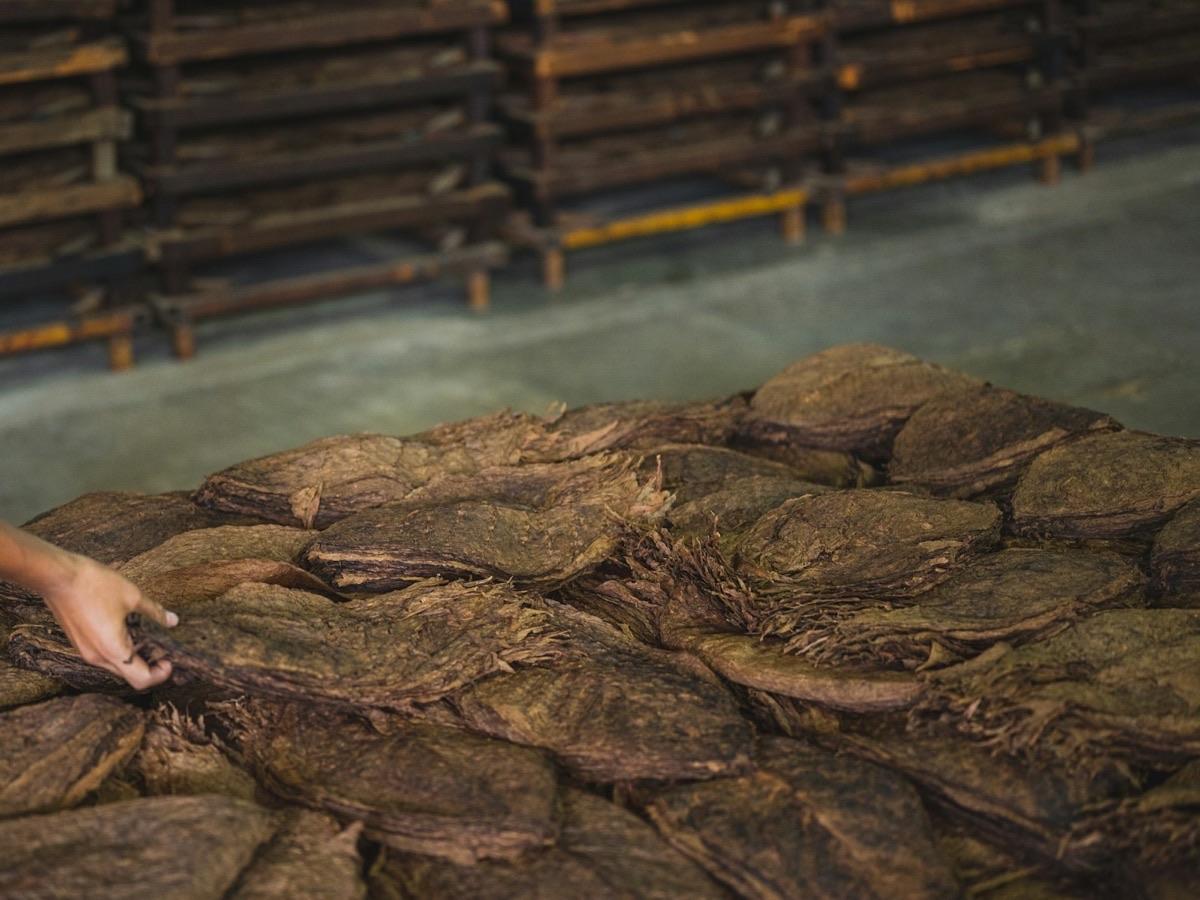
Most cigar labels name one of a handful of wrappers, and learning them is the quickest way to make sense of a shop's shelves. Each has a typical color, texture and set of flavors, shaped by its seed, the place it grew and the way it was grown and fermented, which the earlier lessons of this topic explain. This lesson describes the wrappers you will meet most often, names cigars that wear each, and ends with how to taste the difference for yourself.
The common wrappers at a glance
The table compares the most common wrappers by where and how they grow, the notes reviewers name most often and a few cigars that wear them. The notes are tendencies, not rules.
| Wrapper | Where and how it grows | Notes often named | Cigars that wear it |
|---|---|---|---|
| Connecticut Shade | The Connecticut River Valley, under cloth | Cream, cedar, hay and nuts; usually mild | Macanudo Café, Ashton Classic |
| Ecuador Connecticut | Ecuador, under clouds | Cream, cedar and nuts; usually mild | Montecristo White Series, Perdomo Champagne |
| Habano and Corojo | Ecuador, Nicaragua and Honduras, under clouds, cloth or sun | Pepper, spice, cedar and earth | Padrón, Camacho Corojo, Oliva Serie V |
| Sumatra | Ecuador, under clouds; Indonesia | Earth, cedar and sweet spice | Oliva Serie V Melanio |
| Cameroon | Cameroon and the Central African Republic | Gentle, sweet spice and cedar | Arturo Fuente Hemingway |
| Connecticut Broadleaf | The Connecticut River Valley, in full sun, fermented to maduro | Cocoa, coffee, dark chocolate and natural sweetness | Liga Privada No. 9 |
| San Andrés | Mexico's San Andrés valley, in full sun, fermented to maduro | Cocoa, coffee, dark chocolate and natural sweetness | Te-Amo, Undercrown Maduro |
| Mata Fina and Arapiraca | Bahia and Alagoas, Brazil, fermented to maduro | Cocoa, dark chocolate and natural sweetness | Herrera Estelí Brazilian Maduro, CAO Brazilia |
| Cuban | The Vuelta Abajo and Partido, under cloth | Varies with the cigar | Every Habano |
Read down the second column and the pattern from Growing Methods returns: the pale wrappers are grown in shade, and the dark ones in full sun and fermented to maduro.
The pale wrappers
Connecticut Shade and Ecuador Connecticut are the lightest common wrappers, grown under cloth or cloud from Connecticut seed and cured to a light, golden brown. They are smooth, with fine veins, and they usually give a mild, creamy smoke with notes of cedar, hay and nuts. True Connecticut Shade from the valley has become rare and expensive, and it still wraps Macanudo Café, the Hoyo de Monterrey Excalibur and the Ashton Classic. Ecuador Connecticut, grown from the same kind of seed, is now far more common, on cigars such as the Montecristo White Series, the Romeo y Julieta Reserva Real, Davidoff's signature cigars and Perdomo's Champagne. A pale wrapper does not mean a mild cigar, though, if a strong filler lies beneath it.
The Cuban-seed wrappers
Habano and Corojo wrappers, grown from Cuban seed in Ecuador, Nicaragua and Honduras, wrap a great many of today's fuller cigars. They are medium to dark brown, often oily, sometimes with the reddish tint sold as rosado, and reviewers most often name pepper, spice, cedar and earth. In Nicaragua, Padrón's sun-grown natural wrapper and Aganorsa's shade-grown Corojo '99 come from the same kind of seed grown in different ways. In Honduras, the Eiroa family's Corojo from the Jamastrán valley wraps the Camacho Corojo. Ecuador's Habano leaf wraps cigars such as the Oliva Serie V and A.J. Fernandez's original Enclave.
Sumatra and Cameroon
Two wrappers descend from the Sumatra leaf. Sumatra-seed wrapper, grown in Ecuador as well as Indonesia, is darker and oilier than Connecticut seed, and reviewers often name earth, cedar and sweet spice; Oliva's Serie V Melanio, named cigar of the year in 2014, wears it. Cameroon, grown in Central Africa from Sumatra seed, is thin and toothy, with a gentle, sweet spice, and it has long been the wrapper of Arturo Fuente's Hemingway and Don Carlos, General Cigar's Partagás and A.J. Fernandez's New World Cameroon. Its supply has long depended on very few growers.
The maduro wrappers
The dark wrappers come from a few thick, sun-grown leaves fermented for months. Connecticut Broadleaf is the best known, on cigars such as Drew Estate's Liga Privada No. 9 and General Cigar's Partagás Black Label. Mexico's San Andrés wraps Te-Amo and Casa 1910 at home and cigars such as Drew Estate's Undercrown Maduro abroad. Brazil gives Mata Fina, on the Herrera Estelí Brazilian Maduro, and the heavier Arapiraca, on the CAO Brazilia. Nicaraguan sun-grown leaf is fermented to maduro too, as on Padrón's and Perdomo's maduros. Whatever the leaf, reviewers name cocoa, coffee, dark chocolate and natural sweetness, and a maduro adds richness and body rather than strength.
Cuban wrapper
Every Habano wears Cuban wrapper, grown under muslin in the Vuelta Abajo and Partido from Corojo-type hybrids and graded into some 50 categories. Cuban labels do not name the wrapper, because every Habano wears Cuban leaf. The darker wrappers of the Ediciones Limitadas, Cohiba Maduro 5 and Partagás Maduro No. 1 come from the upper leaves of the plant.
The rarer wrappers
Some wrappers turn up less often but are worth knowing. Candela, the green wrapper, survives in a few cigars and tastes of grass and fresh leaf. Dominican-grown wrapper is still rare, on the Fuente Fuente OpusX and the Davidoff Yamasá. Pennsylvania leaf wraps a few cigars such as RoMa Craft's CroMagnon PA, and J.C. Newman's The American wears Florida Sun Grown. Some cigars wear two wrappers at once, wound in spiral stripes as a barber pole, and Arturo Fuente's Don Carlos 90 Años adds a second, Corojo-seed wrapper over its Cameroon.
Comparing wrappers yourself
The surest way to learn what each wrapper brings is to smoke one line in two or three of them, side by side. Padrón's 1964 Anniversary Series comes in natural and maduro, and most Perdomo lines in Ecuadorian Connecticut, Nicaraguan sun-grown and Nicaraguan maduro. Some makers change the binder and filler along with the wrapper, so it is worth checking that the versions share a blend. Smoked together, the versions show what the wrapper changes: sweetness, body and the character of the first puffs far more than strength. Tastes differ, and none of these wrappers is better than the others; each suits some blends, some moments and some palates better.