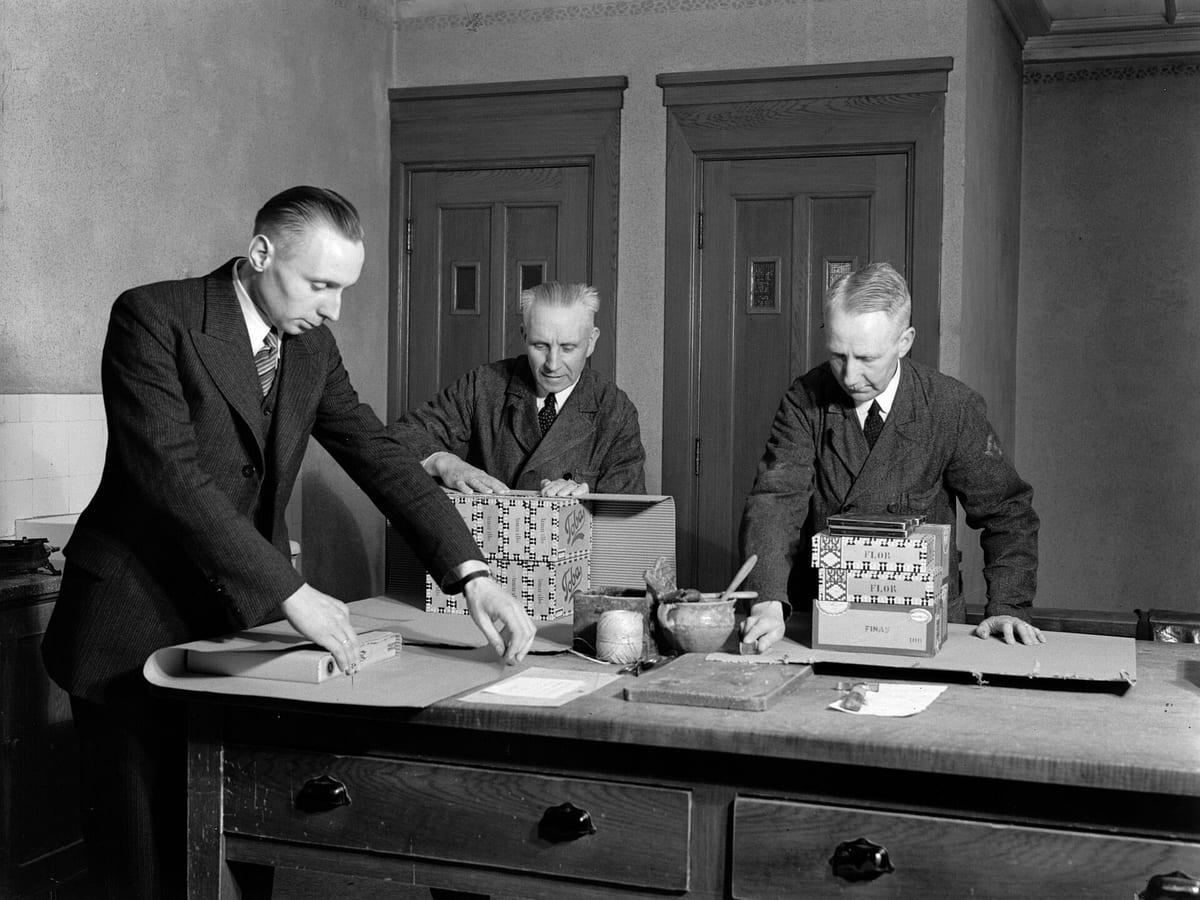
The cigar box grew up with the cigar itself. This lesson follows the box from the early days of shipping cigars loose, through the adoption of Spanish cedar, the American tax laws that fixed the box's size, and the Golden Age of lithographed labels, to the traditions that survive in a modern box. The next lesson, Box Types and Styles, defines each style of box and what it is for, and Certification and Security explains the stamps and codes on a box.
Before the box
For most of the cigar's history there was no box. Cigars were tied into bundles and shipped loose, wrapped in palm leaves, cloth or paper, which gave them little defence against being crushed or drying out on a slow sea voyage. The word for such a bundle survives: in the Cuban trade a media rueda, a "half wheel", is 50 cigars and a rueda, a "wheel", is 100, names left over from the days when cigars were rolled and sold in rounds of that size.
Why Spanish cedar
The wood that solved the problem comes from a tree that is not a true cedar. Spanish cedar, in Spanish cedro, is Cedrela odorata, an aromatic tropical tree of the mahogany family that grows through Central America, the Caribbean and much of South America. The trade calls it the best wood for a cigar box because of its fine grain, its pleasant smell and the insect-repelling resin in its heartwood, and because the wood takes up and gives back moisture in a way that helps keep cigars in condition. Cuban makers adopted it early, and it has stayed the standard lining, and often the whole body, of a cigar box ever since. A cedar box is more than a crate: a thin sheet of cedro is still laid between the rows of an expensive box, and smokers save the sheet to use when lighting a cigar.
The first purpose-built boxes
Boxes began to take the place of loose bundles as the cigar trade expanded from Cuba to Europe and the Americas in the early 19th century. The German mercantile house of H. Upmann, founded in Havana in 1844, is remembered as an early user of the finished cedar box, packing cigars in branded cedar boxes as gifts for the customers of the family's bank and helping fix the hinged cedar box as the standard. What started as a shipping convenience became a way to protect and to sell: the box held a set number of cigars, kept them whole, and carried the maker's name to the other side of the world.
The tax stamp and the box count
The United States gave the box its standard sizes almost by accident. To raise money for the Union in the American Civil War, the Revenue Act of 1862 levied an internal tax on tobacco, and the revenue laws of the 1860s that followed required cigars to be sold in wooden boxes holding a set number of cigars, 25, 50, 100 or 250, each box carrying a government tax stamp that showed the duty had been paid. The law was meant to stop evasion, but it fixed those four counts as the ordinary sizes of a cigar box, and they are the counts still seen on boxes today.
The Golden Age and the lithographed label
As demand for cigars grew through the 19th and early 20th centuries, the outside of the box became advertising. Lithographers printed the cedar dress box with vivid paper labels, and Havana's factories put out boxes covered in gold leaf and scenes of romance, adventure and national pride. In the decades before Cuba's cigar industry was nationalized in 1960, boxes from houses such as Partagás, Romeo y Julieta and H. Upmann became status objects, often carrying their labels in several languages at once because they were made for export markets. These "dress boxes", from the idea of clothing plain cedar in a printed paper label, turned the box into something people kept.
Tradition in the modern box
Much of that history lives on in how a premium box is put together. Cigars are laid flat or diagonally rather than on top of one another, so the wrapper of one does not split against the next, and a Havana factory still packs its cigars by hand into the cedar box. A well-made box remains a small piece of furniture, and owners have long kept the good ones to display, or lined one as a humidor, a sealed cedar container that holds cigars at a steady humidity; the Humidor Essentials topic describes that work, and the points made there are separate from the box itself.