Europe had no tobacco until it met the Americas. The plant that arrived as a curiosity and a medicine became, within a century, a habit, a crop and an item of state revenue, and it was argued over almost from the start. This lesson follows tobacco's first century in Europe: how it arrived, why it was valued as medicine, who spread it, how the cigar form grew out of Spain, and how the earliest opposition rose alongside it. Origins of Tobacco Use covers the plant in the Americas before contact.
A medicine before a pleasure
The first Europeans to describe tobacco saw the Taíno on Hispaniola smoking rolled leaves, and Spanish sailors adopted the practice there. The Spanish introduced the plant to Europe around 1528, and it was first cultivated on the Iberian peninsula in monastery gardens, where it was kept and studied for its supposed healing powers rather than grown as a crop for pleasure. In these early decades tobacco's reputation was medical: the Spanish physician Nicolás Monardes wrote in 1571 that it could treat a long list of ailments, and it was called the "sacred herb". The first producers and sellers in Europe were apothecaries.
The plant travelled by the letter-carriers of diplomacy and trade. Jean Nicot, the French ambassador to Portugal, sent tobacco leaves and seed from Lisbon to Paris in 1559, and they reached King Francis II and his mother, Catherine de' Medici, with the suggestion that it be taken as snuff against the king's headaches. In France the plant came to be called *herbe de la reine*, the queen's herb, and French cultivation began in 1560. By 1570 botanists had named the genus *Nicotiana* after Nicot, and the stimulant in the leaf, nicotine, carries his name today. The physician who first named it may have claimed too much for the plant, but the naming stuck.
Across northern Europe
From Spain and France the plant spread outward. In England the naval commander John Hawkins is credited with first bringing tobacco seed, and smoking is recorded there by 1573, before Sir Walter Raleigh popularized the Virginia pipe. The habit divided Europe by method as much as by country: snuff among the aristocracy, chewing among sailors, and the clay pipe among ordinary people, with Dutch pipe-makers at Gouda sending out the tall clay pipes by the million. In England, James I answered all of it in 1604 with *A Counterblaste to Tobacco*, in which he called smoking a custom "loathsome to the eye, hateful to the nose, harmful to the brain, dangerous to the lungs", and that same year a statute laid a heavy tariff on tobacco imports. The duty did not stop the trade; it made tobacco valuable to the state, and the demand continued.
Europe also learned to grow its own. Tobacco was planted across southern France and Italy and, under later rulers, pushed further, while the English colony at Jamestown in Virginia turned the plant into a cash crop in the early 1600s, a story Tobacco by Nation takes up.
The cigar takes shape in Spain
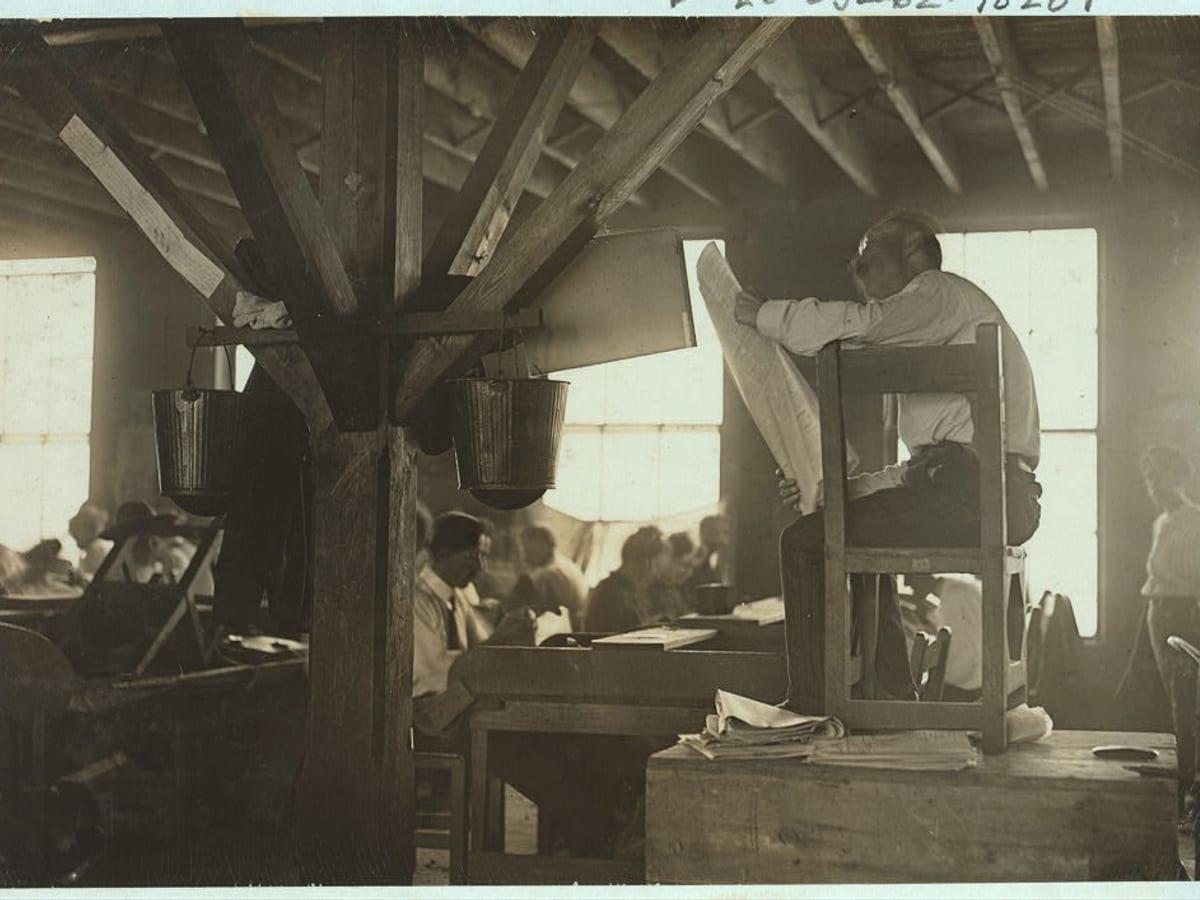
The rolled-leaf form the Spanish had met in the Caribbean did not at first spread with the leaf itself. Early European smoking was overwhelmingly pipe, snuff and chewing. The cigar as a made object grew up in Spain, which had the closest link to Cuba and Hispaniola. In the 18th century Spain's royal tobacco monopoly, the *estanco*, built a great factory in Seville, the Real Fábrica de Tabacos, where workers twisted tobacco into cigars by hand, and Spanish *cigarros* reached France and Britain during the Napoleonic wars. The English word "cigar" comes from the Spanish *cigarro*. By the early 1800s the cigar was established as a distinct, finished product, and the place that would define it was Cuba; Cuba's Golden Age takes up the story there.