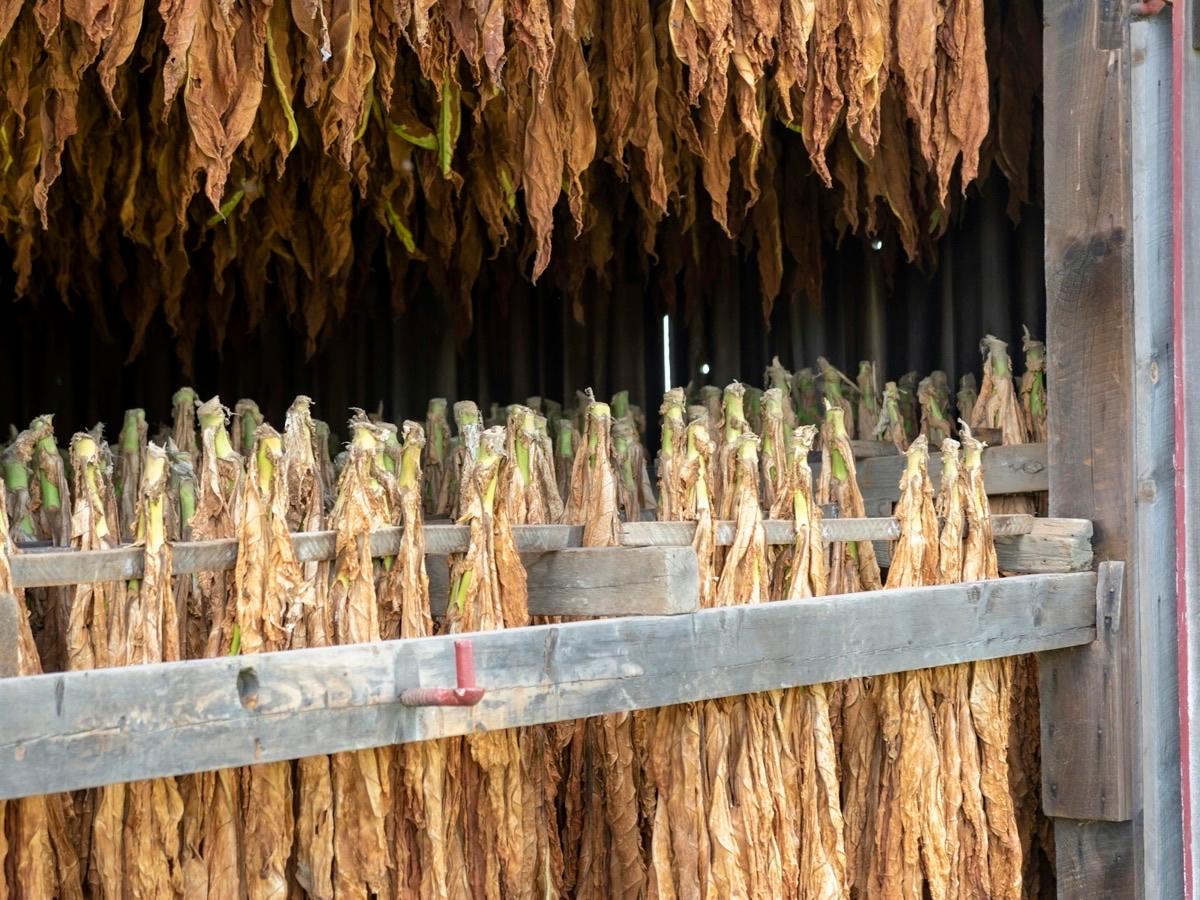
Fermentation is a sequence of cycles. Each time a pile is built or rebuilt, it heats up, is turned, cools and heats again, and the leaf changes a little more with each round. How many rounds, how long each lasts and how they are grouped into separate fermentations is where Cuba and the other cigar countries differ most. This lesson describes a single cycle, the Cuban schedule, the schedules of makers elsewhere, the aging that follows, and the barrels, presses and ropes some makers add.
One cycle of heat
Every turn of a pile starts a cycle. The freshly built pile warms within a day or two and climbs until it reaches its limit; it is then turned, which cools and airs it, and the climb begins again. The cycles lengthen as the fermentation goes on, and the peaks tend to fall, because the leaf has less left to change. An 1899 U.S. account gives the classic rhythm: a first turn after three or four days, the next ones every seven or eight, five to eight in all. Makers today work to similar rhythms, Rocky Patel turning its pilones every 7 to 10 days, and in Mexico's Los Tuxtlas the trojas are turned five or six times before they settle after 55 to 60 days.
The Cuban schedule
In Cuba the stages are fixed and named. Sun-grown filler and binder follow this sequence:
- First fermentation, on the farm. The leaves from each cuje are tied into gavillas, piled in the curing barn and covered with cloth, for up to 30 days; the upper leaves take longest, and the last stage is sometimes done in barrels.
- Sorting, at the escogida. The leaf is moistened, aired and sorted into volado, seco, ligero, medio tiempo and binder.
- Second fermentation, at the despalillo. Medio tiempo, ligero and seco ferment in pilones for about 15 days; volado and binder leaves are only aired.
- Moja and stripping. The leaves are wetted with pure water, the lower part of the midrib is stripped out, and the leaves are pressed.
- Final fermentation, in burros covered with cloth: 15 to 25 days for volado and binder, 45 to 60 days for seco, and about 90 days for ligero and medio tiempo.
- Airing and baling. The leaf is aired on racks for a few days and packed in pacas to age.
Counted this way, seco, ligero and medio tiempo get three fermentations and volado and binder two. Shade-grown wrapper is treated differently: it gets a single fermentation of at least 20 days, in chambers at the escogida, and is then sorted into some 50 categories and aged in tercios. Cohiba is the one Cuban brand whose seco and ligero get an extra fermentation; in 1992 it was described as taking place in small wooden barrels at the El Laguito factory in Havana, for up to 18 months.
Schedules elsewhere
Outside Cuba there is no common schedule; each maker sets its own, and the figures vary widely. Rocky Patel ferments for six months to more than a year. General Cigar's Dominican leaf spends two to six months in its fermentation rooms, depending on how fast it ferments, and Davidoff's wrapper can stay in its pilón for up to a year. Justo Eiroa of JRE, in Honduras, has spoken of an initial fermentation of 12 to 36 months, and Perdomo says it keeps its leaf in pilones for at least three years. Some makers divide the work into separate fermentations as Cuba does: AJ Fernández ferments its tobacco three times, first in pilones, then in bales, then in burros, the piles getting smaller each time.
Maduro takes longer than natural leaf at the same maker, and Differences by Tobacco Type describes it. Labels such as "double fermented" or "triple fermented" have no agreed definition: most premium leaf is turned many times, often in more than one fermentation, and the phrases describe a maker's own process, if anything.
Rest and aging
After the last fermentation, the leaf rests. Packed in bales at a moisture too low to ferment actively, it goes on changing slowly for months or years, a process early U.S. growers called the cold sweat and compared to the aging of wine. Many premium makers age their leaf for years. In Cuba, wrapper ages at least six months and ligero and medio tiempo at least two years, volado the least; the leaf of a Reserva ages at least three years and of a Gran Reserva at least five. Padrón ages the tobacco of its standard series at least two and a half years, of its 1964 Anniversary Series four years, of its 1926 Serie five and of its Family Reserve ten. Davidoff keeps leaf in bales for five to ten years and longer. Strength vs. Body explains what aging does to body, and the Aging Cigars topic covers the aging of finished cigars.
Barrels, presses and ropes
A few makers add a stage of their own. Several age or ferment leaf in spirit barrels. Drew Estate's Pappy Van Winkle Barrel Fermented cigars use Kentucky leaf packed into small bundles with water and pressed into bourbon barrels with railroad jacks, where it ferments for 12 to 18 months. Perdomo ages the wrapper of its Reserve 10th Anniversary in bourbon barrels, for 10 months for the Sun Grown and 14 for the Maduro. Camacho's American Barrel-Aged, from 2015, aged one Corojo leaf in its blend in a barrel for five months, and General Cigar's Weller by Cohiba, from 2022, ages its Connecticut Broadleaf binder in Weller bourbon barrels.
Older methods press the leaf instead. In the Dominican Republic, La Aurora used andullo, an old Dominican way of pressing leaf, in its ADN Dominicano: the leaf is packed into the pods of palm seeds and bound with rope into a hard bar. In Brazil, Arapiraca leaf is bound with tightly wound rope to ferment, and leaf from Bragança is packed into tubes called carottes and ferments under its own compression for six months.