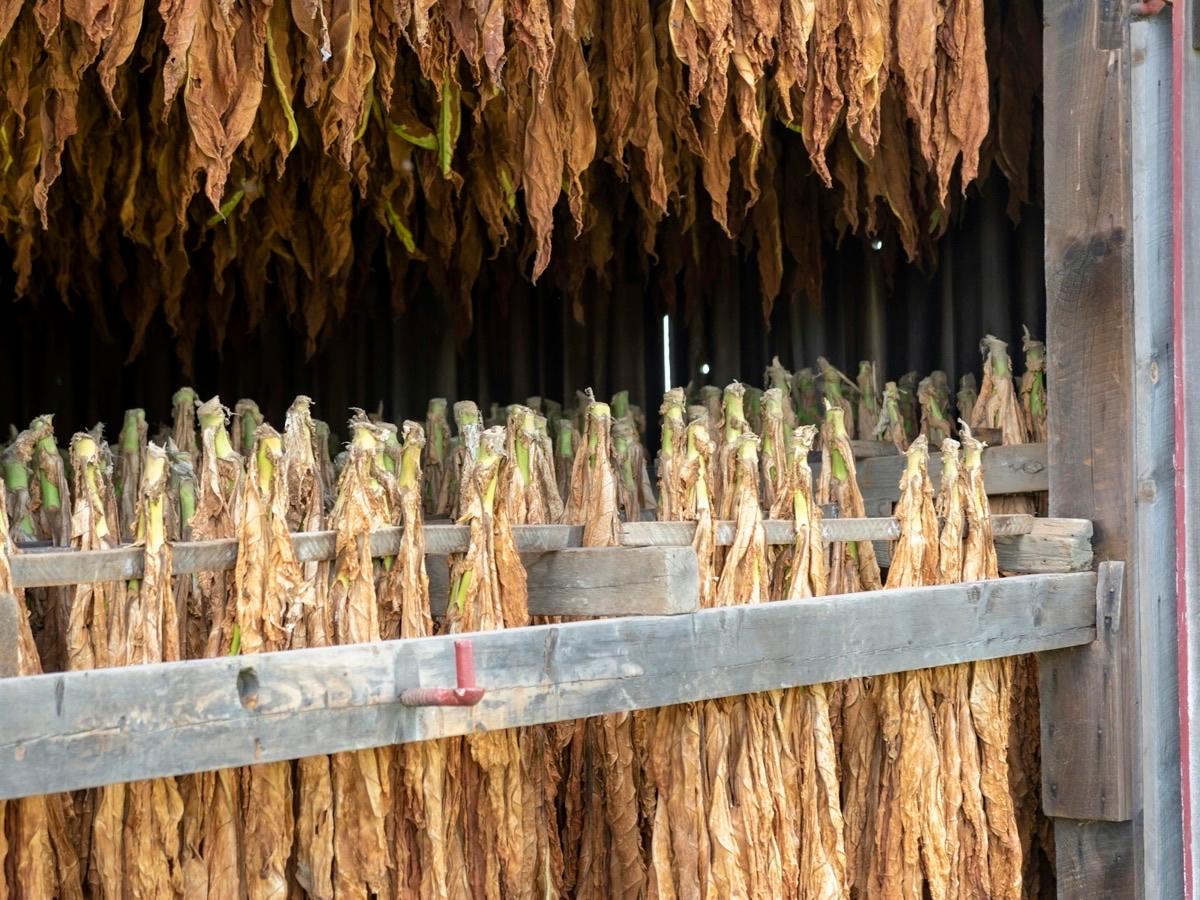
No two piles heat at the same rate. The leaf, its moisture, the size of the pile and the weather all change how fast it warms, so fermentation can't be run by the calendar alone. The fermenter watches each pile and decides when to turn it and when to stop. This lesson explains how a pile is read, what temperatures makers work to and why, and how they know when the leaf is finished. Pilon Building describes how a pile is built and turned.
Reading the heat
The main instrument is a thermometer pushed deep into the center of the pile, where the heat is greatest; Cuban fermenters use long ones shaped like swords. Perdomo checks the temperature and humidity of every pilón each day. A newly built pile warms within a day or two, and left alone it would keep climbing: an 1899 U.S. study of cigar leaf recorded piles reaching 52 °C (126 °F) and more. Fermenters therefore set a limit for each kind of leaf and turn the pile when it gets there, which cools it, airs the leaf and starts the next rise.
How hot is too hot
There is no single right temperature, and the limits makers publish differ widely. The table gives the temperatures some of them work to.
| Maker or place | Leaf | Temperature |
|---|---|---|
| Perdomo, Nicaragua | Natural sun-grown wrapper | Fermented at 27 to 32 °C (80 to 90 °F); broken up at once if it reaches 38 °C (100 °F) |
| Perdomo, Nicaragua | Filler, and maduro wrapper | 43 to 46 °C (110 to 115 °F) |
| General Cigar, Dominican Republic | Filler | Turned above 43 °C (110 °F) |
| Rocky Patel | All leaf | Turned at 43 to 54 °C (110 to 130 °F) |
| Turrent, San Andrés, Mexico | Maduro wrapper | About 60 °C (140 °F) |
| Connecticut, about 1900 | Light wrapper | Turned at 49 °C (120 °F) |
| Connecticut, about 1900 | Filler | Turned at 54 to 57 °C (130 to 135 °F) |
The pattern matters more than any one number. Wrapper is fermented cooler than filler, to protect its color, elasticity and aroma, and maduro hottest of all. Cuba publishes no temperatures for Habanos leaf; a Cuban technical instruction for sol en palo, a leaf grown mainly for Cuban cigarettes, turns farm piles above 42 °C (108 °F) and lets the later burros reach about 60 °C (140 °F).
The limits matter because heat changes what fermentation does, not only how fast it goes. A 2025 study of cigar leaf fermented at different temperatures found that cooler piles, at 30 to 35 °C (86 to 95 °F), kept more sugar and aroma compounds, while hotter ones, at 45 to 50 °C (113 to 122 °F), broke down more nitrogen compounds and alkaloids, formed more Maillard compounds, the browning products that also color toast and roasted coffee, and gave a less irritating smoke. Above 45 °C the microbes in the leaf largely stopped growing. Too much heat damages the leaf outright: early studies warned that it spoils color and aroma, and Drew Estate's Willy Herrera has called excess heat traumatic to the leaf.
Reading the leaf
The thermometer is backed up by the senses. A fresh pile releases a sharp smell of ammonia each time it is opened, and as the leaf ferments out that smell weakens, as Ammonia Release explains. The leaf darkens, and its moisture is watched: leaf that is too wet spots and rots in the pile, and leaf that has dried out stops fermenting.
Knowing when it's finished
A pile is finished when it stops heating. Each time it is turned it climbs again, but less high and more slowly, because the leaf has less left to change: in early Connecticut trials, a wrapper bulk first turned at 49 °C (120 °F) rose only to 46 °C (115 °F) in the ten days after its turn. When a pile no longer rises after a turn and holds its temperature, its fermentation is done. Perdomo ends a first fermentation when the pile holds steady, and the Cuban instruction treats a burro as finished once it stays at or below 40 °C (104 °F). How long that takes depends on the leaf, from weeks for thin leaf to months for ligero and maduro, and Fermentation Cycles gives the schedules.
What goes wrong
Under-fermented leaf is the common fault: it smokes harsh and bitter and smells of ammonia. Over-fermented leaf, cooked by too much heat, has its color and aroma spoiled. Leaf that was too wet in the pile spots and rots, and leaf left on the cool outside of a pile that was turned too seldom stays unfinished.