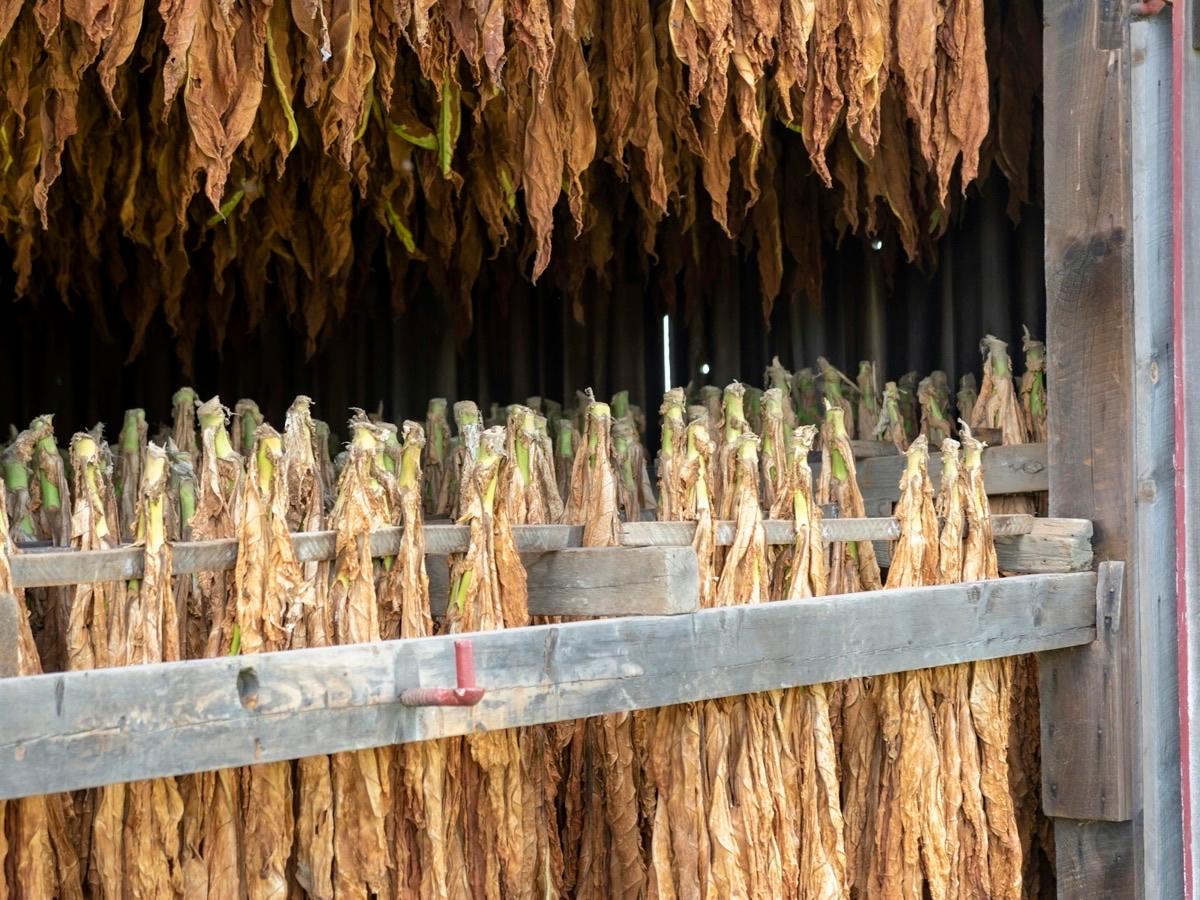
Fermentation needs no oven. Pile enough moist tobacco together and it heats up by itself, and building a pilón is the craft of making that heat work evenly through every leaf. Pilón is Spanish for a pile; the English trade also says bulk, and many factories call some of their piles burros, "donkeys". This lesson explains how a pilón is built, how big it is and how it is turned. Fermentation Monitoring and Timing explains how its heat is read, and Fermentation Cycles how many times the leaf goes through it.
The words are not used the same way everywhere. In Cuba a pilón is a pile of leaf that still has its whole midrib, and a burro a pile of partly stripped leaf for the final fermentation. At AJ Fernández, in Estelí, the burros are the smallest piles, of the last stage, while other makers keep the name for their biggest. What matters in every case is the same: moist leaf, packed close, heating itself.
Sorting before building
A pile ferments best when its leaves are alike, because leaves of different thickness heat and change at different rates. The first pile in Cuba is built in the barn where the leaf cured: the leaves from each cuje are tied into bundles, gavillas, piled in the casa de tabaco and covered with cloth. For the later fermentations the leaf is sorted first, by its class on the plant, volado, seco, ligero or medio tiempo, so that each pile holds one kind. Thin leaf ferments quickly; ligero, the thickest and oiliest, takes longest, and Differences by Tobacco Type explains why.
Building the pile
The leaf is moistened first, as Moisture Control describes, and tied into hands or bundles. The hands are laid flat, one on top of another, on a base of boards, cardboard or old tobacco stems, and built up into a square block. A few makers build round piles instead: the tobacco for CAO's Pilón cigars was fermented in circular piles, which heat more slowly. The finished pile is covered to hold in its heat and moisture, with cloth in Cuba and burlap in most other countries; AJ Fernández wraps its pilones in thick plastic as well as burlap, to control their temperature and moisture more closely.
How big a pilón is
Size matters because a bigger pile holds its heat better and ferments harder. Connecticut growers knew it more than a century ago, when they built light wrapper into bulks of 3,000 to 6,000 pounds (1.4 to 2.7 tonnes) and filler into bulks of 10,000 to 15,000 pounds (4.5 to 6.8 tonnes). Today's piles are of the same order. Rocky Patel's pilones weigh about 2,500 pounds (1,100 kilograms), Perdomo's about 3,600 pounds (1,600 kilograms) and General Cigar's, in the Dominican Republic, 3,500 to 4,000 pounds (1,600 to 1,800 kilograms). In Mexico's San Andrés valley the Turrent family ferments its dark maduro leaf in pilones of 5,000 kilograms (11,000 pounds). At the other end, AJ Fernández's last burros weigh about 1,000 pounds (450 kilograms). Heights run from under a meter for some first fermentations to nearly two meters for the big piles of the later stages.
The weight is part of the method: Rocky Patel describes its pilones as using their own weight to press the leaf.
Turning the pilón
A pilón heats from the middle. Its center, insulated by the leaf around it, gets hotter than its top, bottom and sides, so a pile left alone would ferment unevenly, overheating at its core and barely changing at its skin. The answer is to turn it. When the center reaches the temperature set for that leaf, workers take the whole pile apart by hand and build it again, moving the leaves from the top to the bottom and from the outside to the inside. In Cuba, a pile that gets too hot is broken up, cooled and rebuilt with the bottom leaves on top. The Turrents move hands from the outer rows into the center to bring its temperature down. Rocky Patel moves its leaf from top to middle to bottom every 7 to 10 days, and Plasencia leaves each pilón stacked until it reaches a set temperature, then takes it apart and rebuilds it so that the tobacco ferments evenly.
Each turn also airs the leaf and lets out the ammonia that has built up inside, so the pile starts again cooler and fresher. A pile can be turned many times; Perdomo says it turns each pilón as many times as it takes. Leaf from the cool top and sides of a pile can still come out less fermented than the rest, and some factories finish it in a mulling room, which Fermentation Rooms describes.