Mold is a live fungus, and plume is a word with a history. This lesson explains what mold actually is, where the idea of a harmless crystalline plume came from, what the laboratory work found, and what to do when a cigar shows white, gray, green or blue growth. The storage figures that keep mold away are set out in Why Humidity Matters.
What mold is
Mold is a fungus, one of many that live everywhere as microscopic spores and grow into visible colonies when they land somewhere warm and damp with something to feed on — a cigar wrapper or the cedar wall of a humidor is plenty. On cigars the common culprits are species of *Aspergillus* and *Penicillium*, and the laboratory work on so-called plume identified *Eurotium amstelodami* among them. A colony is usually fuzzy or powdery and may be white, gray, green, blue or black, and it has a distinct smell, musty and damp, that sits under the tobacco. Mold spreads by releasing more spores, so one affected cigar becomes, in a closed box, a slow source of the next ones.
Mold matters for health, not just for taste. Some molds produce mycotoxins, compounds that can sicken a person who inhales them, and even the molds that do not produce toxins can worsen breathing problems and set off allergies. Boiling the danger down to a rule: a cigar with mold on it should be thrown away, and it should not be trimmed or wiped and smoked.
Where "plume" came from
For decades the standard account was different. A widely used trade glossary defines plume, also called bloom, as a fine white powder left when oils from an aging cigar work their way to the surface and crystallize, and describes it as something that brushes off without a mark, unlike mold, which has color and stains. By that account plume was a compliment: proof that the cigars had been aged slowly and well, and the Spanish-speaking tradition has long called it *flor*, or bloom, and treated it as a good sign.
The problem is that the account has never been demonstrated, and the modern evidence points the other way. In the most widely cited test, run through the cigar forum Friends of Habanos, cigars that experienced smokers believed to be carrying plume were sent to a laboratory, and every sample came back as mold rather than crystallized oil. That result, together with the difficulty of finding any chemist who has confirmed plume's existence in a finished cigar, has led most manufacturers and most specialists to say that what smokers call plume is, in real conditions, almost always light mold. Older trade references still carry the traditional definition, so the two accounts sit side by side in print, and the disagreement should be acknowledged rather than smoothed over.
Telling them apart — and why not to rely on it
The traditional field tests describe plume as flat and powdery, shedding at a touch, and mold as fuzzy, raised, colored and staining the wrapper underneath. Those descriptions are useful as far as they go, but the laboratory result undercuts them: a fine, flat, white dust that wipes away clean is a common appearance for early mold, not a guarantee of plume. The one sign that survives scrutiny is the foot. Mold readily grows on the exposed filler at the cut end of a cigar, while any "plume" is said to form only through the intact wrapper; a white or gray growth on the foot is therefore mold, in any account. But the safe conclusion is the blunt one: by eye alone, a smoker cannot reliably tell a harmless deposit from an early fungal colony, and the sensible course is to treat what looks like plume as what it usually is.
What to do
If a cigar shows mold, take the affected cigars out of the box at once, and check the ones beside them. A cigar with mold on the wrapper, and certainly one with mold at the foot or the smell of it, is thrown away; wiping the outside cannot reach what has grown into the filler, and no cigar is worth the health risk. A cigar with only a faint, dry, white dust that brushes clean is no cause for celebration, but it can be kept once the box is put right — and it should be watched afterward, because mold that returns is mold, not plume.
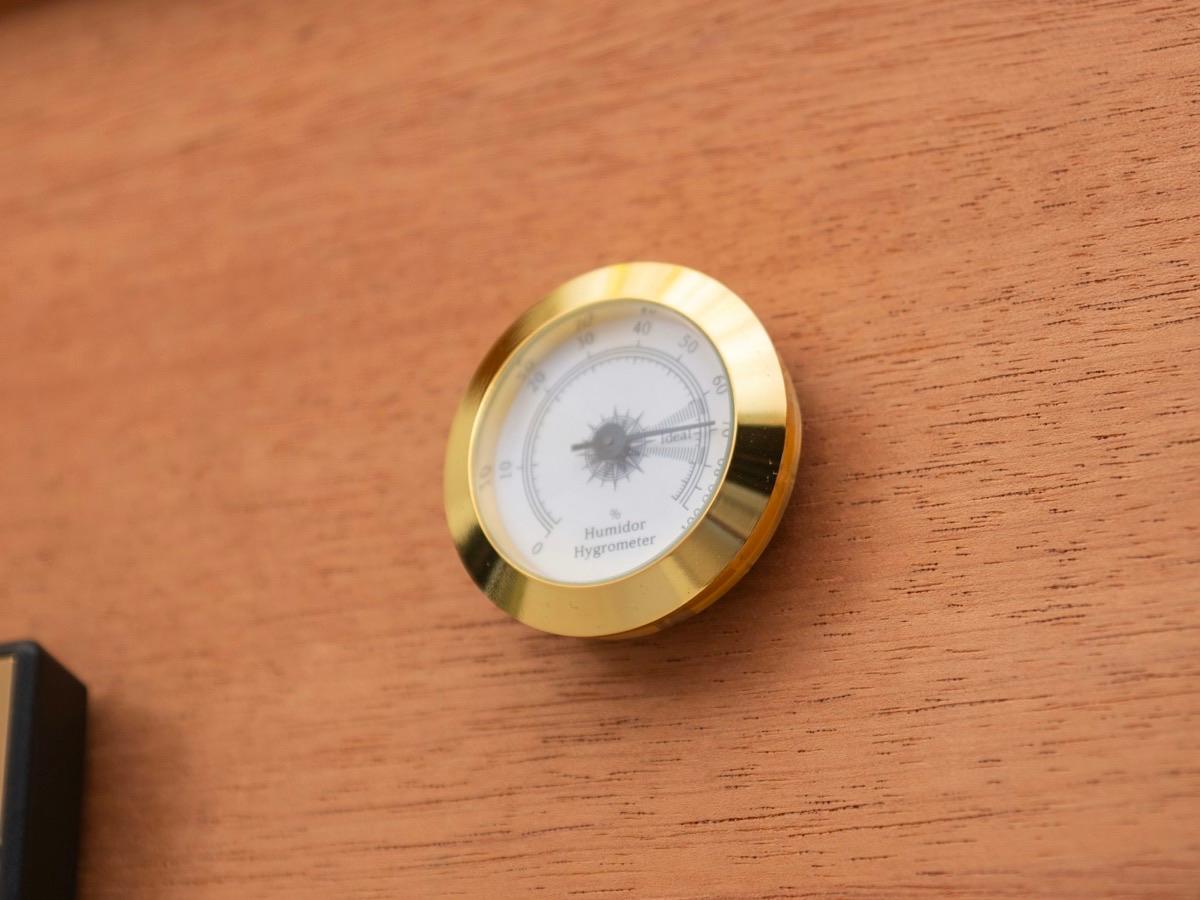
The humidor itself then needs attention. Empty it, wipe the interior with a cloth barely dampened with isopropyl alcohol or a weak vinegar and water, and leave it open to dry thoroughly before re-seasoning, as Seasoning a Humidor describes. Fix the cause: lower the humidity below about 70 percent, check the hygrometer's calibration, and open up the air circulation, since mold in a humidor is almost always the box telling you it has been too wet and too still for too long.