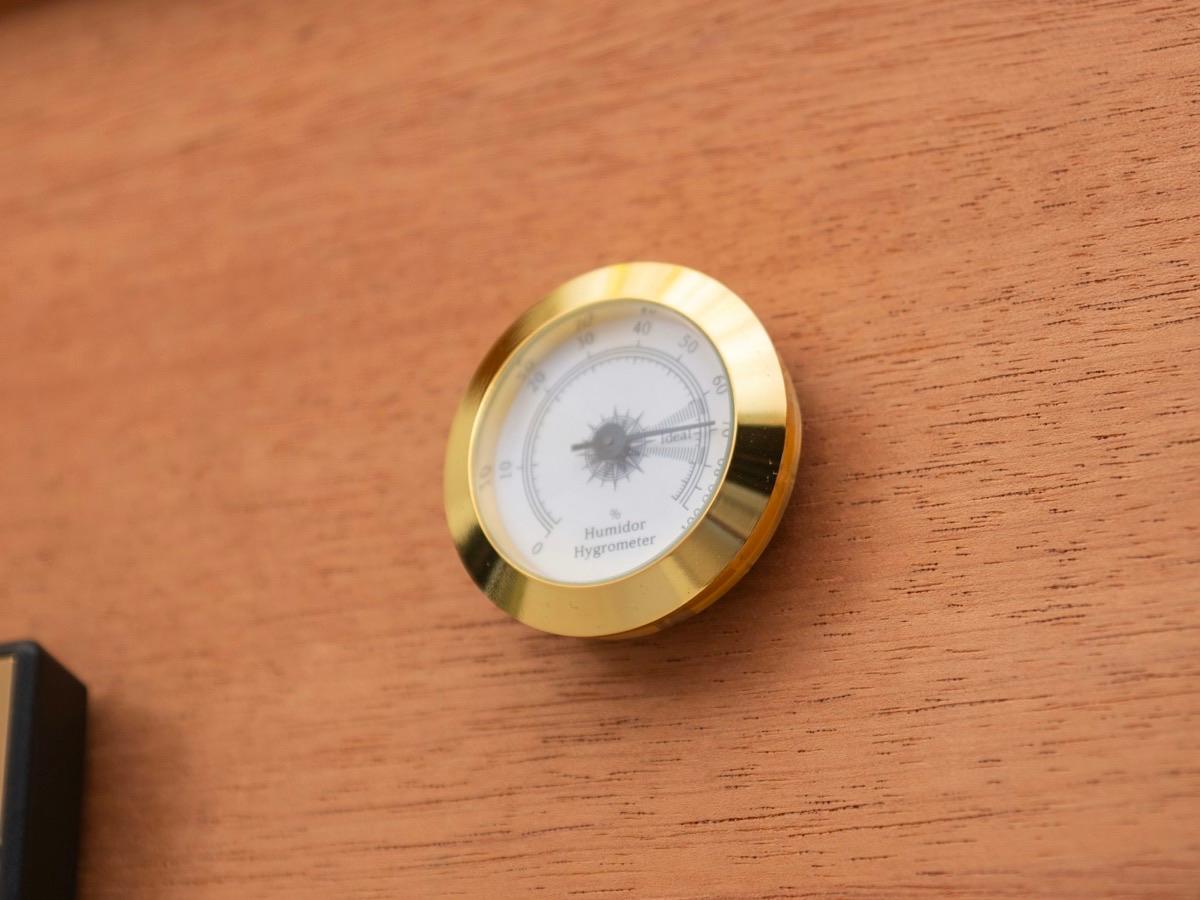
A cigar that spends a week in a suitcase meets conditions its humidor would never allow, and the point of a travel case is to keep the water in the leaf and the wrapper intact for however long the trip runs. This lesson covers the kinds of case, how to manage humidity on the move, and how to get cigars through an airport. Air Circulation and Why Humidity Matters describe the underlying need for steady conditions.
What a travel case does
The shortest trip needs the least. For an evening out, a leather or metal pocket case holding two or three cigars is protection enough; the cigars start in good condition from a humidor and will not lose much in a few hours, so a case without any humidification does its one job — keeping the wrappers from being crushed and the cigars from rubbing against keys and phone. For a day to a week, the cigars need something more: a seal and a water source.
A rigid travel humidor, often called a herfador, is a crush-resistant shell of plastic, composite or metal with foam inserts that hold each cigar in its own slot, and it closes with a gasket seal. Many are waterproof and pressure-tested, which makes them the standard for flights and for luggage, and they usually include a hollow in which a small two-way humidity pack sits. A sealed plastic food container fitted with a pack — the improvised "tupperdor" — does much the same for almost no money, and a padded "humidor bag" with a built-in pack is the light, disposable version in between.
Humidity on the move
On the road the humidity source should be a two-way pack, never an open sponge or a liquid-filled device. The packs described in Humidification Methods have nothing to spill, work at any angle, and tolerate the pressure and temperature changes a suitcase meets, where a jar of water leaks or bursts. Choose a pack at the level the cigars already hold — usually 65 or 69 percent — and seal the case; a sealed case with a pack can hold cigars in good condition for weeks, not days. Leave any cellophane on while traveling, since it adds a layer of protection, and let cigars rest back in the humidor for a day or two after a journey before smoking them.
Heat is the other threat, and the simpler one to forget. A car in the sun becomes an oven, and a suitcase in a hold can freeze. Keep cigars out of parked cars in hot or cold weather, keep the case out of direct sun, and treat the cabin of a plane, where people are comfortable, as the safe place.
Getting through an airport
Where possible, cigars ride in carry-on rather than checked baggage, because the cabin is temperature-controlled and the bag is not thrown. The case itself presents no problem at a checkpoint. The accessories do. Rules on cutters and lighters differ by country and airline and change over time, so they should be checked before flying; in the United States, the Transport Security Administration does not permit torch-style cigar lighters in either cabin or checked baggage and lets a soft-flame lighter through only under limited conditions, while cigar cutters that have no blade over a set length may be carried in hand luggage. A cheap cutter and no lighter is the low-risk combination for a trip.