Lessons
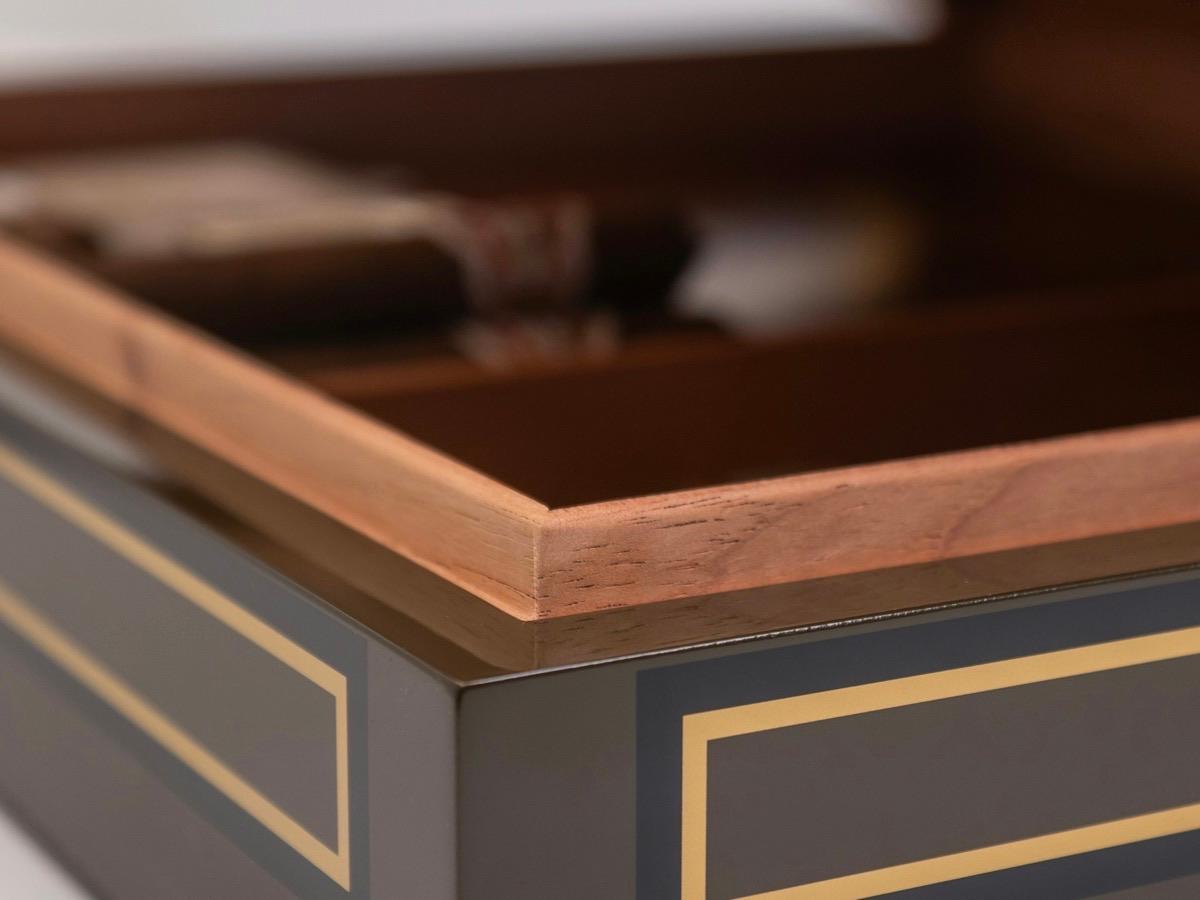
- 1Seasoning a Humidor11 min readA new wooden humidor drinks. Its lining, usually Spanish cedar, has been dried in the workshop, and until that wood has taken up its own share of moisture it will draw water out of the first cigars put into it, leaving them dry, cracked and dull. Seasoning is the job of bringing the wood up to the right humidity before any cigar goes in, and it is done with distilled water, never tap water. A seasoned humidor then does its real work: it buffers, taking in moisture when the air inside is wet and giving it back when the air is dry, so the cigars sit in something steady.
- 2Humidification Methods13 min readA humidor keeps its cigars moist, but something has to supply the moisture. Humidifiers do that work, and they fall into two families: passive devices, which let water leave a material slowly and rely on the box itself to spread it, and active electronic units, which push moist air around with a fan. The oldest methods — a sponge of foam charged with distilled water and propylene glycol — are the cheapest and the neediest; crystal gels, humidity beads and two-way packs need less attention; and electronic units take over the job in large cabinets and walk-ins. The right choice follows the size of the box, the climate, and how much care you want to give it.
- 3Air Circulation9 min readHumidity in a humidor is never a single number. It is a map, and without movement the map has cold corners and wet pockets: cigars near the humidifier sit moister than cigars at the far end, and a dead corner beside the back wall can stay damp long enough to grow mold. Air circulation is what evens the map, and in most humidors it happens only when the lid opens. Leaving gaps between cigars, not overfilling the box, and rotating the stock every so often are the cheap ways of moving the air that a closed box will not move itself.
- 4Mold and Plume10 min readA white powder or a fuzzy patch on a cigar is either mold, which should not be smoked, or the much-debated "plume" that older guides describe as crystallized oil and a mark of good aging. Modern evidence has changed that picture. When cigar lovers sent cigars they judged to be covered in plume for laboratory testing, the growth in every case proved to be mold, and most manufacturers and experts now say the two are, in practice, the same thing: mold. The practical rule follows from that. Treat any growth on a cigar as mold until shown otherwise, and never smoke a cigar with mold on it, because mold and its spores can harm you.
- 5Travel Storage7 min readTraveling with cigars is about protecting them for a short stretch, not aging them. The threats on the road are different from the ones at home: crushing in a bag, swings of humidity and temperature, and the paperwork of airlines. A rigid travel case keeps a cigar whole and, with a two-way humidity pack, in condition for days or weeks; a soft leather case carries two or three for an evening; and a sealed plastic box with a pack is the cheapest way to do the same job. Air travel adds its own rules, above all for cutters and lighters.
- 6Why Humidity Matters14 min readWater is more of a cigar than the smoke ever lets on. A finished cigar holds only a small share of its weight in moisture, but that water decides how the wrapper behaves, how fast and how hot the cigar burns, how freely it draws, and how much of its flavor reaches you. Guard the water and the cigar keeps its oils, its elasticity and its burn; lose it and the wrapper cracks while the cigar burns hot and bitter; add too much and it draws tight, burns uneven and grows mold. The right conditions, and the debate around the exact numbers, are the heart of storage.