The wrapper the trade calls Cameroon is the survivor of a near-death, and it is also the clearest case in the topic of a name that points to the wrong place. This lesson covers where the leaf actually grows, what it is, how it nearly disappeared, and where it ends up, correcting the West Africa error as it goes. It closes out Africa for the topic, and it is one of the Wrappers lesson's central stories.
Central Africa, not West Africa
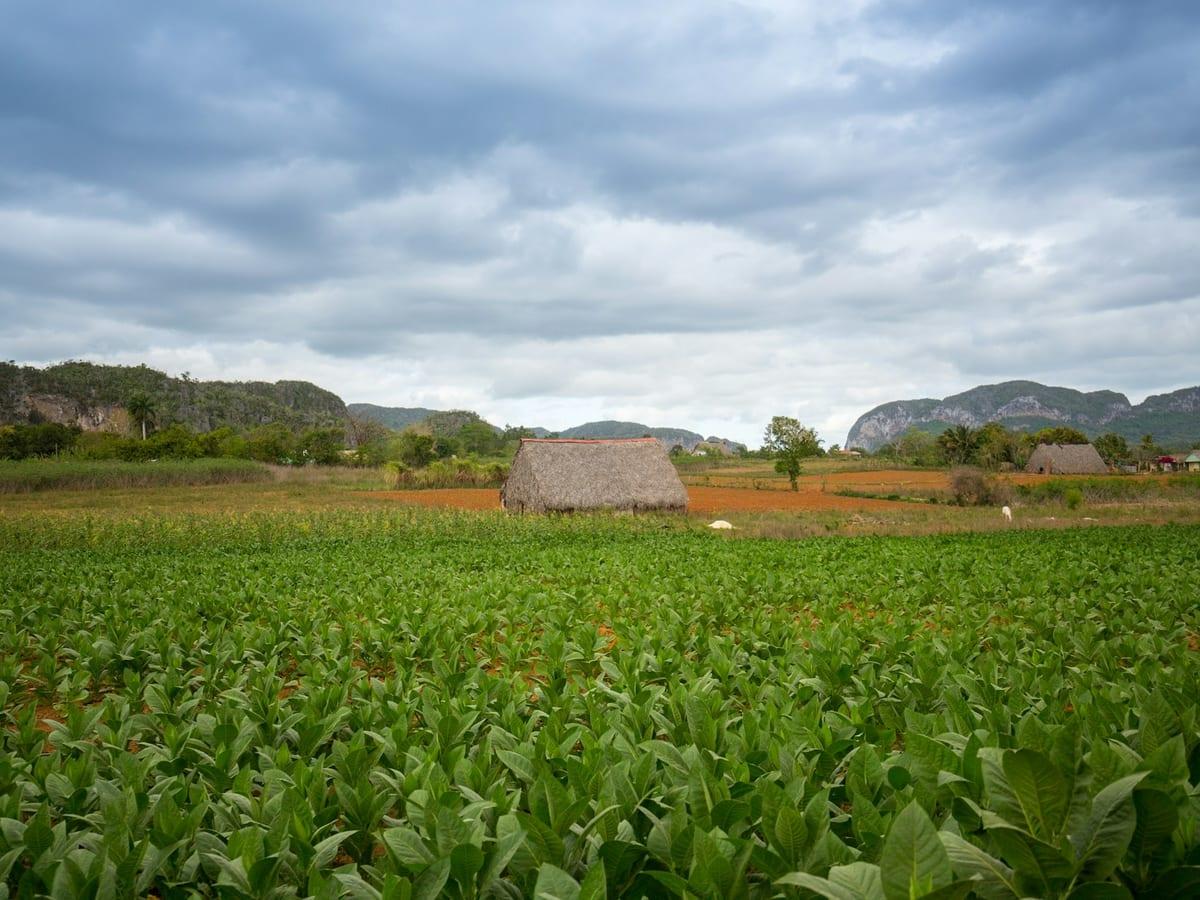
The first correction is geographic. Cameroon wrapper grows in Central Africa, in Cameroon and the neighboring Central African Republic, which is why some in the trade call it Central African leaf. It is not, as is loosely said, a West African product; the two regions are separate parts of the continent, and the leaf's home is the country of Cameroon and the country immediately to its east. This matters because the whole point of the leaf is its place: a specific band of equatorial forest and its cloud.
The crop is descended from Sumatra seed, the seed that also lies behind Connecticut Shade and Cuban Corojo, carried west from Asia and planted under the African cloud. In the region there is no shade cloth and no irrigation; the cloud does the work of the tent, and the leaf grows on small farms, worked by hand, mostly by women, as the Tobacco Farming topic describes.
A near-extinction and a rescue
The crop almost disappeared in living memory. The French developed Cameroon wrapper from the 1950s, building it into the leaf that wrapped half the world's cigars of an earlier generation, and then, in the early 1990s, the French interests withdrew and the crop collapsed. What saved it was one family: the Meerapfels, a cigarette-paper tobacco family, kept the seed alive and continued growing it in the Central African Republic, and it is now established once more. The Wrappers lesson tells the whole rescue.
The leaf that survived is distinctive. Cameroon wrapper is thin, with a fine bumpy grain called tooth, tiny pockets of oil that show as small specks in the ash, and it is known for a gentle, sweet spice, often with a hint of cedar. It is a wrapper of finesse rather than power, and it has stayed associated with a few classic lines: Arturo Fuente's Hemingway and Don Carlos, General Cigar's Partagás in the United States, and A.J. Fernandez's New World Cameroon.
Why the correction matters
Cameroon is the topic's clearest proof that a wrapper's name can outlive its geography. The leaf is Central African, rescued by one family after a colonial withdrawal, and it carries the name of the country where the trade first met it. It is not a West African leaf, and it is not a large crop; it is a thin, sweet, rescued wrapper from the heart of Africa, and its lesson is both the geography and the survival.