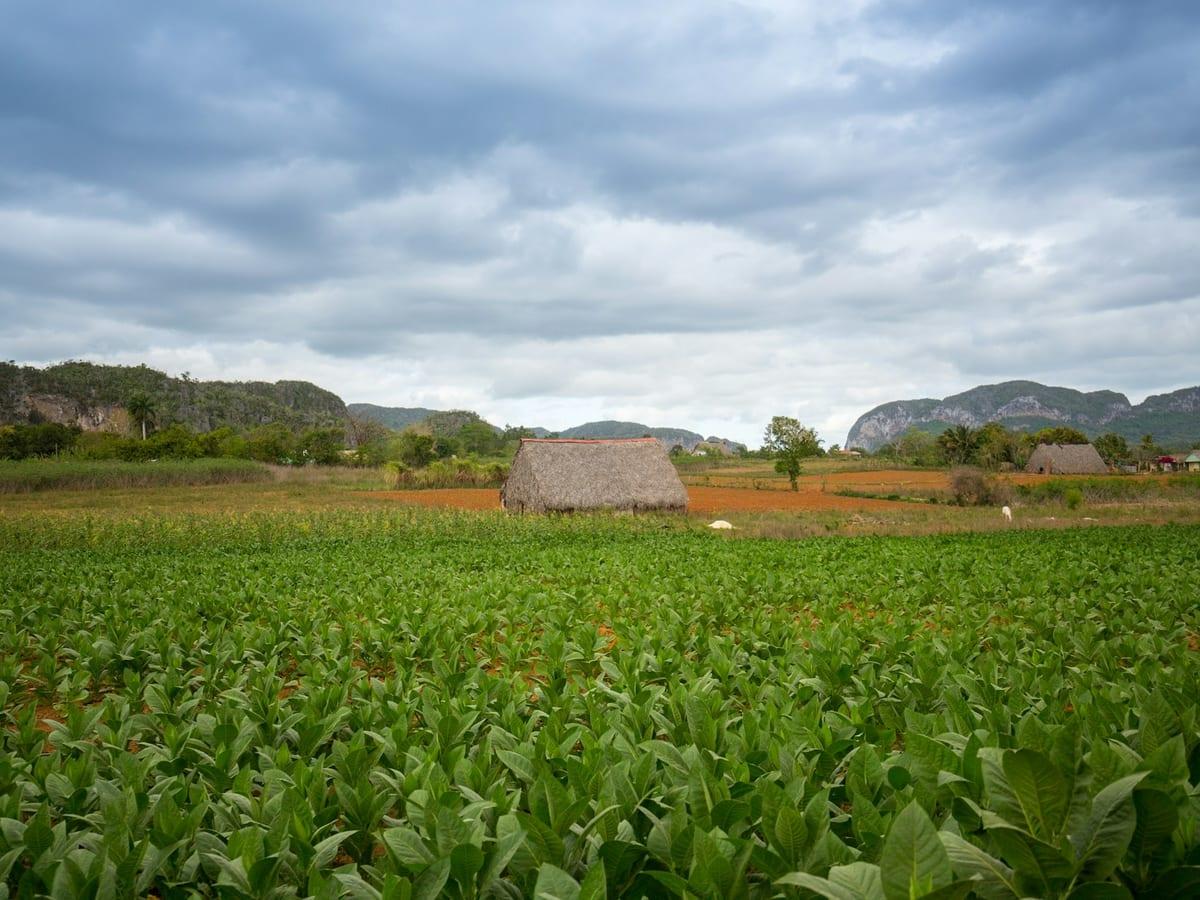
When a blend lists Dominican filler, the leaf almost certainly came from the Cibao. This lesson covers the valley itself: its soil and climate, what it grows and for what, the villages and rivers that shape the tobacco, and why this mild, reliable leaf became the backbone of so many blends. La Canela, San Victor and Mao are districts within its reach, each with a lesson of its own; the Dominican Republic lesson gives the country-level view.
The valley and its river
The Cibao is a wide, fertile plain in the north of the Dominican Republic, running east from the Haitian border toward the coast, and it takes its name from its Taíno name for the stony, productive highland soil. Through its center runs the Yaque del Norte, the country's longest river, which drains the valley north-west toward Monte Cristi and spreads water and silt across the tobacco fields. Santiago de los Caballeros, the country's second city, sits in the middle of it, and most of the country's tobacco, and its cigar factories, lie within a short drive.
The climate suits tobacco. The Cibao has a tropical pattern with a dry season that coincides with the crop, so the leaf grows from late in the year into the spring, then cures in the dry air, much as the Cuban and Nicaraguan crops do. The soil is deep and free-draining, good for the thin, fine-fibered leaf the valley is known for.
Olor and Piloto, mild and strong
Two varieties carry the valley, and they balance each other. Olor Dominicano, the native tobacco, is known for mildness and aroma, the leaf that gives Dominican cigars their smooth, sweet base. Piloto Cubano, the Cuban-seed tobacco that arrived in 1962 from the Piloto area of Cuba's Vuelta Abajo, is known for strength. Around them grow the newer choices: San Vicente, a hybrid that yields more leaves a plant than Piloto, and the varieties the country's tobacco institute, Intabaco, has released, all of them listed in the Seed to Leaf topic.
The pairing shapes the country's cigars. A Dominican blend usually rests on Olor for its mild center and reaches for Piloto when it wants power, and the balance between the two, pulled one way or another, is a large part of what blenders call the Dominican character.
Filler and binder, not wrapper
The valley grows almost everything for a cigar except the outside leaf. Nearly all of its crop is sun-grown filler and binder, and the country's wrapper is grown elsewhere or bought abroad: Connecticut Shade from the United States, Connecticut, Habano and Sumatra leaf from Ecuador, and Cameroon from Central Africa, as the Wrappers lesson explains. The exception is famous precisely because it is an exception. The Fuente family's Chateau de la Fuente, near Bonao outside the valley, grows a dark, shade-grown wrapper for the Fuente Fuente OpusX, but it is a single property, not the valley's crop.
This is why the Cibao matters the way it does. The valley feeds the factories of one of the two great premium-cigar countries, wearing cloth from three other continents, and its two leaves, mild and strong, give those cigars their center. The Dominican Republic lesson describes the makers; this lesson is the ground they stand on.