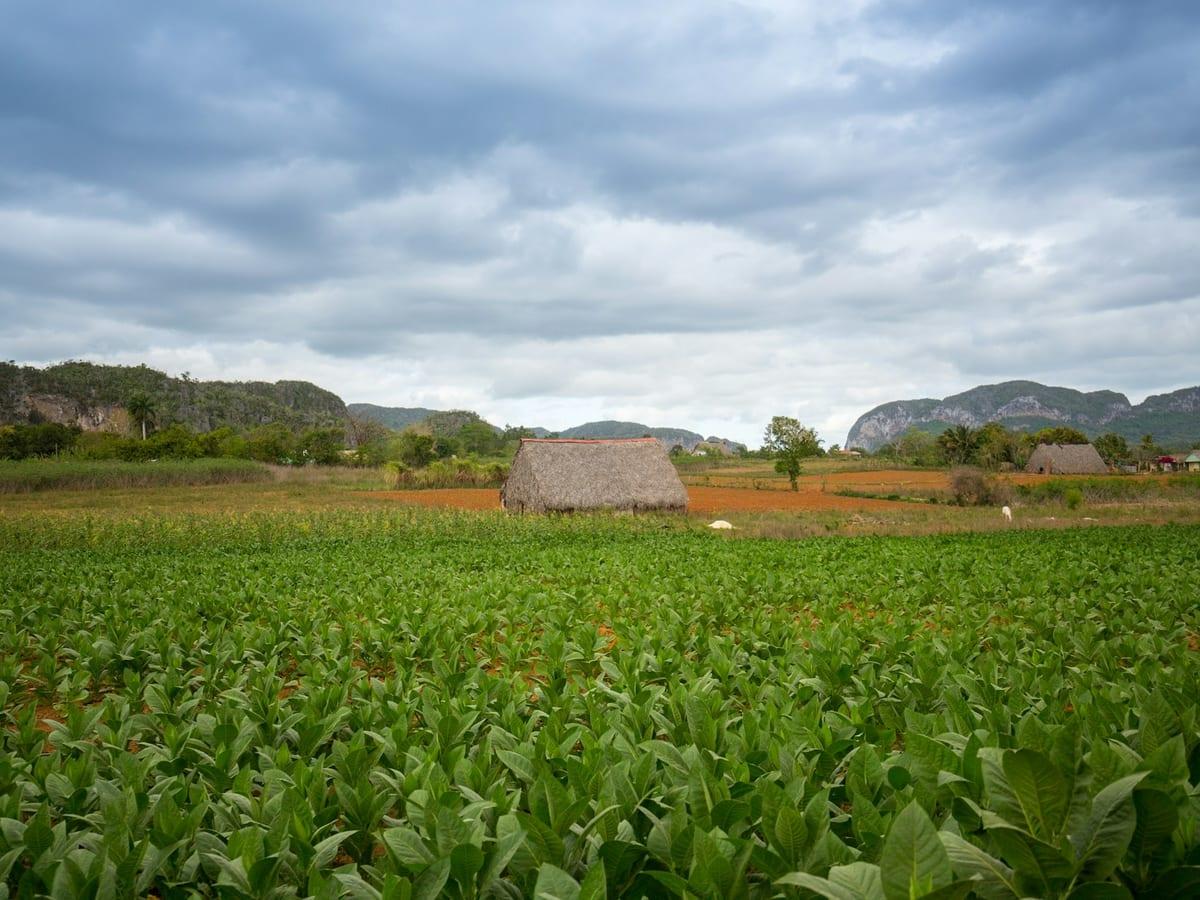
The United States entered cigar tobacco the way it entered most things, by learning to make at home what it once imported, and the Connecticut River Valley is where that happened. This lesson covers the valley: its soil and climate, its two great wrappers, and why one of them nearly vanished while the other boomed. The Wrappers lesson follows the two leaves into the cigars that wear them, and Pennsylvania and Florida are the other American lessons.
A glacial valley, a cool summer
The Connecticut River Valley follows the river north through Connecticut into Massachusetts, a strip of sandy loam left by the glaciers, and its cigar country centers on the towns of Windsor, East Windsor, Suffield and Enfield in Connecticut, and around Hadley and Hatfield in Massachusetts. The soil is light and drains fast, which tobacco favors, and the growing season is the short, hot New England summer, set out after the last frost in May and harvested from July into September, as Tobacco Farming records.
The valley became the American answer to imported wrapper. In the late nineteenth century American makers wrapped cigars in Sumatra leaf, and by 1900 Connecticut growers at Poquonock, near Windsor, had raised the first crop of Sumatra-seed tobacco under cotton cloth, the start of Connecticut Shade, the Wrappers lesson recounts. Within a few years the valley was growing a pale, thin, silky wrapper that could stand in for the foreign leaf.
Shade and broadleaf, two wrappers
The two wrappers are almost opposites, grown in the same soil. Connecticut Shade is raised under cloth tents that filter the sun, picked leaf by leaf, and cured to a light golden brown; it is the classic mild, creamy American wrapper, on cigars such as the Macanudo Café, the Hoyo de Monterrey Excalibur and the Ashton Classic. Connecticut Broadleaf is the same valley grown in full sun, a thick, broad, dark leaf harvested by cutting the whole stalk, and it is now one of the main maduro wrappers, on cigars such as Drew Estate's Liga Privada No. 9, General Cigar's Partagás Black Label and A.J. Fernandez's Enclave Broadleaf.
The two have traded places. Shade wrapper, which once covered about half the non-Cuban cigars reviewed in the United States in 1992, had fallen to about 3 percent of them by 2018, done in by its cost and by Ecuador's cheaper cloud-grown leaf; the valley's shade farms have shrunk to a handful. Broadleaf went the other way, from a workaday binder to one of the most sought maduro leaves, and much of the shade that remains is shipped to the Dominican Republic to be finished into cigars. The Wrappers lesson tells both stories with the figures.
The lesson of the valley
Connecticut shows that a region is never one thing. One valley, one soil, grows the palest wrapper and the darkest, the cheapest trend and the most expensive bespoke leaf, and it has done so for over a century by adapting, from imported seed to shade cloth to the broadleaf revival. Pennsylvania and Florida, the other American lessons, are footnotes to this one.