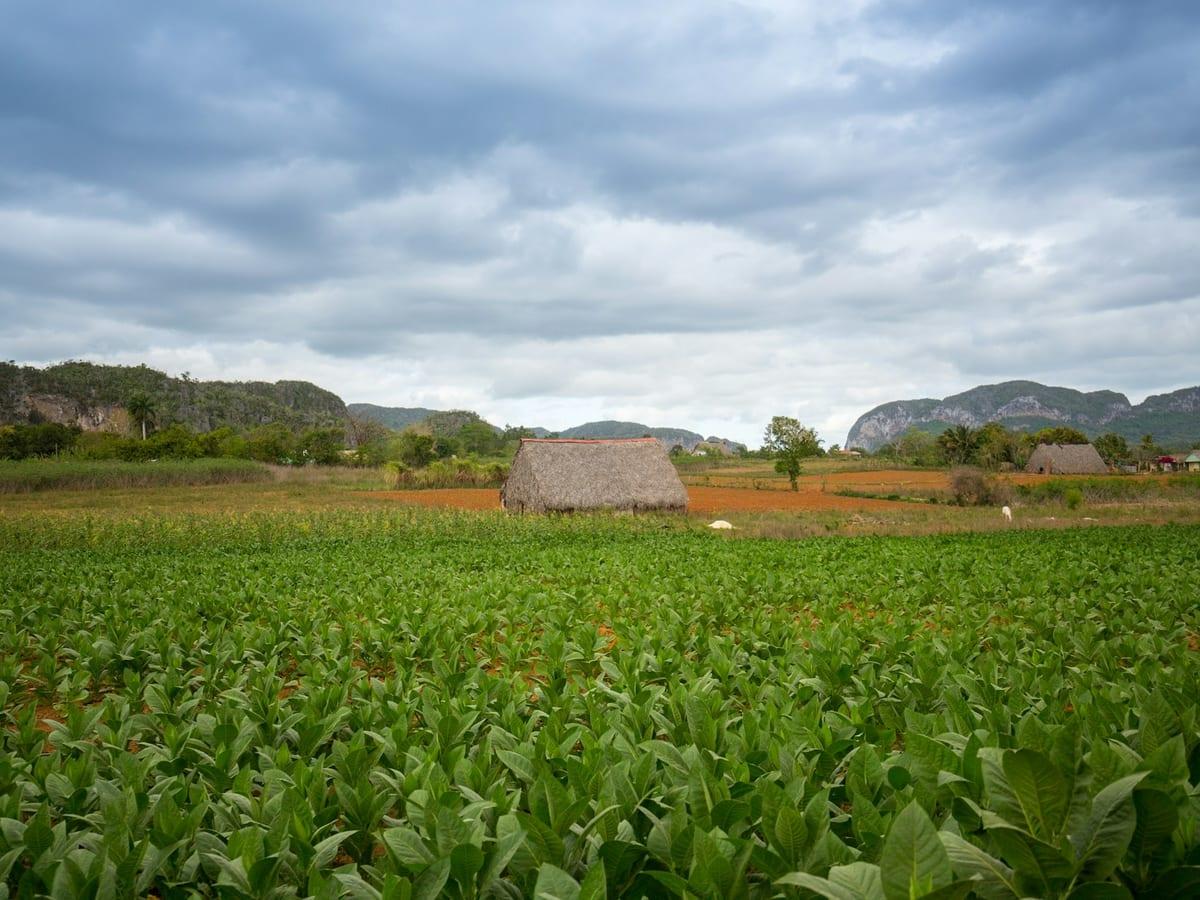
The United States grew cigar tobacco in more than one state, and Pennsylvania was the workhorse of the filler and binder trade. This lesson covers Lancaster County's leaf: what Pennsylvania Seedleaf is, where it went, and how it has found a small place as wrapper. Connecticut's valley is the star of American tobacco; this is the sturdy supporting actor.
A county of seedleaf
Pennsylvania's cigar tobacco centers on Lancaster County, in the south-east of the state, a farming district of rich soil that has grown cigar leaf since the nineteenth century. Its cigar tobacco is known in the trade as Pennsylvania Seedleaf, and also as Pennsylvania Broadleaf, and it is a different plant from Connecticut Broadleaf: a dark, strong, sun-grown leaf, grown in the same broadleaf way, by cutting the whole stalk, but with a character of its own.
For most of its history it was not a wrapper. Pennsylvania leaf went into fillers and binders, the sturdy inside of American cigars, and only recently into wrappers, a point the Wrappers lesson makes. Some in the trade say it does not burn as well as Connecticut Broadleaf, which is part of why it stayed a filler leaf for so long.
Its small place now
Pennsylvania leaf has found a narrow, modern niche as wrapper. RoMa Craft's CroMagnon PA wears a wrapper of Pennsylvania broadleaf, the clearest named use, and the state's farmers have taken up growing Connecticut Broadleaf itself, so that Pennsylvania now supplies both its own dark leaf and the more famous Connecticut one, as the Wrappers lesson records. The crop remains small beside the Caribbean and Central American origins, but it is a real, continuous piece of the American industry.
The lesson of Pennsylvania is persistence through the unglamorous use. A dark, strong leaf that spent a century inside other people's cigars, holding them together, finally gets its name on the outside of a few, and the state keeps growing it either way.